
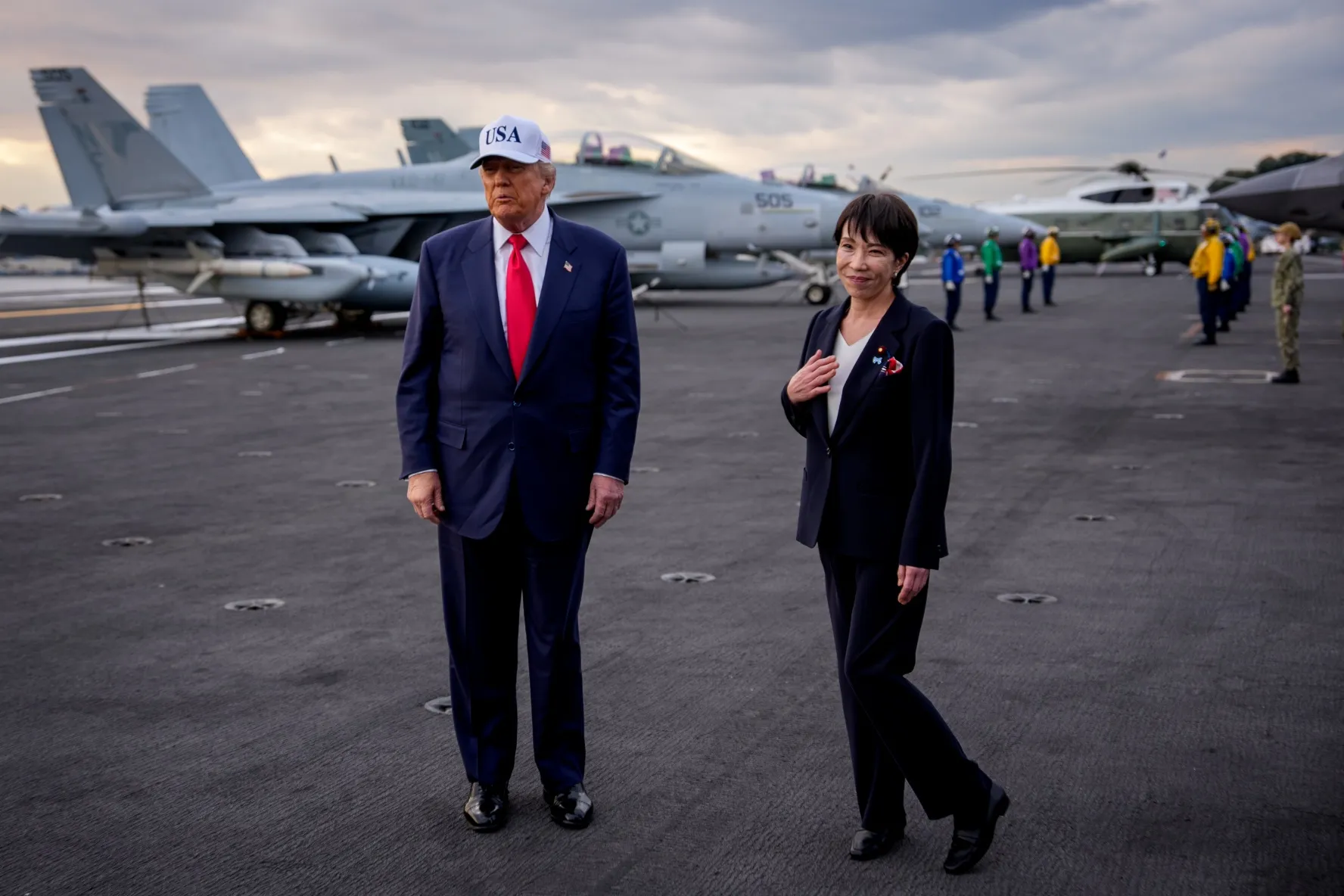
Sanae Takaichi’s visit to Washington unfolds in a moment where international politics feels unstable and constantly shifting. Global crises, changing U.S. priorities and unexpected developments shape the context of the trip, making it harder to plan or control outcomes. Diplomatic engagement in this environment requires flexibility, since agreements and expectations can change quickly.
Japan approaches this relationship with a strong need for stability, especially given rising tensions in East Asia. The United States remains its main security partner, but its attention is increasingly divided across multiple regions. This creates a more complex environment, where cooperation continues to be essential, yet less predictable in how and when it will be delivered. Japan must navigate this reality while maintaining confidence in the alliance.
For Takaichi, the visit involves managing overlapping expectations. Strengthening ties with the United States requires demonstrating commitment to shared security goals, including greater involvement in defense and regional coordination. At the same time, these commitments must be balanced with domestic political considerations. Public opinion, legal frameworks, and economic constraints all shape how far Japan can go, adding nuance to each decision.
Economic issues deepen the complexity of the relationship. Trade, investment, and industrial cooperation are closely tied to security concerns, reflecting how economic policy has become part of strategic competition. Negotiations in these areas involve aligning interests while also addressing differences, as Japan responds to evolving U.S. priorities and pressures.
The regional context adds urgency to these discussions. Developments related to China and Taiwan require close coordination, as they directly affect the security environment in which Japan operates. At the same time, these issues carry significant risks, making it important to manage responses carefully to avoid escalation while still maintaining deterrence.
What emerges from this visit is a picture of an alliance that continues to matter deeply, but functions in a more fluid and demanding way. Japan’s role within this framework involves staying closely aligned with the United States while also preserving its ability to respond to uncertainty.
In this sense, the visit reflects a broader transformation in international relations. Alliances are becoming more dynamic, shaped by multiple pressures rather than fixed commitments. For Japan, this requires the ability to adapt to a world where expectations shift quickly and strategic decisions carry increasingly complex consequences.
Reference: Solís, M. (2026, March 17). Late-breaking shocks and shifting goalposts: Takaichi’s highwire Washington visit. Brookings Institution. https://www.brookings.edu/articles/late-breaking-shocks-and-shifting-goalposts-takaichis-highwire-washington-visit/