
A New Strike Intensifies the Maritime Standoff
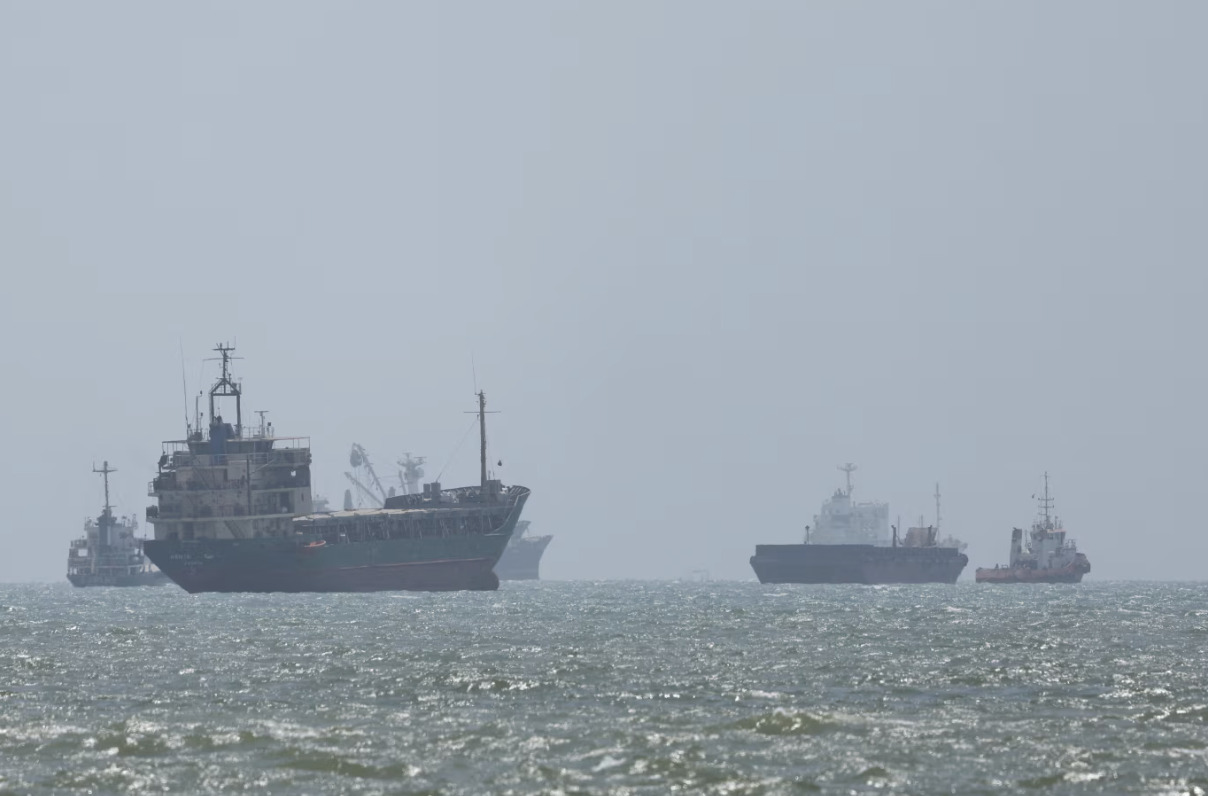
Another oil tanker was struck overnight near the Strait of Hormuz as the economic confrontation between Washington and Tehran intensified. The United Kingdom Maritime Trade Operations said an unknown projectile hit the vessel off Oman and damaged its engine room. Although the ship became inoperable, its crew remained safe. No group immediately claimed responsibility, and authorities did not publicly identify an attacker.
Earlier attacks have already reduced commercial traffic through the strait during the six-month war. Iran has targeted more than a dozen vessels near Hormuz or the Red Sea this month. In addition, a Saudi tanker was struck on Monday in an attack claimed by the Iran-backed Houthis. The group said it used a ballistic missile, which caused a fire on the vessel’s main deck.
Economic Pressure Replaces Stalled Diplomacy
Washington has shifted toward restricting Iran’s trade and financial links after negotiations failed to reopen Hormuz. Treasury Secretary Scott Bessent launched Operation Economic Outcast and threatened penalties against countries or companies that continue dealing with Tehran. Moreover, he warned that Chinese banks were not beyond the reach of American measures. The administration has also renewed suggestions that economic pressure could help collapse Iran’s government.
Meanwhile, diplomatic efforts have produced no substantive breakthrough. Pakistan’s army chief, Asim Munir, met Iranian leaders in Tehran, but Iran did not resume talks with Washington. Inside Tehran, residents reported gasoline lines as supplies became limited. The currency also weakened while the threat of additional sanctions increased.
Iran Widens Its Threats Across Energy Routes
Tehran described the American campaign as an economic terrorist attack and warned that it would respond offensively. Iranian officials threatened American interests and further limits on energy shipments from the Persian Gulf. They also identified 46 vessels accused of violating Iranian rules. Those ships could face fines, detention or cargo seizures, while vessels dealing with them could also receive penalties.
Despite the disruptions, some oil continues to leave the region with assistance from the U.S. Navy. Saudi Arabia and the United Arab Emirates also use pipelines that bypass Hormuz. However, Iranian officials warned that continued economic warfare could stop oil exports through the strait and elsewhere in the Gulf. Tehran is also seeking broader disruption along the Red Sea route used by Saudi Arabia.
China represents the central test for Washington because it purchases most Iranian oil and helps move the resulting revenue. Responding to the sanctions campaign, Chinese foreign ministry spokesman Lin Jian said economic warfare increases tensions and disrupts the global economy. He added that China would protect its rights and interests.
References
Kantchev, G. (2026, 25 agosto). New tanker strike in Hormuz as Iran vows retaliation for U.S. economic offensive. The Wall Street Journal. https://www.wsj.com/world/middle-east/new-tanker-strike-in-hormuz-as-iran-vows-retaliation-for-u-s-economic-offensive-6f1a1f54?st=SPQJp3