
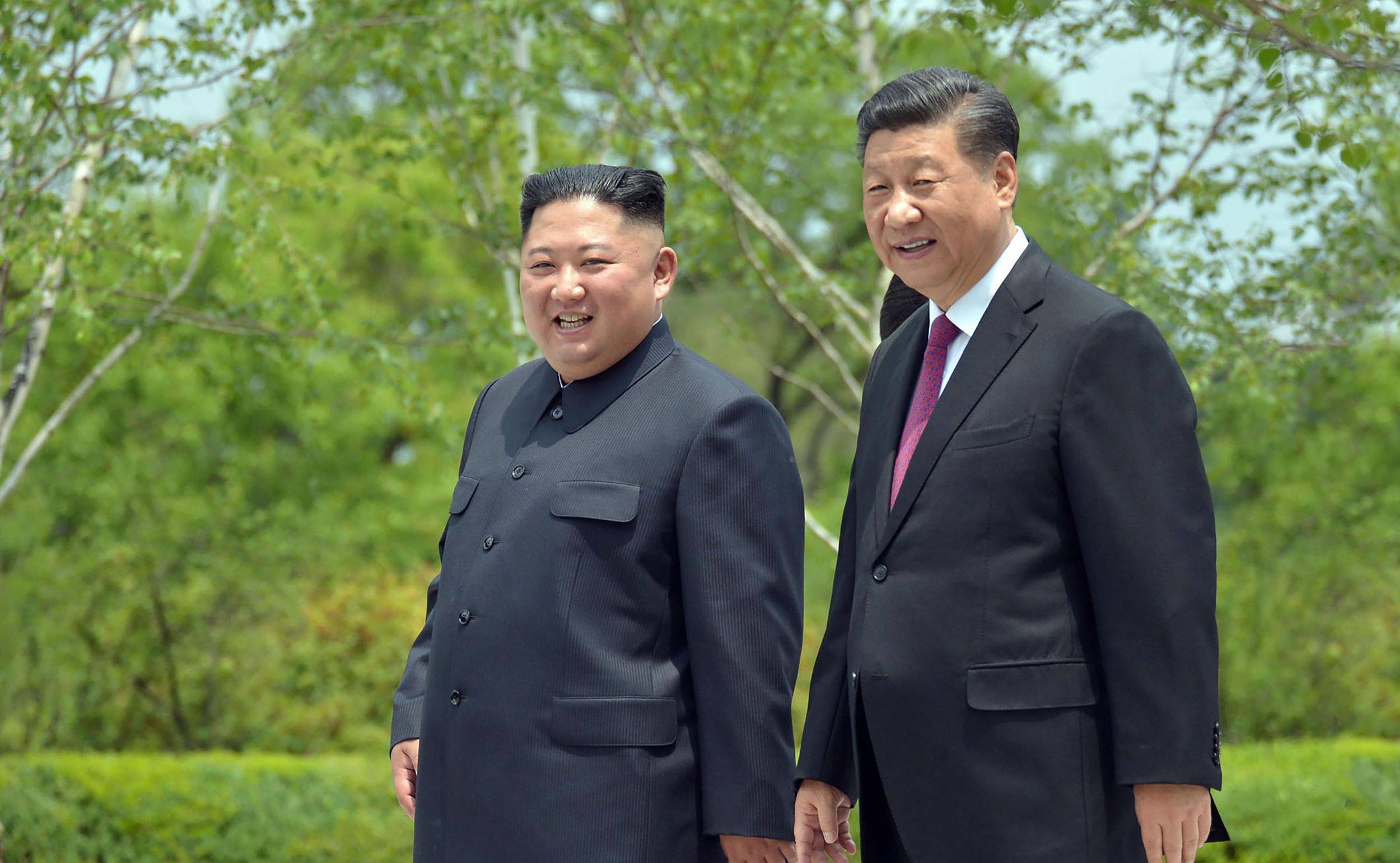
Chinese President Xi Jinping’s two-day visit to Pyongyang marks his first trip to North Korea in seven years and his first overseas travel of the year. This high-profile diplomatic move comes at a crucial geopolitical juncture. Specifically aiming to revitalize Beijing’s historically deep ties with its reclusive neighbor. At a time when North Korea has rapidly deepened its military cooperation and defense ties with Russia. While North Korea has gained broader international maneuvering room due to its partnership with Moscow—including deploying soldiers to assist Russia in the Ukraine war. Beijing is using this visit to reassert its role as North Korea’s ultimate and indispensable neighbor.
The relationship between the two nations remains fundamentally asymmetric. With North Korea heavily dependent on China for its literal survival. As a highly isolated nation restricted by United Nations sanctions due to its nuclear weapons program, North Korea relies on China for up to 95 percent of its total trade. In short, including vital imports like petroleum, machinery, and food. Furthermore, China provides Pyongyang with immense political and security backing. In addition, Beijing serves as North Korea’s sole formal treaty ally and leverages its permanent seat on the UN Security Council to offer crucial diplomatic protection. While Russia can readily supply advanced weapons technology and energy. It cannot replace the geographic, economic, and long-term strategic stability that China provides to the Kim Jong Un regime.
Conversely, Beijing’s need for Pyongyang is rooted in regional stability and tactical power politics. Strategically, North Korea acts as a critical physical buffer. Keeping the more than 28,000 U.S. troops stationed in South Korea away from China’s direct border. Beijing’s primary policy objective is to prevent a chaotic collapse of the North Korean regime, which would not only trigger a massive refugee crisis. This flowing into northeastern China but could also potentially hand Washington significant geopolitical influence right at China’s doorstep. Additionally, Xi’s visit is viewed as a calculated effort to maintain China’s position as the primary gatekeeper of the region. Obviously, ensuring Beijing remains firmly in control of its northeastern flank amidst rising global pressure. And preventing Pyongyang from drifting too far into Russia’s orbit or independently cutting a deal with the United States.
Ultimately, the geopolitical relationship between China and North Korea is driven by deep mutual reliance. Even as Moscow emerges as an alternative partner for Pyongyang. While the Kim Jong Un regime depends completely on Beijing for the economic lifelines and diplomatic protection necessary for its survival. China views North Korea as a vital geopolitical buffer against U.S. military presence in the region. Consequently, Xi Jinping’s strategic engagement ensures that despite temporary diplomatic shifts, Beijing remains the indispensable gatekeeper of its northeastern flank. In conclusion, prioritizing North Korean stability to protect its own borders and maintain its regional dominance.
Reference
Shankar, P. (2026, June 8). North Korea needs China for survival: Why does Beijing need Pyongyang? Al Jazeera. https://www.aljazeera.com/news/2026/6/8/north-korea-needs-china-for-survival-why-does-beijing-need-pyongyang