
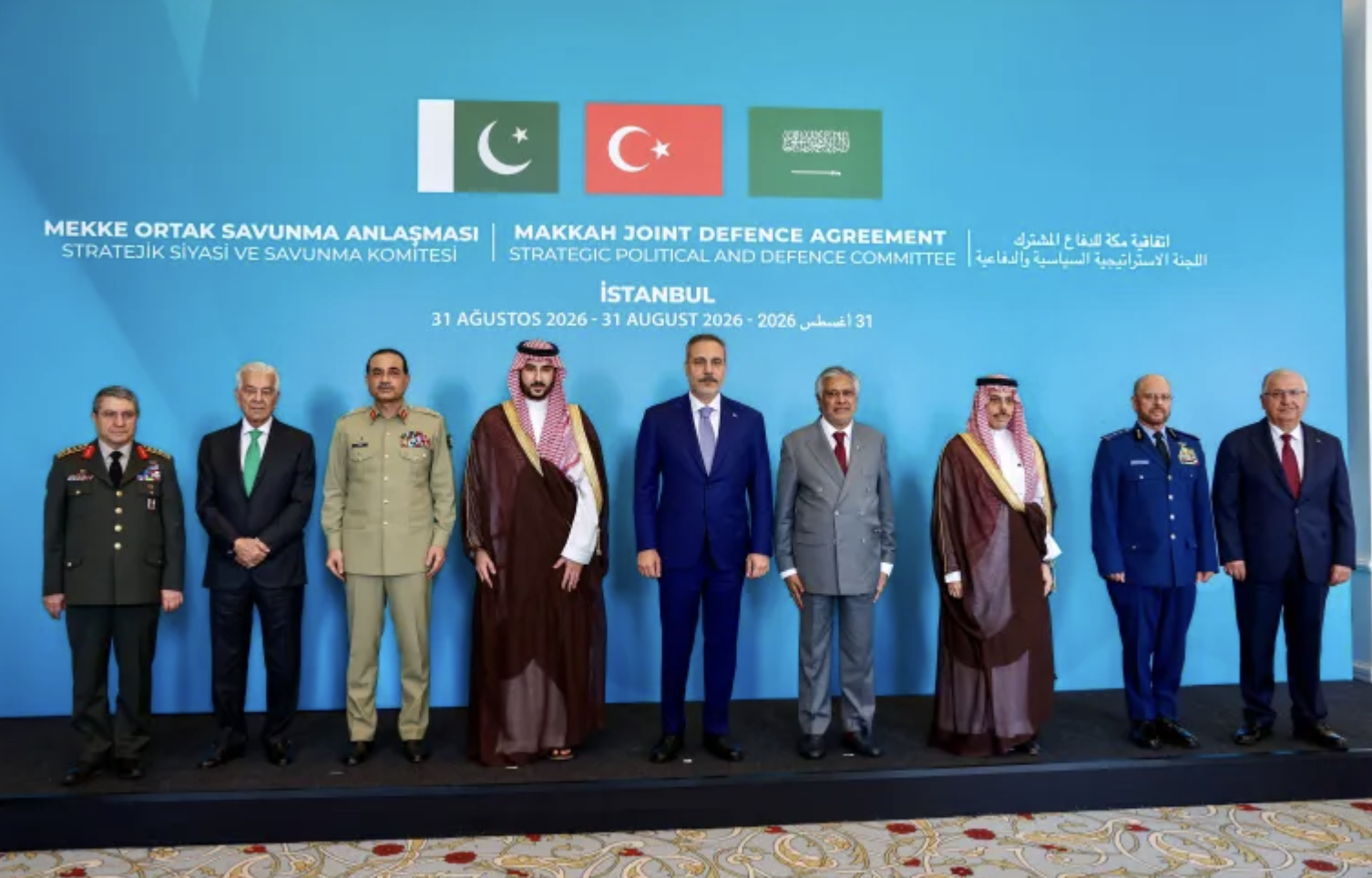
High-ranking officials from Pakistan, Saudi Arabia, and Turkey met in Istanbul on Monday. They gathered to formalize their joint security framework under the Mecca Defence Alliance.
Following diplomatic negotiations, Turkish Foreign Minister Hakan Fidan made an official announcement. He stated that a permanent secretariat will be established in Riyadh. Additionally, a Pakistani official will serve as its first secretary-general.
Fidan emphasized that this defence pact operates on international principles. These include respect for state sovereignty, territorial integrity, and non-interference. Furthermore, leadership confirmed that membership remains open to other regional nations.
Operational Framework and Institutional Structure
The Istanbul summit marks the transition of the mutual defense agreement, signed on August 7 in Mecca, from a broad political declaration into an operational security mechanism. Delegations led by top diplomatic and military personnel—including Pakistani Foreign Minister Ishaq Dar and Turkish Defense Minister Yasar Guler—focused on defining operational parameters. Specifically, the agenda encompassed joint military exercises, defense industry production, research collaboration, and counter-terrorism coordination. However, analysts note that unlike established military alliances, this defence pact currently lacks an integrated command structure or permanent standing force, making clear guidelines essential before parliamentary ratification.
Regional Conflicts and Geopolitical Testing
The consolidation of this tripartite defence pact comes amid heightened regional volatility following renewed military exchanges between American and Iranian forces near the Strait of Hormuz. Pakistani military leadership has engaged in active diplomacy across Tehran to promote regional de-escalation and preserve commercial maritime routes. Nevertheless, foreign policy experts suggest that maintaining balanced diplomatic relationships will become increasingly complex if regional perception frames the alliance as explicitly anti-Iranian. Additionally, security analysts point out that expanding strategic capabilities across member states responds directly to shifting security dynamics across the Middle East.
Expansion Prospects and Future Alliance Membership
As the foundational members refine institutional guidelines, attention has turned toward potential expansion. Foreign ministries from all three nations confirmed that the defence pact remains open to additional partners. Notably, Bangladesh has publicly expressed interest in exploring membership, while diplomatic dialogue continues regarding potential participation from Egypt and various Gulf Cooperation Council members. Nevertheless, analysts emphasize that incorporating new nations will require comprehensive consensus among the founding members, ensuring that future expansion strengthens regional stability without overextending security commitments.
Reference