
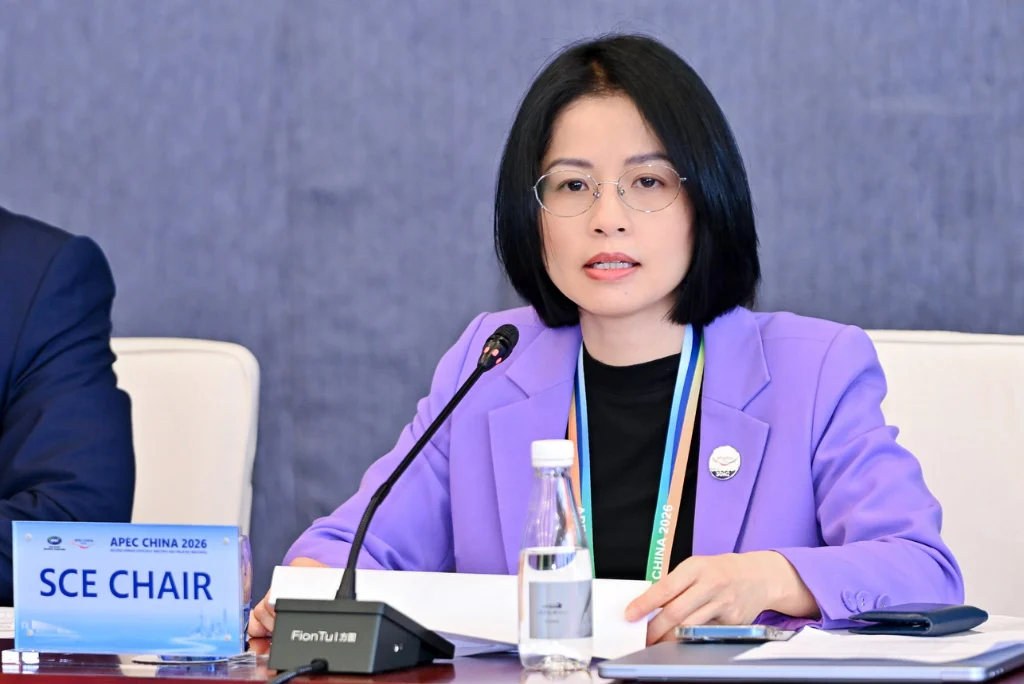
Senior officials from the 21 Asia-Pacific Economic Cooperation (APEC) member economies convened in Suzhou, China, for the Steering Committee on Economic and Technical Cooperation (SCE) meeting. The gathering focused on accelerating actions to bridge development gaps and advance sustainable and inclusive growth across the region.
The committee reviewed a wide range of initiatives designed to deliver practical capacity-building programs, ensuring that all member economies possess the necessary tools to navigate evolving global economic landscapes.
Aligning with the APEC 2026 Priorities
The discussions heavily centered on aligning upcoming projects with the host economy’s overarching pillars for the year: promoting economic openness, driving technological innovation, and deepening comprehensive cooperation. Delegates emphasized that economic and technical cooperation remains the foundational bedrock required to turn high-level policy goals into tangible, on-the-ground realities for businesses and communities alike.
Sub-committees and working groups reported significant progress in key areas, including digital literacy, climate resilience, and supply chain modernization.
“Economic and technical cooperation is not just a secondary pillar of APEC; it is the engine that drives capacity building and ensures equitable development across our diverse economies. By equipping members with shared knowledge and technical expertise, we strengthen the collective resilience of the entire Asia-Pacific region.”
— Ambassador Chen Xu, Chair of the APEC 2026
Senior Officials’ Meeting.
Driving Digital Innovation and Inclusivity
A primary highlight of the SCE meeting was the evaluation of the digital economy workstream. With rapid advancements in frontier technologies, officials underscored the urgency of addressing the digital divide. The committee approved several new capacity-building projects specifically tailored to help small and medium enterprises (SMEs) adopt artificial intelligence and paperless trade frameworks safely and efficiently.
Furthermore, gender mainstreaming and the economic empowerment of women were reinforced as cross-cutting themes. Members reviewed progress on initiatives aimed at increasing women’s participation in science, technology, engineering, and mathematics (STEM) fields, as well as supporting women-led businesses within regional supply chains.
Ensuring Sustainable Development and Structural Reform
The committee also tackled structural reforms necessary to foster green growth. Officials shared best practices on implementing sustainable agricultural methods, managing marine ecosystems, and optimizing renewable energy integration.
By tying technical cooperation directly to environmental sustainability, the SCE aims to help vulnerable economies mitigate the harsh impacts of climate change while maintaining stable economic momentum.
As the first extensive cluster of technical meetings concludes, the outcomes and recommendations endorsed by the SCE will be forwarded to the upcoming Senior Officials’ Meeting (SOM). These technical initiatives will serve as the framework for ministerial discussions later this year, charting a clear, actionable path toward achieving the long-term goals of the Putrajaya Vision 2040.
Reference
APEC. 2026. “APEC Senior Officials Deepen Regional Economic and Technical Cooperation.” Asia-Pacific Economic Cooperation, May 20. (https://www.apec.org/press/news-releases/2026/0520_SCE)