
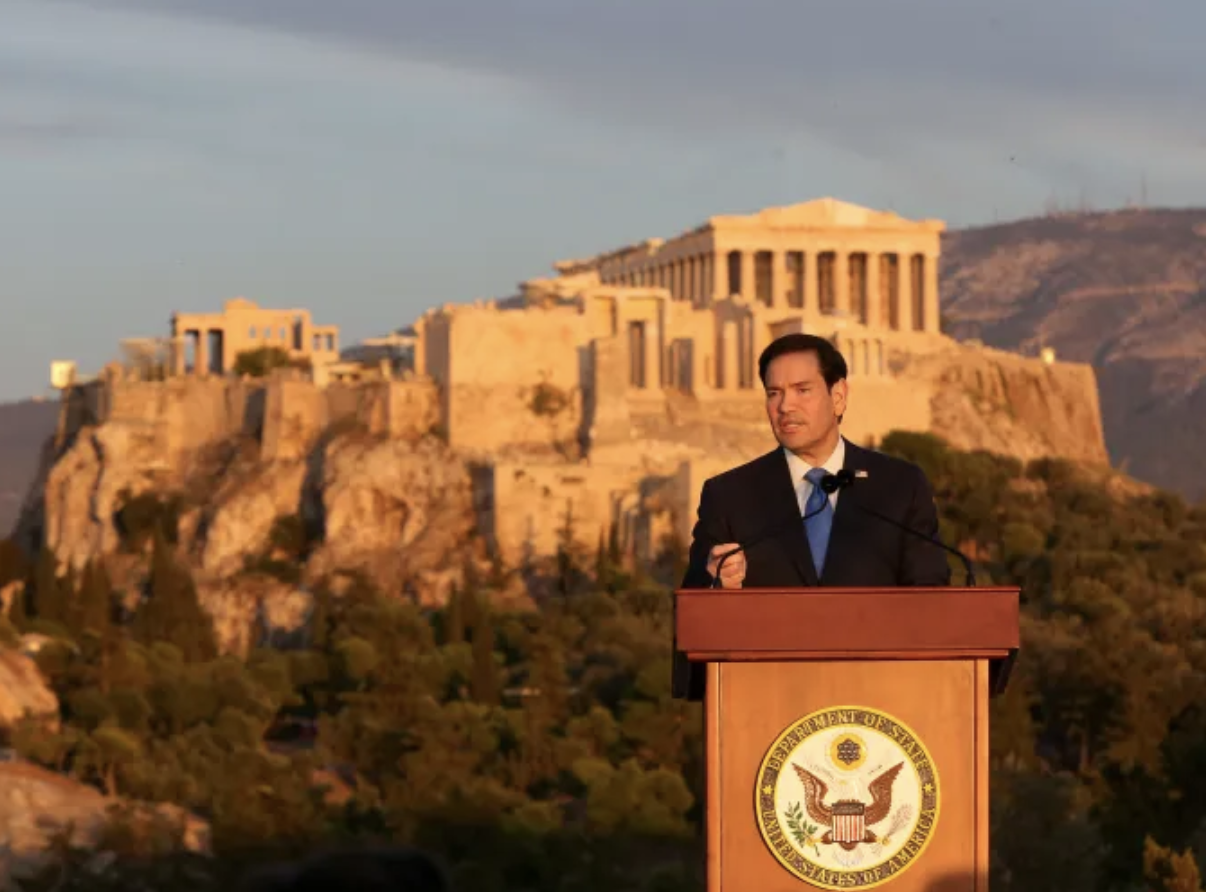
A fierce diplomatic controversy surrounding Rubio rhetoric Tehran backlash Iran civilization comparisons erupted across the Iranian political spectrum on Friday. US Secretary of State Marco Rubio delivered a high-profile address against the backdrop of the Acropolis in Athens. During his speech, Rubio invoked the ancient Greco-Persian wars and the 480 BC sack of Athens by Xerxes I to frame the ongoing military confrontation between Washington and Tehran.
Iranian political leaders and foreign ministry officials rejected the historical comparisons, describing the rhetoric as an anachronistic attempt to justify contemporary coercion. Foreign Ministry spokesman Esmaeil Baghaei stated that Washington resorted to selective historical narratives to legitimize military actions following naval blockades and regional disruptions.
Concurrently, senior Iranian security officials countered Rubio’s historic references by recalling the capture of Roman Emperor Valerian by Persian King Shapur I in 260 AD. Analysts emphasized that utilizing 2,500-year-old conflicts alienates the general Iranian population while failing to address the severe economic impact of modern naval blockades on ordinary citizens.
Foreign policy experts suggest that Rubio aimed to create a unified civilizational narrative to align European allies with US strategic goals in the Middle East. Meanwhile, the speech coincides with ongoing disruptions in the Strait of Hormuz and efforts by Washington to stabilize global energy markets through alternative supplies.
Consequently, media outlets and historians in Tehran continue to condemn the civilizational framing. Scholars argue that portraying an ancient living civilization as a monolithic adversary undermines prospective diplomatic avenues between the two nations.
Reference
Al Jazeera. (2026, October 10). ‘Anachronism’: Rubio’s civilisational rhetoric draws Iranian backlash. Al Jazeera. https://www.aljazeera.com/news/2026/10/10/anachronism-rubios-civilisational-rhetoric-draws-iranian-backlash