
The Transition from Dissent to Executive Pacification
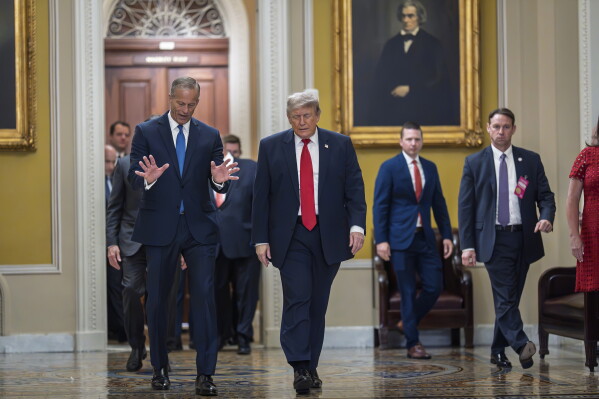
By June 24, 2026, the relationship between President Donald Trump and Republican senators had transitioned from contained friction to an explicit, face-to-face clash at the Capitol. GOP lawmakers, after being sharply berated by the president over their opposition to the war in Iran, immediately reversed a previous war powers vote to appease the executive. As a consequence, the focus of the legislative session shifted drastically from domestic affordability issues toward an explicit demonstration of political alignment with the White House. This suggests that Trump is capitalizing on his control over the party to override congressional attempts to limit his military actions and reassert unilateral authority over the international conflict.
Origins of the Conflict and the Collapse of Consensus
Originally, Republican efforts in Congress sought to advance a legislative agenda focused on family economics, bipartisan initiatives, such as a housing bill designed to lower costs for voters. However, the origin of this latest internal crisis lies in the collapse of that strategic consensus due to escalating executive pressure. Trump unexpectedly blocked the public signing ceremony for the housing bill, using it as leverage to force the Senate to pass the SAVE America Act. The report emphasizes that majority lawmakers are no longer operating within an autonomous institutional framework, but rather under the dilemma of yielding to presidential demands or risking public retribution ahead of the upcoming events.
The Structure of the Multi-Front Pressure Strategy
The structure of this latest political collision is organized around three layers of technical and political friction. First, is the “legislative blockade” tactic, which works by freezing a popular housing bill, the executive pressures his own senators, conditioning a domestic achievement on their submission regarding foreign policy. Second is the internal disciplinary variable, as the report documents tense, direct exchanges with critical lawmakers like Senator Bill Cassidy, whom Trump verbally targeted after he voted with Democrats. Finally, the active mediation of key White House figures, including Vice president JD Vance and special envoy Steve Witkoff, who delayed last minute meetings to neutralize dissent and secure the senators’ sudden change of stance.
Synthesis of the Normalization of Obedience and the New Party Order
The White House’s success in bending the Senate vote to expose a paradox where the “normalization of party obedience” dilutes institutional checks and balances precisely when they are most needed. This represents a political wear-down phenomenon where continuous executive challenges to congressional prerogatives result in weaker legislative resistance with each cycle, granting the presidency nearly unlimited military maneuverability. Ultimately, it is clear that these parliamentary maneuvers are a reminder that while Congress attempts to focus on voter priorities, legislative autonomy in the face of executive power is reaching a point of no return.
Reference: Associated Press. (2026, June 24). Senate Republicans hold new vote on war powers after Trump berated them at Capitol meeting. AP News. https://apnews.com/article/trump-capitol-republican-senators-968c1454ede461d2db413790670c07df