
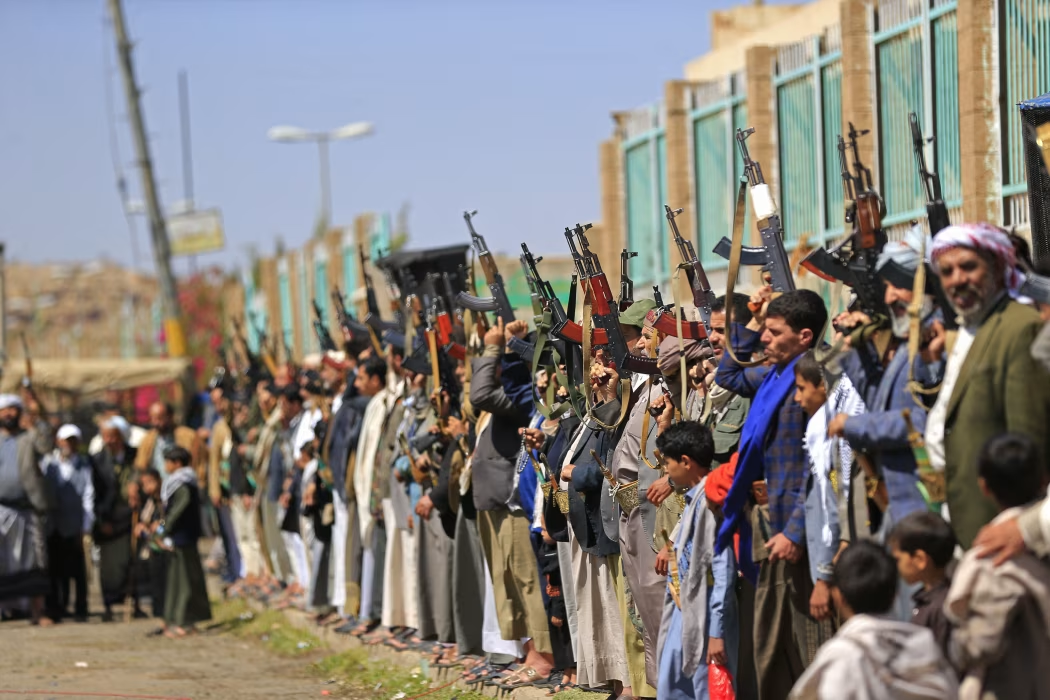
Houthis Seek to Expand Missile Production
According to a new report by Conflict Armament Research, Houthi militants in Yemen are trying to produce advanced medium-range ballistic missiles. To do so, they are using parts delivered from China. The research group investigates weapons and their supply chains in conflict zones.
Specifically, the components would allow the Iran-backed group to make a version of the Kheibar Shekan, one of Iran’s most powerful weapons. A Houthi missile of this type would have a range of up to about 1,200 miles. As a result, it could reach all of Saudi Arabia and Israel, increasing the threat posed by the group.
Missile Capabilities and Regional Reach
The Kheibar Shekan is a cheap, mobile and precision-guided weapon first displayed in Tehran in 2022. Subsequently, Iran used it with some success against American bases during the war with the United States last spring. Moreover, its ability to maneuver around air defenses makes it more effective than other Iranian-made missiles.
In some variants, the nose section carrying the warhead separates during the final phase of flight. Then, a small engine adjusts its direction as it approaches the target at about 6,000 miles an hour.
Escalating Attacks and Growing Autonomy
Meanwhile, the Houthis have intensified their attacks on Saudi Arabia in recent weeks, trying to break a blockade led by Riyadh. Those attacks, together with Iran’s continued strikes on commercial ships in the Strait of Hormuz, have pushed oil prices higher. Consequently, they have angered President Trump.
Experts say the Houthis have become more autonomous after years of relying on Iran and its ally Hezbollah. Previously, Tehran sent missiles for the group to reassemble. Now, however, Mohammed al-Basha says the Houthis have developed domestic manufacturing capabilities.
In addition, they use artificial intelligence in drone and missile software. They have also diversified their supply chains and established procurement networks.
Chinese Components and Arms Embargo Concerns
Chinese companies are now the largest source of seized goods destined for the Houthis. The group is designated a terrorist organization by the United States and is subject to a U.N. arms embargo. Furthermore, most of its drone-parts suppliers sanctioned by Washington are based in China.
Henry Thompson formerly served on the U.N. sanctions panel on Yemen. According to Thompson, evidence shows imports of Chinese solid-fuel missile components for at least two years. These medium-range missiles would allow deeper strikes into Saudi Arabia. Additionally, they could carry larger payloads than cruise missiles and drones.
China says it respects the arms embargo. However, some components were designed specifically for missiles. Michael Knights said the case exposes Beijing’s limited willingness and ability to control the final destinations of its dual-use technologies.
Referencia
Norman, L., & Faucon, B. (2026, October 13). The Houthis are building an advanced missile with Chinese parts. The Wall Street Journal. https://www.wsj.com/world/middle-east/houthi-missile-china-parts-5c2b2516