
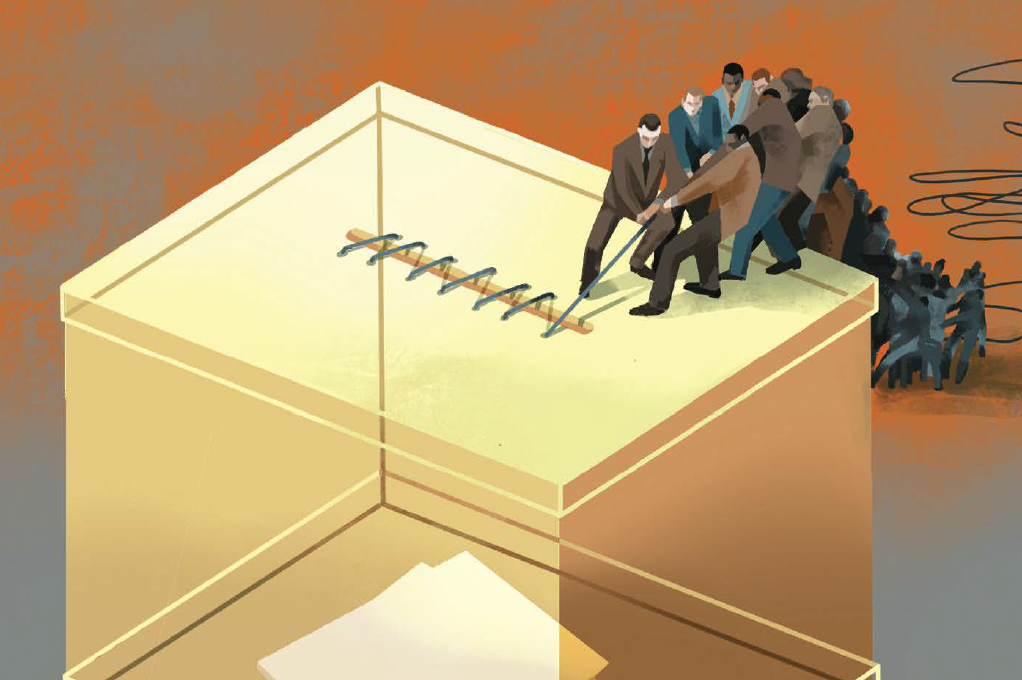
Authoritarian Cooperation Is Reshaping the Global Order
Nic Cheeseman, Matías Bianchi & Jennifer Cyr | Foreign Affairs, January/February 2026
In The Illiberal International, Nic Cheeseman, Matías Bianchi, and Jennifer Cyr argue that authoritarian regimes are no longer operating in isolation. Instead, they increasingly cooperate across borders in ways that reshape global politics. This cooperation does not resemble a formal alliance like the Cold War blocs. Rather, it functions as a flexible and adaptive network.
A Networked Authoritarian Order
The authors explain that today’s authoritarian cooperation operates through diplomatic protection, economic assistance, military coordination, and information exchange. Countries such as China, Russia, Iran, and others support one another in international institutions, shielding partners from sanctions and criticism.
Moreover, this cooperation extends beyond governments. It includes intelligence sharing, digital surveillance tools, and media influence strategies. As a result, authoritarian regimes strengthen one another’s capacity to resist both domestic dissent and international pressure.
Cross-Border Influence and Democratic Vulnerability
The article highlights how illiberal cooperation increasingly affects democratic states. Authoritarian governments fund sympathetic political movements, spread disinformation, and use economic leverage to influence political outcomes abroad.
At the same time, new technologies amplify this influence. Digital tools allow regimes to export surveillance practices and narrative control strategies. Consequently, democratic systems face not only internal polarization but also coordinated external pressure.
The Strategic Implications
The authors argue that democracy is not simply declining within individual countries—it is facing structured international competition. Authoritarian states now possess greater economic resources and diplomatic coordination than in previous decades.
Therefore, democratic governments must recognize the scale of this cooperation. Without strategic coordination of their own, liberal states may struggle to counterbalance the growing influence of the illiberal network.
Ultimately, the article frames global politics as entering a new phase. The challenge is no longer only domestic democratic resilience, but also international democratic cooperation.
Reference
Cheeseman, N., Bianchi, M., & Cyr, J. (2026). The illiberal international: Authoritarian cooperation is reshaping the global order. Foreign Affairs, 105(1). https://www.foreignaffairs.com/