
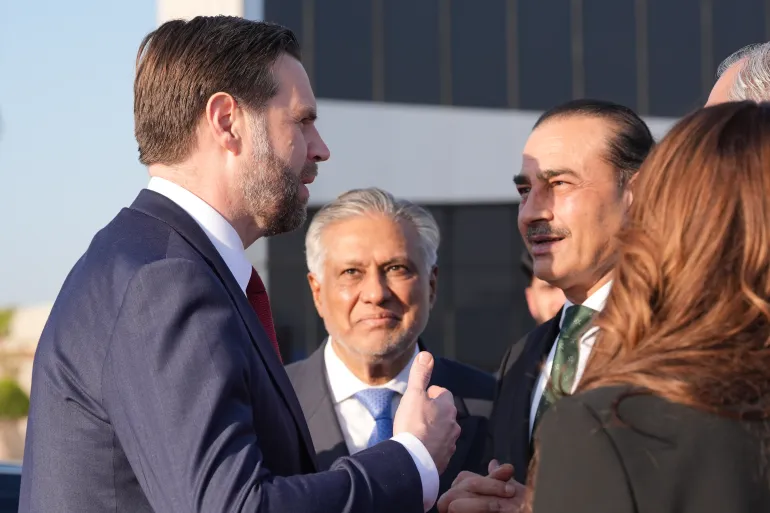
The Transition from Diplomatic Hope to Negotiated Deadlock
Following over 12 hours of face-to-face (indirect) negotiations in Islamabad, the United States and Iran have transitioned from a phase of “exploratory dialogue” to a state of Diplomatic Breakdown. The report highlights that despite Pakistan’s intensive efforts to bridge the gap, the delegations led by U.S. Vice President JD Vance and Iranian Foreign Minister Abbas Araghchi departed without a signed Memorandum of Understanding (MoU). Consequently, the 14-day ceasefire—originally designed to be a “cooling-off” period—is now under extreme strain. This suggests that the “window of opportunity” is rapidly closing as both nations revert to their respective military postures.
Origins and the “Six Points” of Contention
Originally, the Islamabad talks were intended to stabilize the ceasefire and define the terms for a permanent end to the “Stone Age” campaign. However, the origin of the breakdown lies in the failure to agree on six non-negotiable pillars:
- Nuclear Dismantlement: U.S. demands for the total removal of highly enriched uranium stockpiles.
- The “Lebanon Linkage”: Iran’s insistence that any ceasefire must include a halt to Israeli operations in Lebanon (Operation Eternal Darkness).
- Sanctions vs. Assets: While the U.S. reportedly unfroze some assets as a “good faith” gesture (Article #1.4), it refused to lift the broader maritime blockade until enrichment facilities were dismantled. For 2026, these “shifting goalposts” (as Tehran calls them) have turned the negotiation into a zero-sum game. Furthermore, the report emphasizes that the April 13 Port Blockade announcement by the U.S. acted as the final catalyst for the Iranian delegation’s departure.
The Structure of Pakistan’s “Setback but Not Failure”
The structure of Pakistan’s mediation strategy is organized around “Resuscitation” rather than immediate resolution. Specifically:
- Modest Goal Realignment: Islamabad has shifted from seeking a “Peace Treaty” to merely securing a “Protocol to Keep Talking” to prevent the ceasefire from expiring without a follow-up.
- Military-Diplomatic Nexus: The role of the Pakistani Army Chief has been central, utilizing military-to-military channels to interpret Iranian intentions for the Pentagon.
- Institutional Friction: The article highlights the contrast between Pakistan’s “agile” diplomacy and India’s perceived “caution” in the conflict, positioning Islamabad as the indispensable backchannel for 2026.
Synthesis of “Maximalism” and the Ceasefire Decay Paradox
The successful “resuscitation” of the talks now faces a paradox where the fragility of the ceasefire is being used as a weapon by both sides. This represents “Maximalist Bargaining” in Political Science: both sides believe that by letting the clock run down toward the end of the 14 days, they can force the other to blink first. There is a clear intent in Islamabad to maintain the “shuttle” channel, but the structural reality is that the U.S. has already moved to Phase 2 (the port blockade), signaling that the time for talking is effectively over. Ultimately, the Al Jazeera report provides a stable warning: when “goodwill begets enmity,” the only remaining currency is force.
Reference
Al Jazeera. (2026, April 13). Pakistan eyes narrow window to resuscitate US-Iran talks after breakdown. Al Jazeera News South Asia. https://www.aljazeera.com/news/2026/4/13/pakistan-eyes-narrow-window-to-resuscitate-us-iran-talks-after-breakdown