
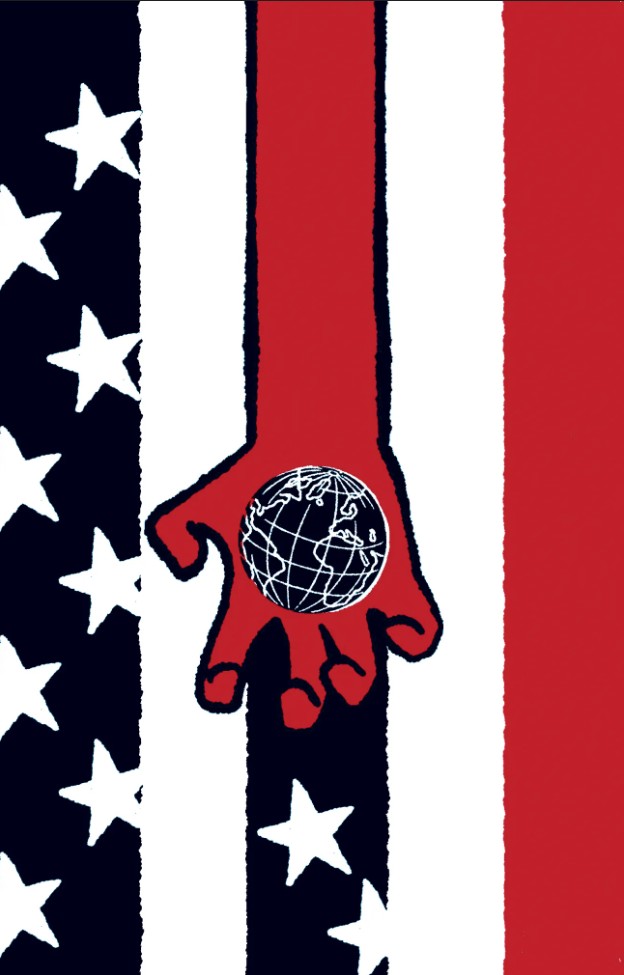
How Trump Wields American Power
Stephen M. Walt | Foreign Affairs, March/April 2026
Predatory Hegemon and American Power
In The Predatory Hegemon, Stephen M. Walt argues that Donald Trump’s approach to foreign policy is best understood as predatory hegemony. Rather than sustaining alliances or strengthening institutions, this model treats American power as a tool to extract concessions, tribute, and asymmetric advantages from both allies and adversaries.
Walt contrasts this approach with earlier forms of U.S. leadership. After World War II, the United States often acted as a “benevolent hegemon,” using its dominance to build institutions, stabilize markets, and reinforce alliances. By contrast, a predatory hegemon seeks relative gains above all else, prioritizing short-term leverage over long-term systemic stability.
Economic Leverage and Coercion
According to Walt, Trump’s foreign policy relies heavily on economic coercion. Tariffs, sanctions, and threats of withdrawal from security commitments are used to pressure other states into favorable deals. Trade relationships are framed as zero-sum transactions in which the United States must “win.”
Moreover, this strategy links security guarantees to financial contributions. Allies are expected to increase defense spending or risk reduced American support. In this way, economic pressure becomes central to diplomacy.
Institutional Erosion and Global Consequences
The article emphasizes that predatory hegemony undermines international institutions. Trump’s skepticism toward multilateral agreements—such as climate accords or trade frameworks—reflects a preference for bilateral bargaining, where leverage can be maximized.
However, Walt argues that this strategy carries long-term risks. By weakening alliances and encouraging distrust, the United States may reduce its own influence. A predatory hegemon extracts gains in the short term but potentially erodes the foundations of its own leadership.
Ultimately, the essay presents this approach as strategically shortsighted. While coercive tactics may yield immediate concessions, they risk diminishing America’s credibility, soft power, and structural advantages in the global order.
Reference
Walt, S. M. (2026). The predatory hegemon: How Trump wields American power. Foreign Affairs, 105(2), 8–18. https://www.foreignaffairs.com/