
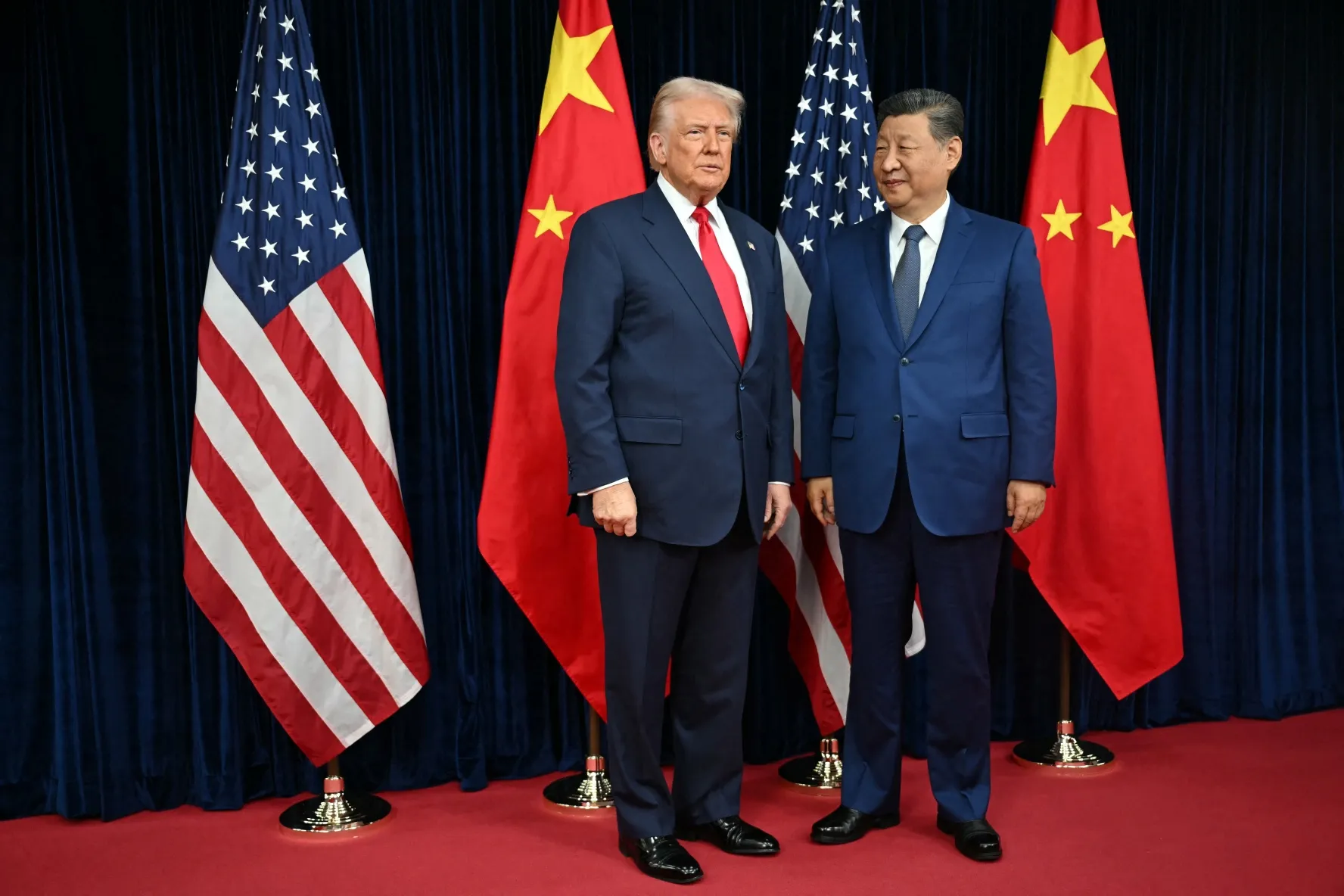
U.S.-China relations under Donald Trump’s second presidency have entered an unexpected phase marked by reduced tensions and pragmatic engagement rather than open confrontation. Contrary to widespread expectations, the administration moved away from framing China as a central ideological or strategic enemy and instead emphasized transactional competition focused on trade, technology and concrete deliverables. Tariffs and export controls have been treated less as permanent tools of containment and more as leverage in negotiations. This shift was reinforced by the October 2025 meeting between Donald Trump and Xi Jinping in Busan, where both leaders agreed to a one-year pause in the trade war. The truce produced a period of relative stability that surprised many observers and reshaped assumptions about the short-term direction of the bilateral relationship.
The Three Possible Futures
For this starting point, three broad trajectories emerge for how relations could evolve over the next several years. One possible outcome is a gradual stabilization of ties through sustained cooperation. In this scenario, both governments would seek to transform the temporary truce into a more durable framework for engagement. Economic relations would improve through reduced trade barriers, increased Chinese purchases of U.S. goods, and selective easing of technology restriction. Regular high-level dialogue would become institutionalized, and cooperation could expand to global challenges such as public health, climate issues, and regional security. This pathway would not eliminate competition, but it would manage it within predictable and mutually accepted boundaries.
A second possibility is a return to confrontation following unmet expectations. If Beijing fails to deliver outcomes that Washington views as meaningful, such as narrowing trade imbalances, curbing illicit fentanyl precursor flows, or opening key sectors to U.S. firms, the current calm could unravel quickly. In this scenario, frustration would drive a renewed emphasis on economic pressure, including harsher export controls, expanding sanctions, and stronger efforts to limit China’s access to advanced technologies. Diplomatic engagement would diminish, and rhetoric on both sides would harden, reframing the relationship as a long-term struggle with limited room for compromise.
The most plausible trajectory lies between these two extremes and centers on strategic caution rather than reconciliation. Under this path, both countries would maintain the truce while prioritizing domestic resilience and reduced dependence on one another. The United States would continue diversifying supply chains and investing in critical industries, while China would accelerate efforts toward technological self-sufficiency. Neither side would seek a major breakthrough, but both would avoid actions that could trigger escalation. Competition would persist, yet managed in a way that buys time and limits mutual vulnerability rather than pursuing outright decoupling.
Overall, the future of U.S. – China relations remain contingent on leadership choices, domestic political pressures, and unforeseen crises. While the current period of calm suggests a preference for stability, it rests on fragile foundations. Incremental cooperation, cautious competition and strategic hedging now coexist, leaving the relationship open to multiple outcomes depending on how both sides navigate their competing interests.
Reference:
Hass, R. (2026, January 26). Three potential pathways for US-China relations under Trump. Brookings Institution. https://www.brookings.edu/articles/three-potential-pathways-for-us-china-relations-under-trump/