
Breakdown of trade negotiations
Trade negotiations between the United States and Canada collapsed after weeks of discussions aimed at reaching a new agreement. The breakdown prompted Washington to impose new tariffs on approximately $20 billion worth of Canadian imports.
Specifically, the United States introduced tariffs of 50% on a range of Canadian products, including electronics, paper products, construction materials and agricultural goods. The measures took effect after both governments failed to resolve their remaining differences.
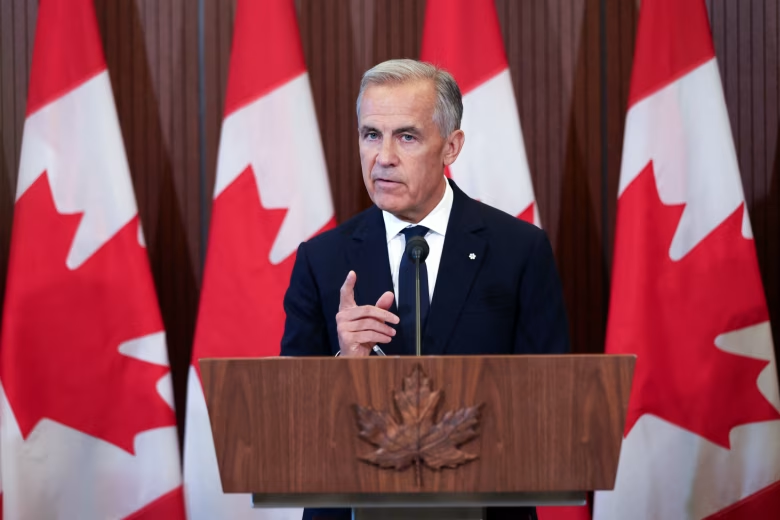
Meanwhile, Canadian Prime Minister Mark Carney announced that Ottawa would respond with equivalent tariffs on selected U.S. products. The Canadian measures are scheduled to begin on September 8, the Tuesday following Labour Day.
However, the dispute represents more than a disagreement over individual products. Both governments are increasingly debating the broader structure of their economic relationship and the future of North American trade integration.
Tariffs and competing positions
The Trump administration argued that Canada had failed to accept U.S. proposals during the final stage of negotiations. U.S. Trade Representative Jamieson Greer accused Canadian negotiators of introducing additional demands that prevented an agreement.
Conversely, Carney described the final U.S. proposals as unfair and economically damaging to Canada. The Canadian government argued that accepting the terms could weaken its economic interests and negotiating position.
Furthermore, the dispute involves several strategic sectors. Automotive trade, steel, aluminum, agricultural products and other industrial goods remain central to the negotiations. These industries are deeply integrated across the U.S.-Canada border.
Consequently, the tariffs could increase costs for companies that depend on cross-border inputs. They could also place additional pressure on consumers and manufacturers in both countries as businesses adjust their supply chains.
Implications for North American trade
The escalation creates uncertainty for the future of the United States-Mexico-Canada Agreement (USMCA). The new tariffs affect products that had previously benefited from the regional trade framework, raising questions about the durability of existing North American commercial arrangements.
Moreover, prolonged tariffs could encourage Canadian companies to diversify their export markets and reduce their dependence on the United States. Carney has already emphasized the importance of expanding Canada’s international trade relationships and strengthening domestic economic capacity.
International Relevance
The news has a high international relevance because it involves the two economies at the center of one of the world’s most integrated regional trading relationships. The escalation demonstrates how tariff measures and failed negotiations can affect international commerce, production networks and economic cooperation between strategic partners.
For the OGU, the note is particularly relevant because it allows analysis of the relationship between international trade, economic diplomacy, regional integration, supply chains and North American economic relations. The dispute is also significant for Mexico because changes in U.S.-Canada trade relations could affect the broader framework of the USMCA and the competitiveness of regional supply chains. Consequently, the evolution of the conflict will be important for understanding the future of economic integration in North America.
Reference / Referencia: The Wall Street Journal. (2026, August 22). Canada Announces New Post-Labor Day Tariffs. Artículo original en The Wall Street Journal.