
The Transition from State Propaganda to “Memetic Subversion”
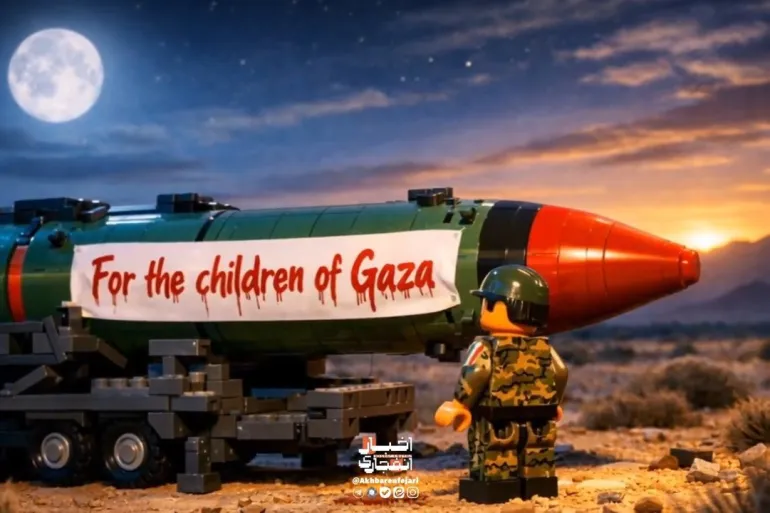
By April 2026, the Iranian messaging strategy has transitioned from dry, state-controlled press releases to a sophisticated campaign of Memetic Subversion. The report highlights that a series of AI-generated, Lego-style animation videos—titled “Vengeance for All”—has successfully pierced the Western media bubble. Consequently, while the U.S. maintains military superiority, Iran is winning the “Narrative War” by utilizing viral, high-quality animation to mock the American administration and humanize the Iranian response. This suggests that the Revayat-e Fath Institute, the likely producer of the content, has successfully adapted to the 2026 digital landscape by blending humor with geopolitical grievances.
Origins and the “Minab Massacre” Catalyst
Originally, Iranian propaganda was focused on internal morale and resistance rhetoric. However, the origin of the “Lego Strategy” lies in the Minab School Attack earlier in the war, which killed dozens of schoolchildren. To bypass Western censorship and fatigue, Iranian creators turned to “Lego-fied” depictions of the event to draw attention to civilian casualties without triggering “graphic content” filters. For 2026, this has evolved into a sprawling “Multiverse” where blocky, Lego-versions of President Trump and Prime Minister Netanyahu are outsmarted by heroic Iranian figures. Furthermore, the report emphasizes that the YouTube Ban on these videos (Article #2.2) backfired, turning the “Vengeance for All” series into a “forbidden fruit” that garnered millions of mirror-views on X and Telegram.
The Structure of “Childlike” Warfare
The structure of the “Lego War” is organized around three distinct psychological hooks:
- The Satirical Deconstruction of Power: By portraying President Trump as a petulant “Lego figure” in an American flag Teletubby outfit, the videos attempt to strip away the “intimidation factor” of the U.S. presidency.
- Universal Accessibility: The “Lego” aesthetic is a global visual language. It allows Iran to convey complex geopolitical arguments—such as the illegality of the Strait of Hormuz blockade (Article #105)—to a global audience that might otherwise tune out a standard political speech.
- Institutional Friction: The article highlights the frustration in the Pentagon’s Information Operations cell, which has struggled to counter these “trolls” because responding directly to a Lego video often makes the U.S. government look humorless or absurd.
Synthesis of the “Asymmetric Narratives” and the Digital Front
The success of the “Vengeance for All” campaign now faces a paradox: while it has “won the narrative” among the global youth and anti-war activists, it has not altered the Kinetic Reality of the U.S. blockade. This represents a divergence in Political Science between Narrative Power and Structural Power. There is a clear intent in Tehran to prove that they cannot be “silenced” by Western tech platforms, but the structural weight of the Islamabad Impasse (Article #107) remains. Ultimately, the Al Jazeera report clarifies that in 2026, the “Last Stand” of a nation is no longer fought just in the streets, but in the server farms where the “truth” is animated one block at a time.
Reference
Al Jazeera. (2026, April 17). ‘Vengeance for all’: How Iran’s Lego videos won narrative war against Trump. Al Jazeera NewsFeed. https://www.aljazeera.com/news/2026/4/17/vengeance-for-all-how-irans-lego-videos-won-narrative-war-against-trump