
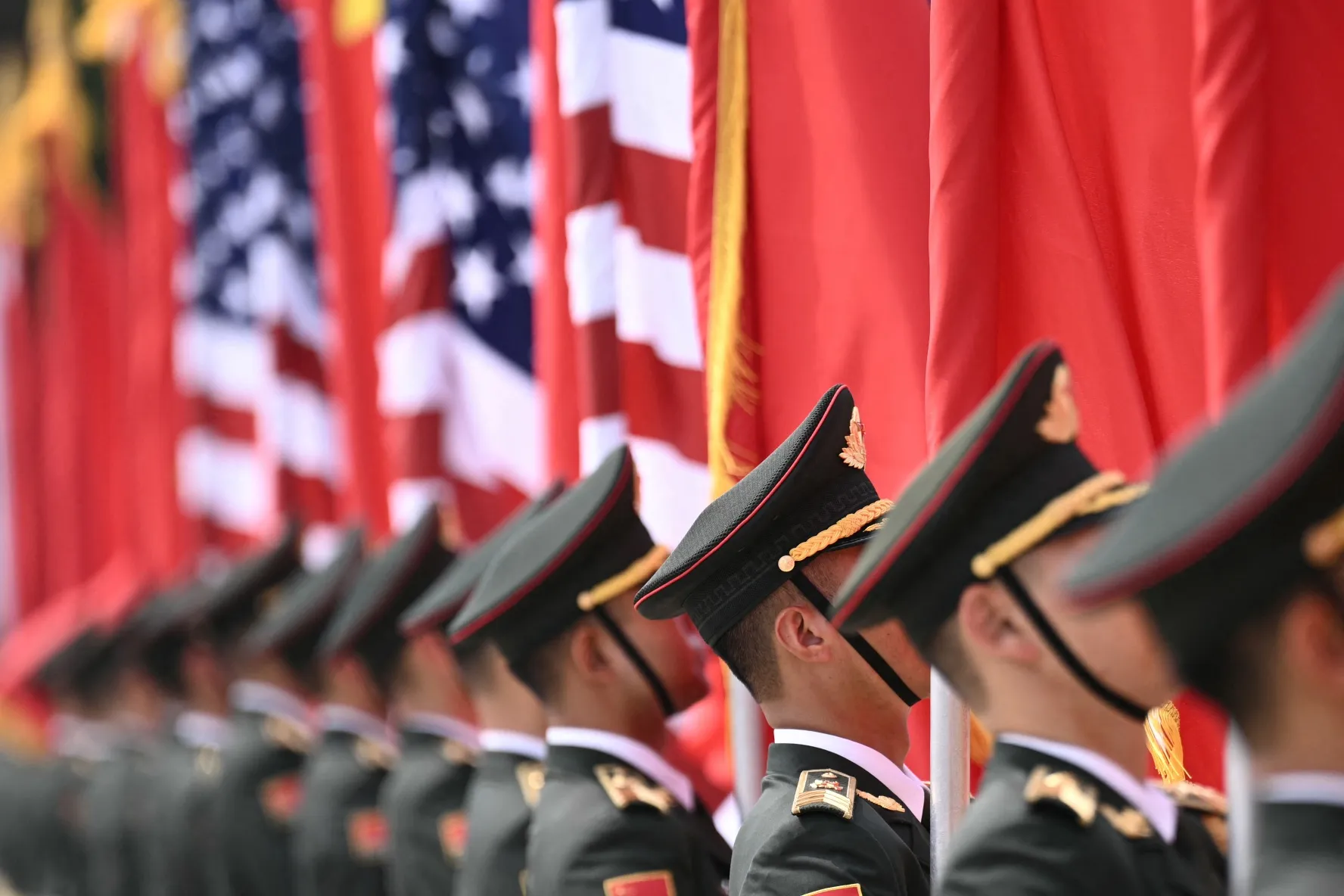
The U.S.-China military balance has become a major issue in international security. China has expanded and modernized its military over the last two decades. As a result, many experts now ask whether the United States still holds a clear advantage. A Brookings article answers this question by presenting three different expert views.
Different Strengths Shape the Balance
The experts explain that there is no simple answer. Military power depends on the type of conflict and where it takes place. For example, the United States continues to lead in global logistics, overseas bases, and naval operations far from home. In addition, its long experience working with allies gives Washington an important advantage.
However, China has made major progress in recent years. It has improved its navy, missile systems, and air defenses. Because of this, Beijing has stronger military capabilities close to its own territory. This is especially true around Taiwan and the First Island Chain.
More Than Weapons
The Brookings analysis also shows that advanced weapons alone would not decide a future conflict. Instead, several other factors would shape the outcome. These include logistics, industrial capacity, political leadership, and support from allies. Moreover, geography would play an important role because China would operate much closer to the battlefield.
The experts also note that each conflict would present different challenges. Therefore, no single country has a permanent advantage in every situation.
Why the U.S.-China Military Balance Matters
The authors agree that the U.S.-China military balance continues to change. Although the United States remains stronger in some areas, China has reduced the gap in others. As a result, both governments must carefully evaluate the risks of military competition.
Overall, the Brookings article argues that understanding the military balance requires more than comparing weapons or troop numbers. Decision-makers must also consider geography, alliances, logistics, and political choices. This broader view can help reduce miscalculation and support stability in the Indo-Pacific.
Reference
Culver, J., Jones, B., & O’Hanlon, M. E. (2026, July 14). Who holds the advantage? Three perspectives on the U.S.-China military balance. Brookings Institution. https://www.brookings.edu/articles/who-holds-the-advantage-three-perspectives-on-the-us-china-military-balance/