
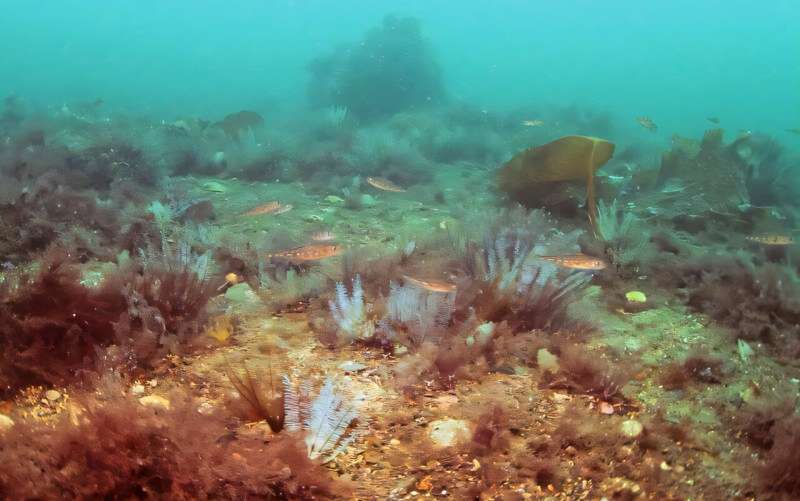
The article explains why the health and integrity of the seafloor are essential to the functioning of the Earth system. Although the ocean floor is often considered a remote and inactive environment, it contains complex ecosystems made up of reefs, sponge and mussel beds, burrowing organisms, kelp forests and microbial communities. These organisms contribute to nutrient cycling and regulate the exchange of carbon between sediments and seawater. The article emphasizes that human activities are increasingly reaching the seafloor, from coastal areas to depths of more than 6,000 meters. Bottom trawling alone can disturb up to 2% of the global seafloor each year.
One of the most important functions of the seafloor is its role in the global carbon cycle. Large quantities of organic carbon are stored in marine sediments, particularly on continental shelves. When these sediments are repeatedly disturbed, some of the stored carbon can be released. Global models suggest that bottom trawling could release more than 100 million tonnes of carbon from sediments every year, although researchers emphasize that there is still uncertainty about how much of this carbon ultimately reaches the atmosphere as additional carbon dioxide. The seafloor also contributes to nitrogen, phosphorus and carbon cycling, which supports marine food webs and ecosystem processes.
The article uses the Baltic Sea as an example of how long-term human pressure can affect marine ecosystems. Human activities, together with climate change, acidification, eutrophication and oxygen depletion, have significantly altered the region’s seafloor. According to the researchers, no square meter of the Baltic Sea floor can currently be considered completely pristine and free from human influence. Some of these changes may persist for decades or even become irreversible, making the Baltic Sea an example of what could happen in other marine regions if pressure on the seafloor continues to increase.
Finally, the researchers argue that protecting the seafloor requires a broader approach to marine management. Environmental assessments should consider not only individual species and habitats but also functions such as carbon storage and nutrient cycling. The researchers also emphasize the importance of protecting deep-sea ecosystems and carbon-rich sediments because they can recover very slowly after disturbance. The Planetary Health Check 2026 has therefore incorporated seafloor integrity as an important part of understanding the planet’s condition. However, researchers note that there is still no established global indicator or threshold for seafloor integrity, so more scientific monitoring is needed.
Link to the article: DOWNLOAD
Reference
- Beck, K. (2026, September 23). Why a healthy seafloor matters for the Earth system. Phys.org. Original article on Phys.org