
World Cup Security in Mexico
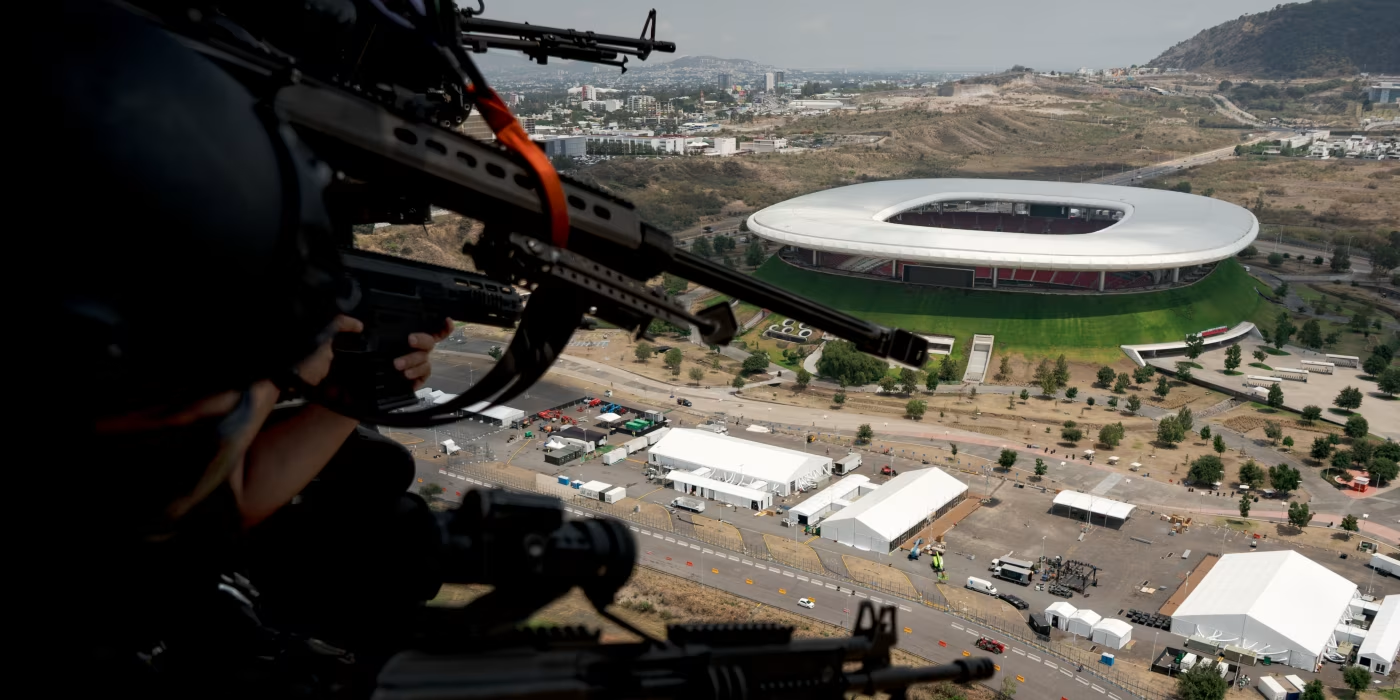
Mexico is facing intense international attention as the 2026 FIFA World Cup begins in the country. According to The Wall Street Journal, authorities are deploying a large security operation around host cities such as Mexico City, Monterrey and Guadalajara. The situation is especially sensitive in Jalisco, where Guadalajara’s Akron Stadium will host several matches and where cartel violence has recently exposed the depth of Mexico’s security crisis.
Jalisco and Cartel Violence
The report highlights the contrast between the global celebration of the World Cup and the violence surrounding parts of Mexico. In Zapopan, near Guadalajara, 89 bags of human remains have been found over the past year. The area is located in Jalisco, a state strongly associated with the Jalisco New Generation Cartel, one of the country’s most powerful criminal organizations. This makes the tournament not only a sporting event, but also a test of the government’s ability to manage security under global scrutiny.
Security Measures and Public Image
Mexican authorities are investing millions of dollars in security equipment and deploying around 100,000 personnel across host sites. Measures around stadiums include drones, antidrone systems, armored vehicles and heavy police presence. These efforts aim to reassure visitors and protect the image of a safe tournament. However, the strategy also reflects the challenge of separating tourist zones from the broader reality of organized crime and violence in the country.
Activists and the Disappeared
The World Cup has also become a platform for activists and families of the disappeared. More than 130,000 people are missing across Mexico, many in cases linked to organized crime or collusion with authorities. Groups in Jalisco are using the tournament’s visibility to place images of missing people near fan zones and stadium areas. Their goal is to make international visitors aware that behind the sporting celebration there is a continuing human rights crisis.
International Relevance
Overall, the WSJ report shows how megaevents can place domestic security problems under global observation. Mexico’s World Cup challenge is not only to protect tourists, but also to confront the international visibility of cartel violence, disappearances and public mistrust. For this reason, the issue matters beyond Mexico: it connects organized crime, human rights, tourism, global sports governance and the political responsibility of host governments.
Reference: The Wall Street Journal. (2026, June 11). World Cup puts Mexico’s cartel crisis on the global stage. https://www.wsj.com/world/americas/world-cup-puts-mexicos-cartel-crisis-on-the-global-stage-c1933554