
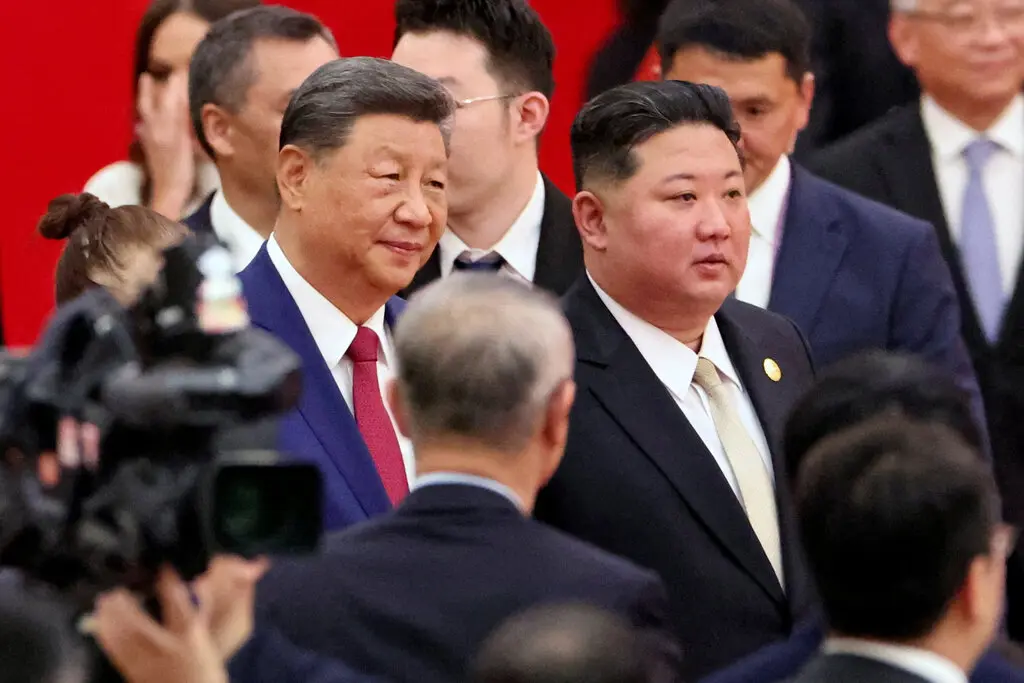
Xi Jinping Returns to Pyongyang
Chinese President Xi Jinping is expected to visit North Korea next week, marking his first trip to Pyongyang since 2019. The visit comes at a sensitive moment for Northeast Asia, as North Korea strengthens its ties with Russia and continues expanding its nuclear program. According to reports, Xi’s trip reflects Beijing’s effort to reassert its influence over Pyongyang and maintain its role as North Korea’s most important diplomatic partner.
China and North Korea’s Strategic Relationship
China remains North Korea’s only formal treaty ally and an essential economic and political partner. However, Pyongyang’s growing cooperation with Moscow has created new strategic calculations for Beijing. North Korea has supported Russia’s war in Ukraine, and this closer relationship could reduce China’s leverage over Kim Jong Un. For this reason, Xi’s visit can be understood as an attempt to reinforce traditional ties and prevent China from losing influence in the region.
Nuclear Tensions and Regional Security
The visit also takes place as North Korea continues to expand its nuclear capabilities. AP News reported that North Korea recently unveiled a new uranium enrichment facility, a move analysts see as an attempt to strengthen its nuclear position before Xi’s visit. This raises important questions about whether China will pressure North Korea on denuclearization or prioritize stability and strategic alignment against U.S.-led pressure.
China’s Diplomatic Balancing
Xi’s trip is also part of China’s broader diplomatic strategy. Reuters notes that the visit follows Xi’s recent meetings with U.S. President Donald Trump and Russian President Vladimir Putin, showing that Beijing is trying to position itself as a central actor among competing powers. At the same time, China must balance its relationship with North Korea against its interest in regional stability and its ties with South Korea.
International Relevance
Overall, Xi Jinping’s visit to North Korea matters beyond bilateral relations. It reflects the changing balance of power in Northeast Asia, the growing coordination among China, Russia and North Korea, and the challenge of managing nuclear risks on the Korean Peninsula. For this reason, the visit is internationally relevant: it shows how regional security, great-power rivalry and nuclear diplomacy remain closely connected in the Asia-Pacific.
Reference: The New York Times. (2026, June 4). China’s Xi Jinping to visit North Korea. https://www.nytimes.com/2026/06/04/world/asia/china-north-korea-xi-jinping-visit.html