
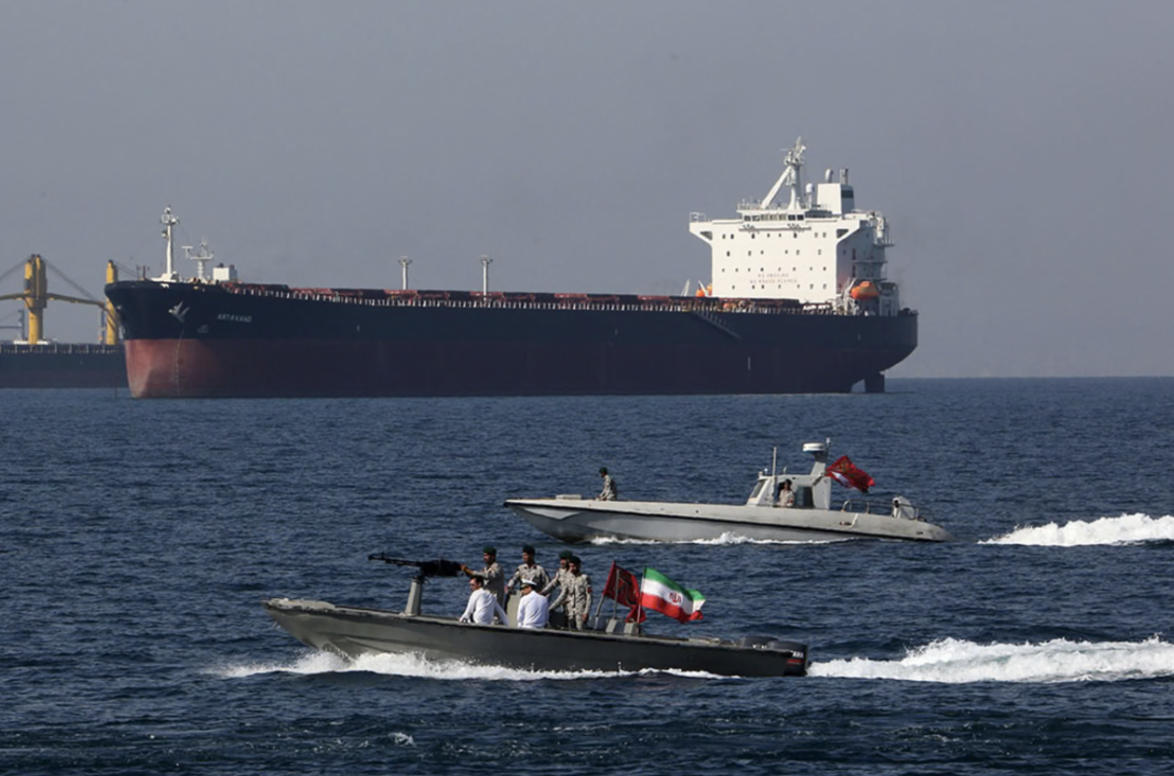
Strategic Waterway in the Middle East
First, the Strait of Hormuz is a narrow maritime passage connecting the Persian Gulf with the Gulf of Oman, located between Iran and the Arabian Peninsula.
Moreover, the strait measures roughly twenty-one miles at its narrowest point, making it geographically vulnerable to military disruption and maritime incidents.
Global Energy Chokepoint
Next, the strait functions as one of the world’s most critical energy corridors.
Approximately one-fifth of global crude oil and about a quarter of liquefied natural gas shipments transit this route each day.
Consequently, any disruption to navigation threatens energy markets, global supply chains, and the economies of countries dependent on Middle Eastern oil exports.
Escalating U.S. – Iran Tensions
Meanwhile, tensions between the United States and Iran have increasingly centered on this maritime corridor.
Military deployments, including aircraft carriers and fighter jets, have intensified the strategic competition surrounding the strait.
Additionally, diplomatic disputes and failed nuclear negotiations have heightened fears that confrontation could erupt near the waterway.
Military Escalation and Maritime Risks
Subsequently, armed conflict and retaliatory strikes have raised the risk of attacks on ships traveling through the strait.
Some vessels have already been targeted, while shipping traffic has sharply declined amid security concerns.
As a result, commercial shipping companies have rerouted vessels or avoided the passage entirely to reduce exposure to military escalation.
Economic Consequences
Furthermore, instability around the strait has triggered volatility in global energy markets.
Oil and gas prices have surged following military exchanges and disruptions to regional production facilities.
Therefore, prolonged instability could significantly increase transportation costs and delay global energy deliveries.
Iran’s Potential Leverage
Historically, Iranian leaders have threatened to close the strait as retaliation against economic sanctions or military pressure.
Such threats aim to influence international negotiations by exploiting the waterway’s importance to global energy trade.
However, experts note that a long-term blockade would be difficult to sustain due to international naval pressure and logistical constraints.
Methods of Disrupting Shipping
Nevertheless, Iran could still hinder maritime traffic through indirect tactics.
Small attack boats, naval mines, and submarines could temporarily interrupt shipping lanes and create uncertainty for global oil markets.
Legal and Strategic Disputes
Finally, questions remain regarding the legality of restricting passage in the strait.
International maritime law limits coastal states’ authority, allowing free navigation in international waterways.
Consequently, attempts to close the strait would likely provoke international confrontation and rapid military response.
Source:
Council on Foreign Relations. (n.d.). Strait of Hormuz: U.S.-Iran maritime flash point. Retrieved March 11, 2026, from https://www.cfr.org/articles/strait-hormuz-us-iran-maritime-flash-point