
The Transition from “Targeted Strike” to “Total Siege”
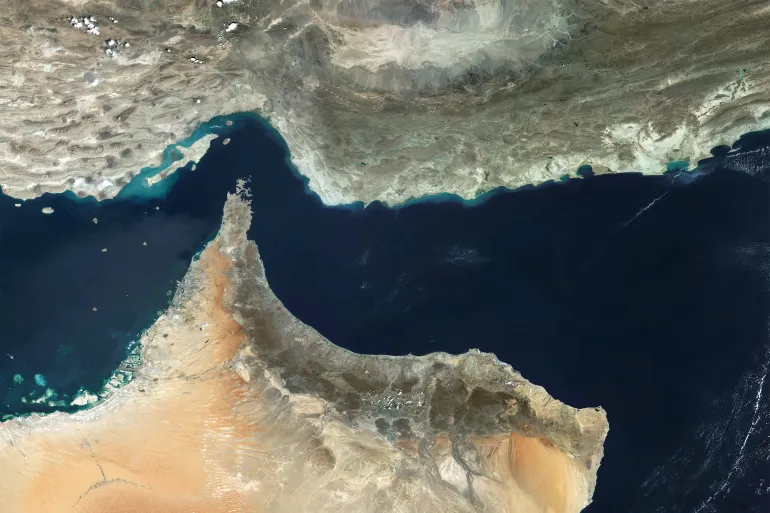
By mid-April 2026, the U.S. strategy has transitioned from a campaign of selective aerial bombardment to a full-scale naval blockade of the Strait of Hormuz. The report highlights that this is no longer a “freedom of navigation” operation, but a “denial of navigation” mission aimed at stopping all Iranian exports and imports. Consequently, the Persian Gulf has been effectively “red-lined” for commercial shipping. This suggests that the administration is moving toward a “Surrender or Starve” doctrine, betting that the total collapse of the Iranian economy is a more efficient tool for regime change than a prolonged air war.
Origins and the “Phase 2” Escalation
Originally, the U.S. military focused on degrading Iranian power grids and missile sites. However, the origin of this blockade lies in the failure of the Islamabad Talks (Article #104), where the 14-day ceasefire expired without a diplomatic breakthrough. For 2026, the administration has categorized the Strait of Hormuz as a “Military Exclusion Zone.” This is a major escalation because it ignores the traditional maritime laws governing “innocent passage” in international straits. Furthermore, the report emphasizes that the U.S. is utilizing its Sixth and Fifth Fleets to enforce a “Digital Quarantine,” tracking every vessel in the region via satellite and threatening to sink any ship that attempts to dock at Iranian ports.
The Structure of a “Total Blockade”
The structure of this maritime siege is organized around three layers of enforcement:
- The Outer Ring: Long-range drone patrols in the Arabian Sea to intercept ships before they reach the Gulf of Oman.
- The Choke Point: Heavy naval presence directly in the 21-mile-wide Strait of Hormuz to provide physical obstruction.
- The Insurance Kill-Switch: Working with global maritime insurers to automatically void the coverage of any vessel that enters the exclusion zone, effectively “grounding” the world’s commercial fleet by proxy. Moreover, the article highlights the “Strategic Shock” this has caused in Beijing and New Delhi, as both nations are now effectively cut off from their primary energy suppliers, forcing them to decide between defying the U.S. Navy or facing a domestic energy collapse.
Synthesis of International Law and the “Hegemonic Exception”
The successful enforcement of the blockade now faces a paradox where the U.S. is violating the very Maritime Order it has spent 80 years defending. This represents the “Hegemonic Exception” in Political Science: the idea that a superpower can ignore international law (specifically the UN Convention on the Law of the Sea) when it deems its “vital interests” are at stake. There is a clear intent to force Tehran into a total capitulation, but the structural reality is that this blockade acts as a Global Economic Tax, raising the price of everything from gasoline to grain. Ultimately, it is clear that by blockading the Strait, the U.S. has turned a regional war into a global economic siege; the “Stone Age” is no longer just a threat for Iran, but a looming reality for the global supply chain.
Reference
Al Jazeera. (2026, April 13). Trump’s threat to blockade Hormuz: Why it’s war’s latest major escalation. Al Jazeera News Middle East. https://www.aljazeera.com/news/2026/4/13/trumps-threat-to-blockade-hormuz-why-its-wars-latest-major-escalation