
Women remain underrepresented in educational leadership
Although women’s participation in Côte d’Ivoire’s education system has increased over the last decade, leadership positions continue to be dominated by men. Between 2014 and 2024, the proportion of female teachers in primary education rose from 26% to 38%, yet women represented only 13% of primary school principals and 22% of secondary school heads in 2024. Within the Ministry of Education, more than 70% of decision-making positions remain occupied by men.
Government reforms promote gender equality in school leadership
To address these disparities, the Ivorian government has integrated gender equality into major education reforms and planning frameworks. Through initiatives such as the Partnership Compact (2024–2029), the Programme for Strengthening the Basic Education System (PRSEB), and the Programme to Support the Transformation of Basic Education (PATEB), authorities seek to expand women’s access to leadership positions. In 2025, more than 30% of newly appointed school heads were women, marking an important milestone.
Research identified barriers faced by women leaders
An exploratory study conducted by IIEP-UNESCO in Africa in 2025 gathered the experiences of nearly 2,000 education stakeholders to better understand the obstacles women encounter when accessing and exercising leadership roles. The findings led to a comprehensive support plan combining training, mentoring opportunities, professional networks, and institutional reforms. As a result, more than 250 women school leaders and newly appointed administrators have already participated in capacity-building activities.
Training programmes strengthen transformative leadership skills
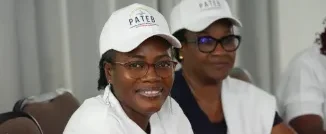
In March 2026, nearly 100 female school heads and deputy heads participated in specialized training on gender-transformative leadership and resistance management. The programme addressed challenges frequently reported by participants, including resistance from male colleagues to female leadership. Beyond management techniques, the training emphasized skills such as empathy, active listening, conflict prevention, and team motivation, demonstrating how inclusive leadership practices can contribute to stronger school environments and improved educational outcomes.
Professional networks help sustain long-term progress
To ensure that progress extends beyond training programmes, women educational leaders recently established the Network of Women School Heads, Principals, and Inspectors (REFCEDI). The network promotes mentoring, professional development, and mutual support among women working in education leadership. UNESCO and national authorities view these initiatives as essential for sustaining reforms and advancing a model of educational leadership that improves quality, equity, and effectiveness throughout Côte d’Ivoire’s education system.
Reference
United Nations Educational, Scientific and Cultural Organization (2026, April 24). Côte d’Ivoire: transforming education through women’s leadership. UNESCO. https://www.iiep.unesco.org/en/articles/cote-divoire-transforming-education-through-womens-leadership