
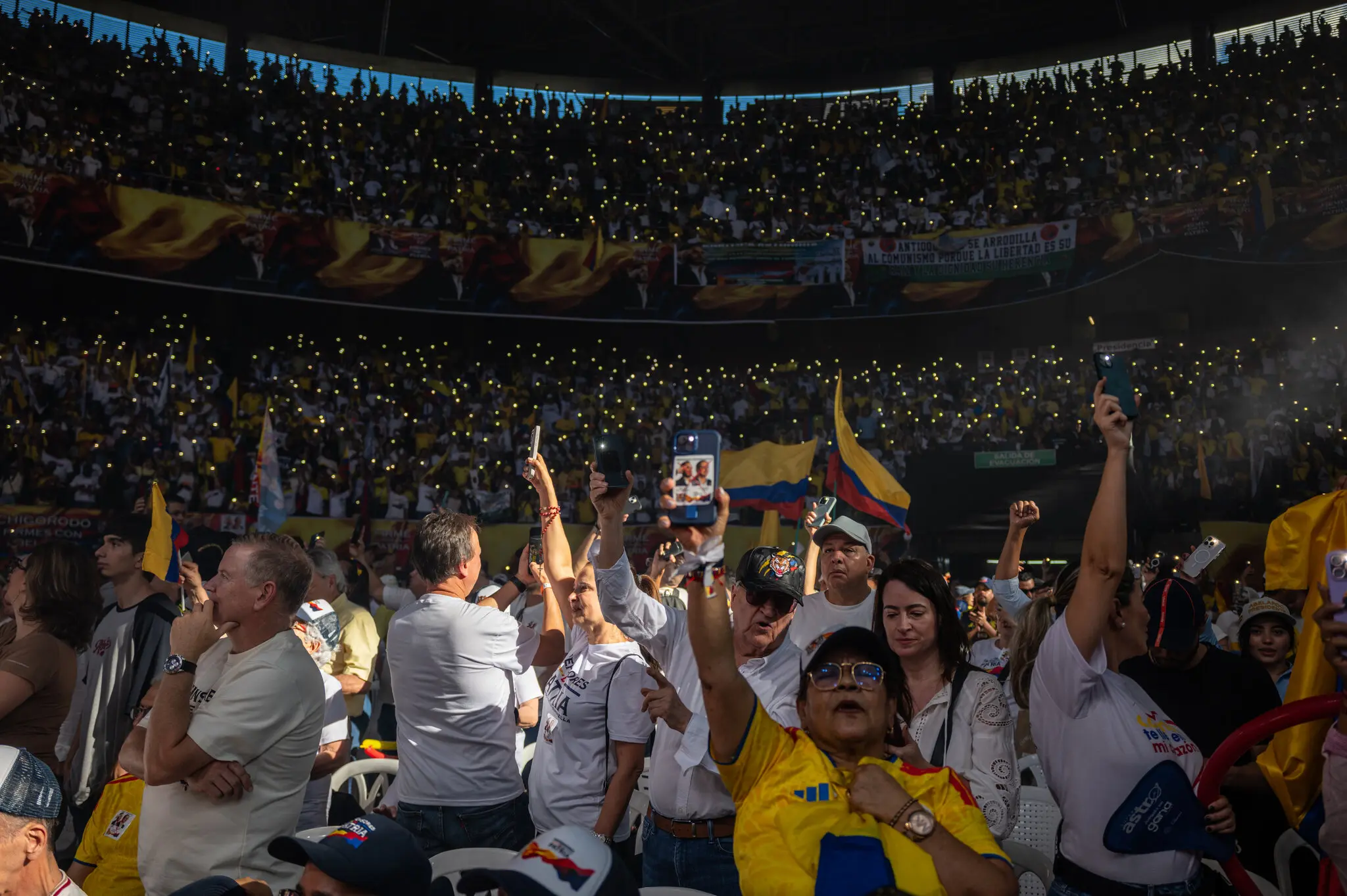
Colombia is approaching one of its most consequential presidential elections in recent years. The vote has become, in many ways, a judgment on the legacy of President Gustavo Petro, whose administration sought to combine social reforms with negotiations aimed at reducing the country’s long-running armed conflicts. Four years later, however, many Colombians remain divided over whether those efforts have produced meaningful results. Violence has persisted in several regions, armed groups continue to expand their influence, and public confidence in the state’s ability to guarantee security has weakened.
These conditions have transformed security into the defining issue of the campaign. Rather than debating only economic or social policies, candidates have focused on competing visions for how the country should respond to rising violence. Iván Cepeda, a close ally of Petro, has defended negotiations with armed groups and argues that lasting peace requires addressing the structural inequalities that fuel conflict. His opponents contend that dialogue has failed to contain criminal organizations and has instead allowed them to strengthen their presence in parts of the country.
Much of the attention has centered on Abelardo de la Espriella, a political outsider who has gained support through promises of aggressive action against criminal networks. Presenting himself as a figure willing to break with traditional politics, he has drawn comparisons to other leaders in the region who favor hardline security policies. His rise reflects growing frustration among voters who believe that restoring public order should take precedence over negotiation and gradual reform.
The election is taking place against a troubling backdrop of political violence. The campaign has been marked by attacks, security threats, and concerns about the safety of candidates and public officials. These developments have revived fears that Colombia could be moving away from the hopes generated by the 2016 peace agreement with the FARC. A decade after that accord was signed, the country continues to struggle with many of the same questions about state authority, armed actors, and the prospects for durable peace.
Beneath the electoral contest lies a broader debate about Colombia’s future. Supporters of Petro’s political project argue that inequality, exclusion, and weak state institutions remain at the root of the country’s instability. Critics respond that ambitious reforms lose legitimacy when citizens feel increasingly insecure. The disagreement is therefore not simply about policy preferences, but about how Colombians understand the causes of violence and the path toward stability.
The election ultimately reflects a society searching for answers after years of unmet expectations. Voters are being asked to choose not only between candidates, but between competing interpretations of peace, security, and democratic governance. The outcome will shape the post-Petro era and determine whether Colombia continues pursuing negotiated solutions to conflict or moves toward a more confrontational approach centered on state authority and public order.

Reference: Correal, A., Glatsky, G., & Ferré-Sadurní, L. (2026, May 31). Colombia election: President candidates. The New York Times. https://www.nytimes.com/2026/05/31/world/americas/colombia-election-president-candidates.html