
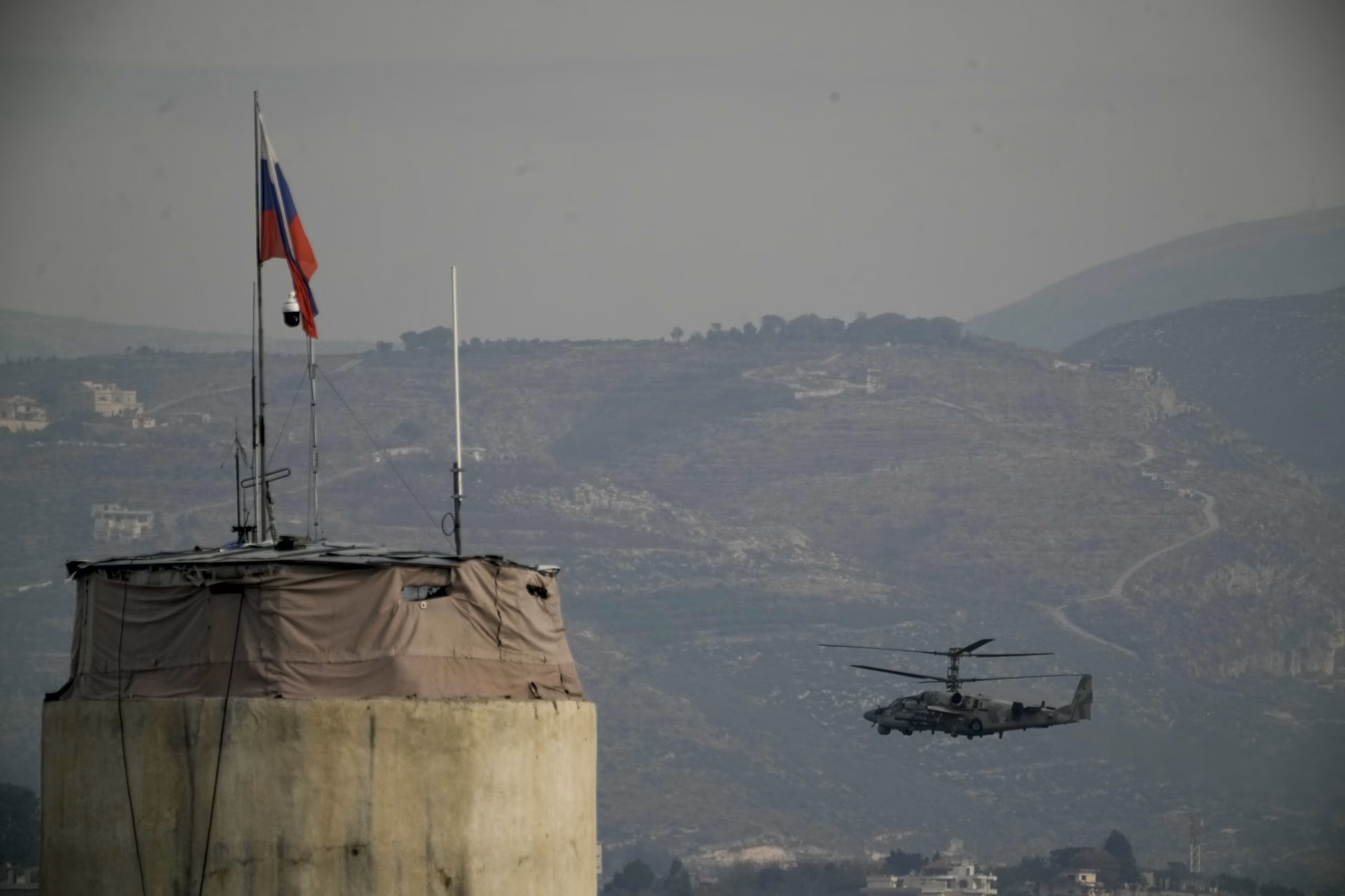
Russia is working to preserve its military presence in Syria despite the profound political changes that followed the fall of Bashar al-Assad’s government. For more than a decade, Moscow relied on its bases in Syria to project power across the Middle East, support military operations, and strengthen its influence in the Mediterranean. The collapse of its closest regional ally has forced Russian officials to renegotiate their position with Syria’s new leadership, turning what once appeared to be a secure strategic foothold into a source of uncertainty.
At the center of these efforts is the Hmeimim air base, located on Syria’s Mediterranean coast. The facility has played a crucial role in Russian military operations since Moscow intervened in the Syrian civil war in 2015. Beyond its military value, the base symbolizes Russia’s status as a major actor in the region. Retaining access to Hmeimim would allow Moscow to preserve logistical routes and sustain a degree of political influence despite the loss of its longtime partner in Damascus.
The negotiations show how dramatically the balance of power in Syria has shifted. The new authorities are no longer dependent on Russian military support in the same way Assad’s government was. This has created an opportunity for Syrian leaders to reassess relationships that were previously shaped by wartime necessities. Russian officials are now attempting to convince the new government that continued cooperation serves Syria’s interests, even as Damascus seeks to expand its diplomatic options and reduce reliance on any single foreign power.
Economic considerations have become an important part of this process too. Russia has reportedly offered investment, economic assistance and other forms of cooperation in exchange for maintaining access to its military facilities. These proposals reflect a broader effort to transform a relationship once grounded in military intervention into one based on mutual strategic and economic interests. The approach also highlights Moscow’s recognition that military leverage alone may no longer be sufficient to secure its position.
The future of the bases carries significance far beyond Syria itself. Russia’s presence on the Mediterranean coast provides a valuable link between its operations in the Middle East, North Africa and Eastern Europe. Losing access would not only reduce Moscow’s regional influence but also weaken its ability to project power across several interconnected theaters. At a time when Russia remains heavily engaged in Ukraine and faces continued tensions with Western countries, preserving strategic assets abroad has become increasingly important.
ALongside, Syria’s new leadership must navigate a complex diplomatic environment. While cooperation with Russia may provide economic or security benefits, maintaining close ties with Moscow could complicate relations with other regional and international actors. The government therefore faces the challenge of balancing competing interests while seeking greater autonomy after years of conflict and foreign intervention.
The situation illustrates a broader transformation taking place across the Middle East. Alliances that once seemed stable are being reassessed, and relationships forged during wartime are increasingly subject to political negotiation. Russia’s efforts to remain in Syria demonstrate that military victories do not automatically guarantee lasting influence. As power structures evolve, maintaining strategic partnerships requires adaptation to new political realities.
The outcome of these negotiations will help determine not only Russia’s future role in Syria but also the extent of its influence across the wider region. What is being contested is more than access to an air base. The discussion reflects a struggle over political relevance, regional reach, and the ability to shape events in a Middle East that is becoming increasingly fluid and unpredictable.
Reference: Malsin, J. & Seligman, L. (2026, June). Russia seeks to keep its Syria air base after Assad’s fall. The Wall Street Journal. https://www.wsj.com/world/middle-east/russia-syria-air-base-c068ea9e?st=PGk9yT