
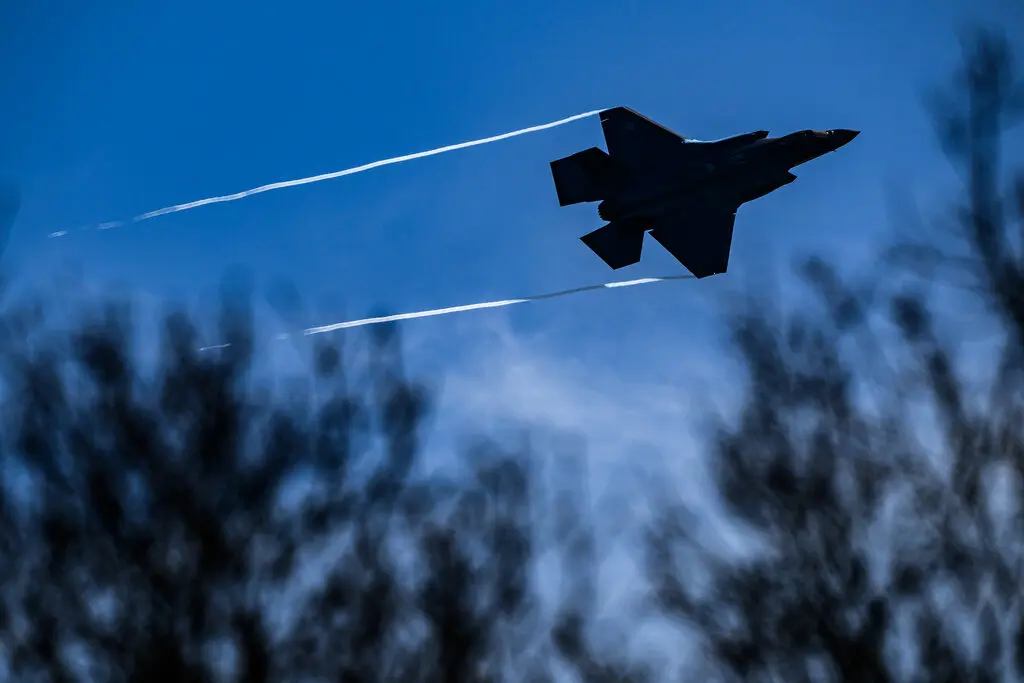
As military escalations continue across the Persian Gulf and Levant, the deployment of additional US fighter jets Middle East capabilities represents a significant shift in regional force posture. According to recent updates from U.S. Central Command (CENTCOM), the Pentagon has ordered additional squadrons of advanced combat aircraft—including F-16 fighters staged in Germany and stealth F-35s based in the United Kingdom—to forward-operating bases within striking distance of regional flashpoints. This strategic airpower shift aims to bolster defensive coverage and deter further asymmetric strikes against coalition forces.
Strategic Airpower Deployments to Strategic Chokepoints
To evaluate the operational impact of this military surge, defense analysts are tracking the deployment of multi-role fighter squadrons across the theater. The arrival of additional high-readiness air wings substantially increases theater-wide defensive cover and precision-strike capabilities.
According to defense officials, the rapid relocation of European-based combat squadrons ensures immediate operational readiness without degrading global strategic reserves.
By integrating fifth-generation F-35 stealth fighters alongside proven F-16 platforms, coalition forces gain enhanced sensor-fusion coverage against incoming drone swarms and ballistic missile threats. Consequently, the arrival of these US fighter jets Middle East formations acts as a direct deterrent to further military escalation along critical maritime and land corridors.
Deterrence and Operational Readiness in a Volatile Theater
This concentrated military build-up impacts theater stability through both operational readiness and strategic messaging channels. Maintaining a high-tempo air presence deters further attacks while protecting vital commercial maritime routes.
The addition of these fighter squadrons allows CENTCOM commanders to maintain continuous combat air patrols over sensitive infrastructure and transit corridors. By demonstrating rapid force-projection capability across vast distances, coalition forces aim to stabilize contested airspace and protect both diplomatic personnel and commercial transit lines.
Implications for Defense Planning and Logistics Networks
For defense procurement directors, regional military planners, and commercial logistics coordinators, this force buildup highlights the ongoing necessity of agile air logistics. Sustaining high-tempo flight operations in active theaters requires extensive aerial refueling corridors and robust supply chains for high-tech precision munitions.
Furthermore, maintaining extended combat readiness across multiple forward bases requires continuous coordination with host nations regarding airspace rights and basing logistics. While deploying advanced combat squadrons involves substantial operational expenditure, securing strategic waterways remains essential to prevent widespread economic disruption. Ultimately, establishing air domain dominance ensures that critical sea lanes remain open despite ongoing regional volatility.
The Outlook for Regional Stability and Airpower Strategy
Navigating complex multi-domain conflicts requires balancing active deterrence with long-term strategic readiness. Relying exclusively on temporary force posture surges is insufficient to resolve underlying geopolitical friction.
Moving forward, defense leadership must continue coordinating joint force exercises and expanding integrated air and missile defense networks with regional partners. Success in this volatile environment depends on maintaining flexible, rapid-deployment capabilities that can respond instantly to emerging threats. Ultimately, the immediate objective for allied air command is stabilizing regional airspace and preventing localized hostilities from broadening into a wider continental war.
Rubin, A. J., & Cooper, H. (2026, July 19). U.S. sends additional warplanes to Middle East as regional tensions escalate. The New York Times. https://www.nytimes.com/2026/07/19/world/middleeast/us-warplanes-mideast-iran.html