
El Observatorio Global UDLAP (OGU) es una iniciativa sólida y necesaria para entender la complejidad del sistema internacional actual, especialmente considerando la relevancia estratégica de México en foros como APEC.
El OGU es un recurso valioso para monitorear temas apasionantes como la economía y la política globales y se consolida como un centro de análisis crítico coordinado por el Departamento de Relaciones Internacionales y Ciencia Política de la UDLAP.
El Observatorio cuenta con cuatro pilares fundamentales: APEC/PECC, Organismos Internacionales, Prensa Internacional y Think Tanks.
Pilares del Observatorio
Te invitamos a explorar nuestro repositorio de noticias con los temas más actuales.

APEC / PECC
Esta sección es clave para el seguimiento del Foro de Cooperación Económica Asia-Pacífico, sobre todo ahora que México será sede del Foro en el año 2028. Se enfoca en:
- Seguimiento de políticas públicas regionales que inciden en el crecimiento económico.
- Análisis de comunicados de líderes y ministros.
- Temas de liberalización del comercio e inversión en la región transpacífica.

Organismos Internacionales
Monitorea la actividad de las instituciones que rigen la gobernanza global, tales como:
- Sistema de Naciones Unidas: PNUD, PNUMA, UNICEF, FAO, OIT, entre otros.
- Instituciones Financieras y Comerciales: Seguimiento puntual a la Organización Mundial del Comercio y al Fondo Monetario Internacional (FMI).

Prensa Internacional
Esta sección ofrece una cobertura objetiva y concisa de los acontecimientos a través del monitoreo de los principales diarios internacionales y agencias de noticias en diversas regiones geográficas como América Latina y el Caribe, África, Asia-Pacífico, Europa y Medio Oriente.

Think Tanks
El Observatorio mantiene alianzas con centros de reflexión en México que son referentes en la economía política global, tales como:
- PECC-México (Consejo de Cooperación Económica del Pacífico).
- COMEXI (Consejo Mexicano de Asuntos Internacionales).
- AMEI (Asociación Mexicana de Estudios Internacionales).
El OGU es un excelente espacio para dar seguimiento a las propuestas de políticas públicas orientadas a definir la posición de México ante los cambios en el entorno global. Actúa como un puente con la generación de conocimiento global, reseñando documentos de instituciones de prestigio mundial como:
- América del Norte: Brookings Institution, Carnegie Endowment, CSIS, Council on Foreign Relations (CFR), PIIE, Wilson Center.
- Europa y otros: Chatham House (Reino Unido), Bruegel (Bélgica), SIPRI (Suecia), JIIA (Japón).
Notas a través del mundo
A continuación te presentamos las notas de la Prensa Internacional que acontecen desde una vista geográfica.
África

América del Norte
América Latina y el Caribe
Ártico y Antártico

Asia
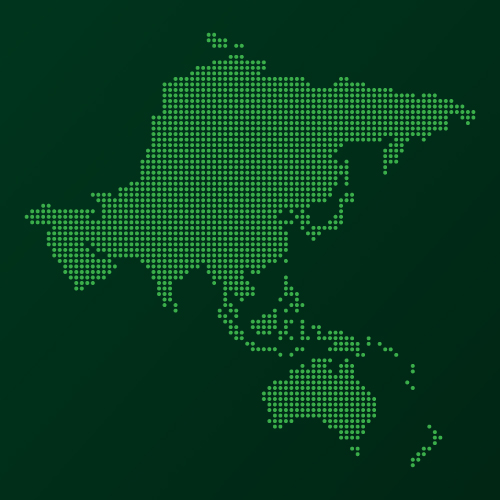
Asia – Pacífico
Europa

Global

Medio Oriente

¿Buscas algún acontecimiento?
Lee, analiza y comparte
-
The AI cold war needs a nonaligned movement
The next era of global competition is fundamentally changing how we perceive power. We are currently witnessing an intensifying AI cold war between the United States and China. This rivalry is no longer limited to hardware or chip manufacturing;…
-
Ranked: Countries With the Fastest Immigration Growth (2019–2024)
Permanent immigration patterns across OECD countries have undergone a significant transformation between 2019 and 2024. While traditional destinations like the U.S. and Canada remain major hubs, the data reveals that migration growth is broadening toward…
-
Trump launches US’s 250th birthday celebrations with partisan attack
The official kickoff for America’s 250th birthday celebrations—marking the nation’s semi quincentennial—was intended to be a moment of national unity. However, the event at Independence Hall in Philadelphia quickly evolved into a platform for intense political…
-
England’s game against Mexico to stay at 1am UK kick-off after day of chaos
The highly anticipated FIFA World Cup 2026 Round of 16 match between England and Mexico is officially confirmed to proceed as scheduled. After a day of confusion regarding potential weather-related shifts, FIFA decided to maintain the original…
-
Asian Americans push for wider share of the spotlight as US celebrates 250
As the United States celebrates its historic 250th anniversary, the national conversation is increasingly focused on the importance of Asian American representation US 250th anniversary. While the country commemorates its founding, diverse communities are highlighting the continuous…
-
USMCA review reviewed: Lessons from the first use of USMCA’s review mechanism
The United States-Mexico-Canada Agreement (USMCA) introduced a notable innovation: a formal joint review. This review occurs six years after the agreement enters into force. As the first USMCA review mechanism process concludes, analysts are currently evaluating its…
-
China Defends Widely Criticized ‘Ethnic Unity’ Law
July 1, 2026. China’s Law on Promoting Ethnic Unity and Progress officially came into effect. While the Chinese government frames the legislation as a means to foster national cohesion and development among its 56 recognized ethnic groups,…
-
The world’s wealthy are migrating like never before
The global landscape is witnessing an unprecedented shift as wealthy individuals migration 2026 reaches record levels. No longer content with remaining tied to a single country, the world’s affluent families are increasingly constructing “sovereign portfolios” of residence rights,…
-
Impeachment Trial of Philippine Vice President Set to Begin
On July 6, 2026, the Philippine Senate will convene as an impeachment court. This session marks the beginning of the historic trial for Vice President Sara Duterte. She is the first Philippine official to face…
-
In Strike After Strike, Ukraine Is Bringing the War to Crimea
As the conflict enters its fourth year, the strategic landscape of the Black Sea peninsula has shifted dramatically. Recent reports confirm that Ukraine has intensified its campaign of targeted operations against Russian-occupied territories. Our interactive…
-
Trump Targets Not Just Georgia’s Vote, but Also Trust in Elections
The Trump administration has intensified its scrutiny of past electoral outcomes, recently focusing federal law enforcement efforts on Georgia’s 2020 presidential election results. In January 2026, the FBI conducted an unprecedented seizure of 600 boxes…
-
Connected Farmers, Better Harvests: How Cameroon’s Agritech Innovators Are Transforming Agriculture
Cameroon agritech innovators are helping transform the country’s agricultural sector through digital technologies that connect farmers with markets, information, and modern farming tools. Agriculture employs nearly 60% of Cameroon’s population, making innovation in this sector essential…
-
From starry-eyed to skeptical: why young Chinese are turning away from the American dream
For decades, the American Dream represented opportunity, prosperity, and personal freedom for many young Chinese. Studying in the United States, building a career abroad, and achieving upward mobility were common aspirations among China’s educated youth.…
-
Who moves up and why? A closer look at the new release of the World Bank Group Country Income Classifications
The World Bank released its latest update of country income classifications in July 2026, revealing that six economies have advanced to higher income categories. These annual classifications are based on Gross National Income (GNI) per…
-
What Nepal’s Smallest Businesses Reveal About Economic Development
A recent World Bank report sheds light on Nepal’s smallest businesses, a sector that remains largely overlooked despite employing nearly 1.5 million people. The study examines formal and informal microenterprises, revealing their critical role in…