
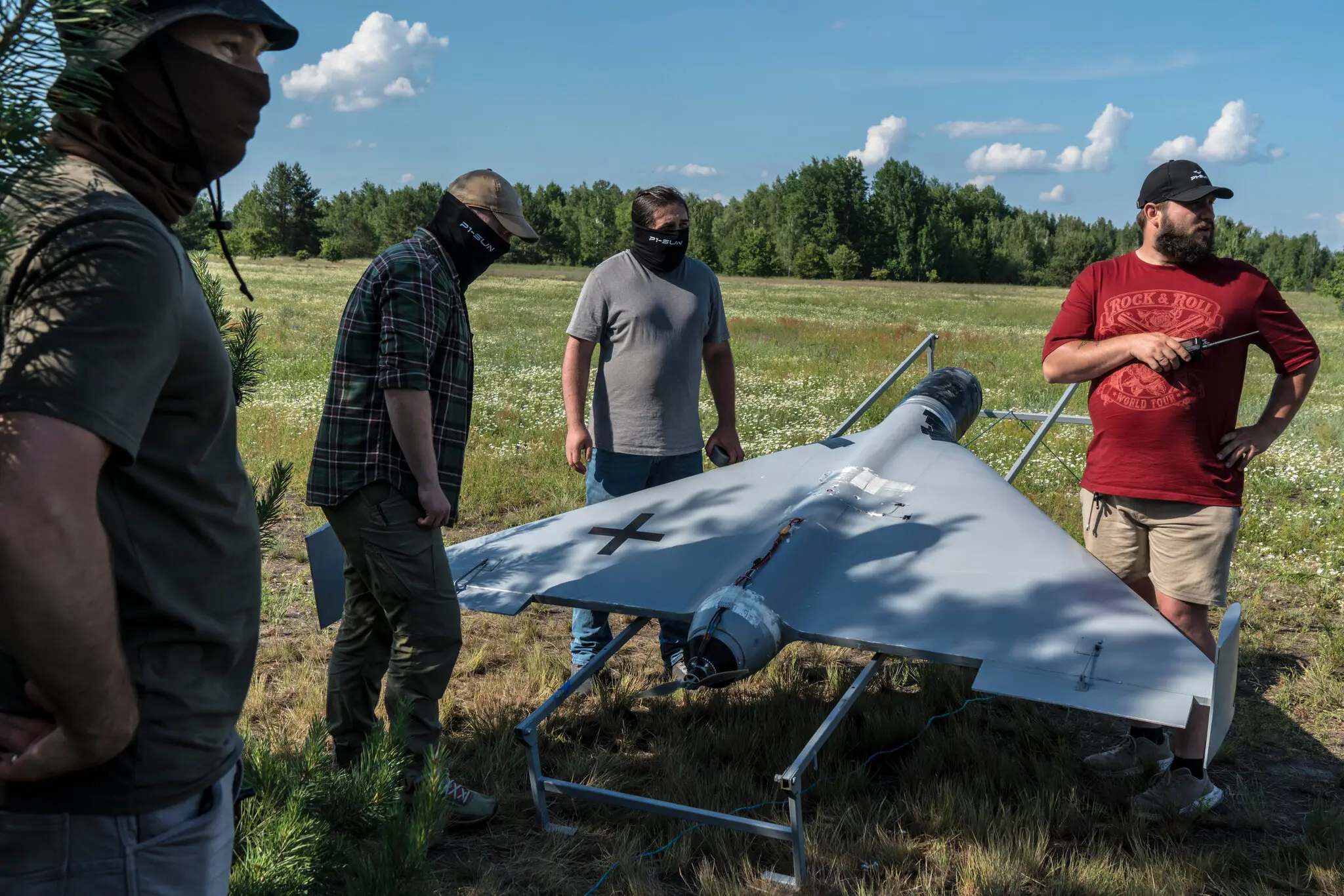
AI Moves to the Front Line
The war between Ukraine and Russia has become one of the clearest examples of how artificial intelligence is transforming modern warfare. According to The New York Times, both sides are increasingly relying on drones, automated targeting tools, battlefield data and electronic warfare to gain tactical advantages. The conflict shows that future wars may depend not only on soldiers and weapons, but also on software, sensors and rapid technological adaptation.
Drones and the Changing Battlefield
Drones have become central to the war. They are used for surveillance, attacks, logistics and defense against enemy systems. Artificial intelligence can help drones identify targets, navigate difficult environments and continue operating when communication signals are jammed. This is especially important because Russia and Ukraine are both using electronic warfare to disrupt each other’s equipment. As a result, the battlefield has become a constant race between innovation and countermeasures.
Ukraine’s Technological Adaptation
Ukraine has turned technological flexibility into a key part of its defense strategy. Ukrainian engineers, soldiers and private companies have worked together to develop low-cost systems that can be tested and improved quickly. This model allows Ukraine to respond faster to battlefield changes, especially when Russian forces adapt their own tactics. The war has therefore created an unusual link between military necessity, startup culture and defense innovation.
Risks of Autonomous Warfare
The growing use of artificial intelligence also raises ethical and legal questions. If weapons systems become more autonomous, it may become harder to determine responsibility for mistakes, civilian harm or unlawful attacks. The use of AI in war creates concerns about human control, accountability and the speed at which lethal decisions are made. These risks make the Ukraine war an important case for future international debates on regulating military artificial intelligence.
Global Security Implications
The impact of AI in Ukraine extends far beyond Eastern Europe. NATO countries, Russia, China and other military powers are closely watching the conflict to understand how artificial intelligence, drones and electronic warfare can reshape combat. The lessons from Ukraine may influence defense budgets, military training and arms development around the world. For this reason, the war is also becoming a laboratory for the future of global security.
International Relevance
Overall, the New York Times report shows that artificial intelligence is no longer a distant concept in warfare. It is already changing how armies observe, attack, defend and make decisions. For the OGU, this issue is internationally relevant because it connects the Russia-Ukraine war with broader debates on defense technology, autonomous weapons, cybersecurity, military innovation and the future of international security.
Reference: The New York Times. (2026, June 15). Ukraine-Russia war AI. Link provided by user. https://www.nytimes.com/2026/06/15/world/europe/ukraine-russia-war-ai.html?smid=nytcore-android-share