
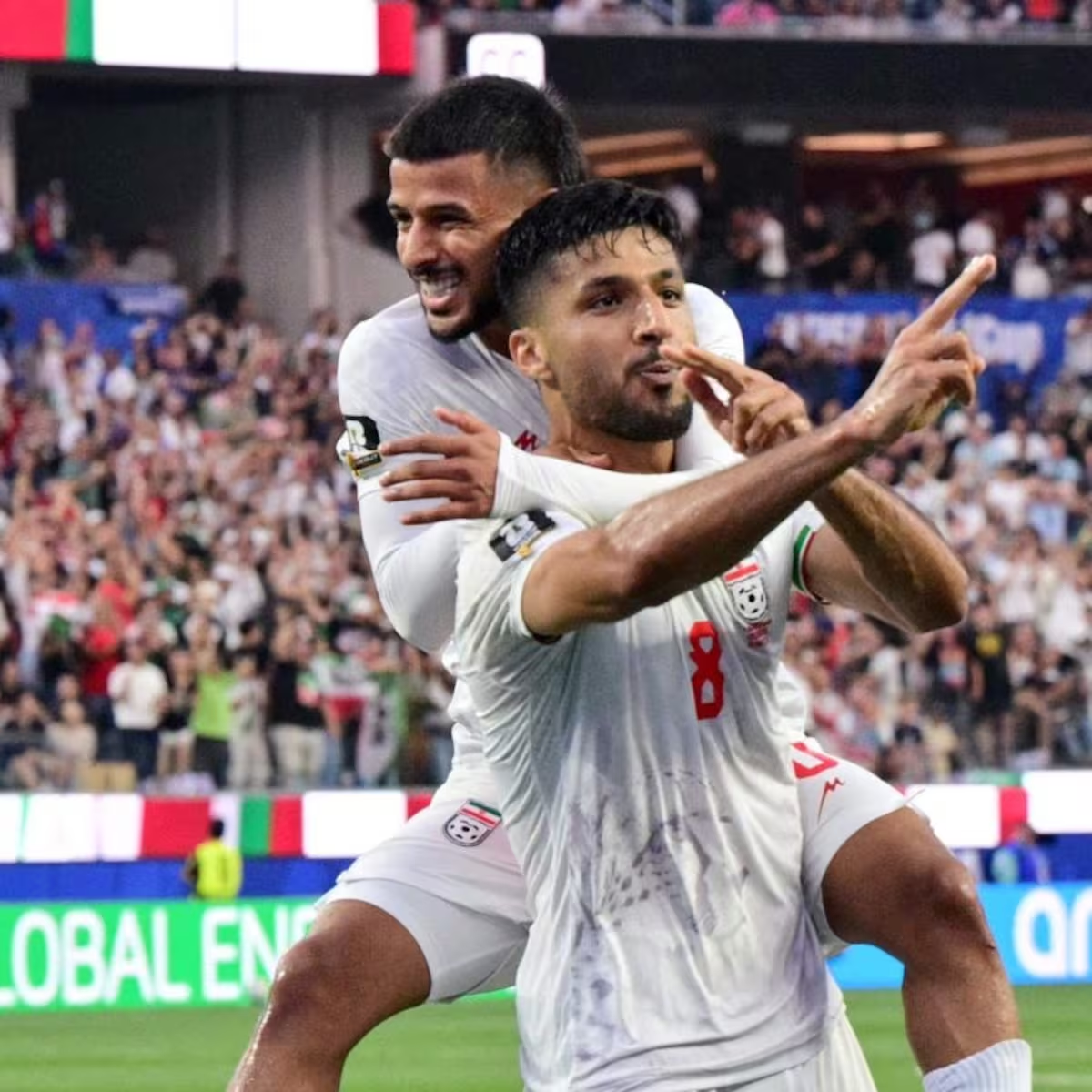
Iran’s World Cup Under Pressure
Iran’s World Cup campaign has become deeply affected by the war with the United States, one of the host countries of the tournament. TIME reports that Iran’s 2-2 draw against New Zealand in Los Angeles was not only a sporting event, but also a politically charged moment shaped by travel restrictions, security concerns and the emotional weight of the conflict. The match showed how global sports can become entangled with war, diplomacy and national identity.
Taremi Criticizes the Situation
After the match, Iranian striker Mehdi Taremi expressed frustration over the conditions facing the team. He said the situation was a disaster for Iran, not because of the result alone, but because of the stress created by the war, travel limitations and logistical problems. His comments reflected the pressure on players who are expected to compete at the highest level while dealing with political tensions far beyond the football field.
Travel Restrictions and Logistical Problems
Iran’s team faced major practical challenges before the game. Several members of the Iranian soccer delegation were unable to secure visas to enter the United States, including officials connected to the national federation. Because of security concerns, Iran moved its training base from Arizona to Tijuana, Mexico. The team then had to travel to the Los Angeles area shortly before the match and return to Mexico afterward, limiting rest and recovery.
Iranian Diaspora Divided in Los Angeles
The match also exposed divisions within the Iranian diaspora in the United States. Some Iranian-Americans protested against Team Melli, arguing that the national team represents a regime accused of repression. Others felt conflicted, trying to separate the players from politics and focus on football. A third group openly supported the team, viewing it as a symbol of Iranian identity regardless of the political situation. These different reactions showed how sports can reflect deeper debates about homeland, exile and political legitimacy.
FIFA and Global Sports Politics
The case raises difficult questions for FIFA and international sports governance. Hosting a World Cup match involving a country at war with the host nation creates unusual diplomatic and security challenges. Iran’s experience shows that travel bans, visa policies and military conflict can directly affect competitive fairness and player welfare. It also reveals the limits of the idea that sports can remain separate from politics.
International Relevance
Overall, TIME’s report shows that Iran’s World Cup is not just a sports story. It connects international conflict, migration, diaspora politics, human rights, diplomacy and global sports governance. For the OGU, the case is internationally relevant because it demonstrates how geopolitical crises can reshape megaevents and turn football matches into platforms for political expression, national identity and global scrutiny.
Reference: TIME. (2026, June 16). “A Disaster”: Iran’s World Cup overshadowed by war with host U.S. https://time.com/article/2026/06/16/iran-new-zealand-world-cup-war-us-mexico-taremi-disaster/