
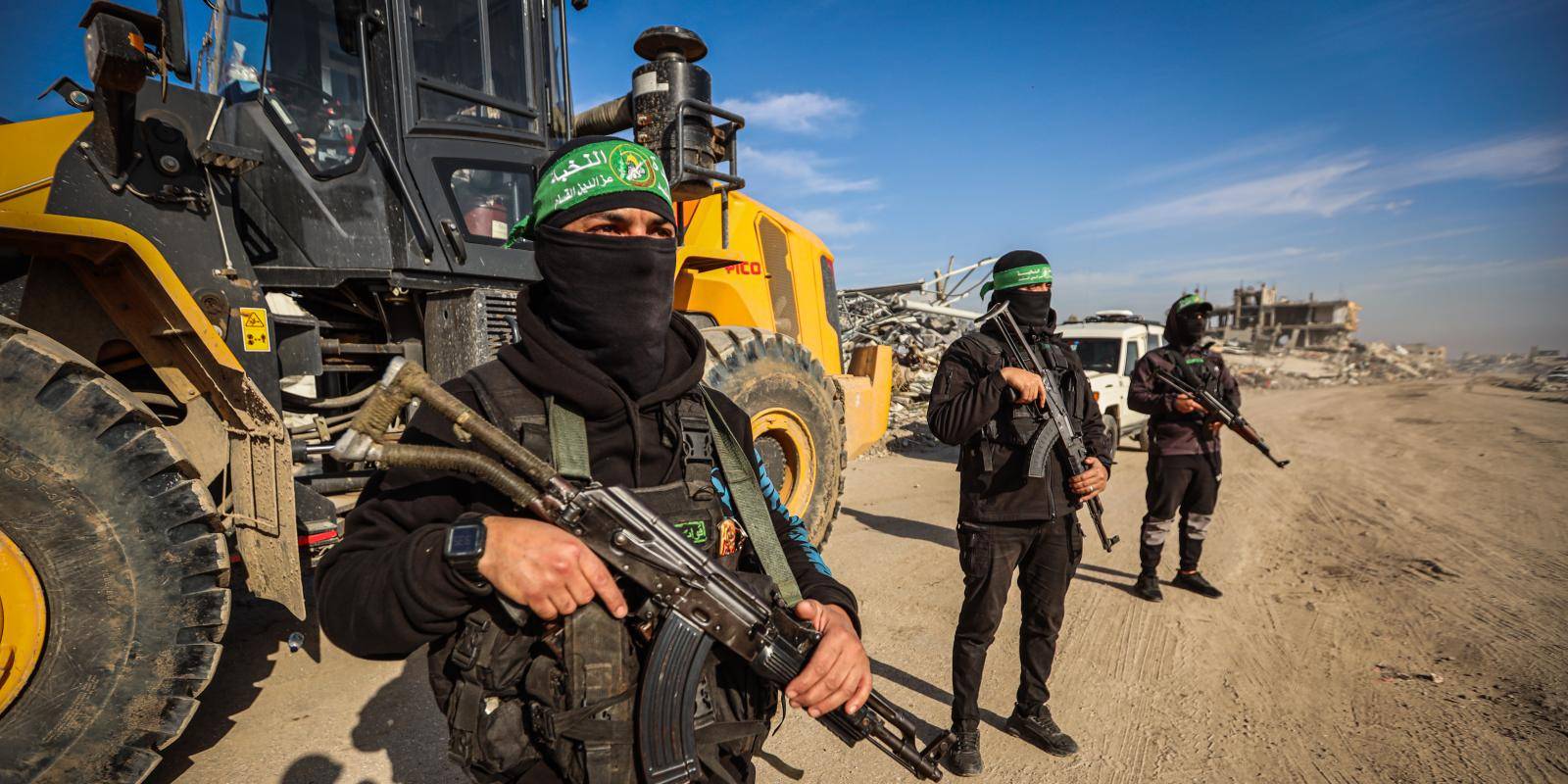
Gaza’s future remains shaped by a fragile balance between political negotiations, military objectives and an ongoing humanitarian crisis. Although the October 2025 ceasefire created new diplomatic opportunities, the process has advanced slowly and continues to face deep disagreements over its implementation.
A Stalled Path Forward
Since the ceasefire began, the Board of Peace has treated Hamas’s decommissioning of weapons as the central requirement for broader progress. That objective is linked to the deployment of an international stabilization force, the arrival of a technocratic administration, and the start of Gaza’s reconstruction. However, this approach has largely sidelined another critical issue: Israel’s military withdrawal. During the ceasefire, Israeli control expanded from just over half of Gaza to nearly seventy percent of the territory.
Against this backdrop, Hamas’s recent acceptance of President Donald Trump’s decommissioning proposal could alter that political dynamic. By agreeing to the framework, the group has shifted part of the international focus toward Israel’s position. Even so, this development is unlikely to produce rapid results because both sides continue defending incompatible conditions for moving forward.
For Prime Minister Benjamin Netanyahu, there are strong political incentives to delay meaningful negotiations. Any public commitment to withdraw from Gaza could weaken his electoral support before Israel’s upcoming elections. Moreover, members of his governing coalition have already promoted plans for new settlements, reinforcing opposition to territorial concessions.
Conflicting Conditions
Hamas also benefits from prolonging the process without making immediate security commitments. Accepting the roadmap allows the movement to remain involved in discussions over Gaza’s future while reducing accusations of obstruction. At the same time, it carefully avoids describing its position as disarmament or surrender, insisting that Israeli military operations must end before meaningful implementation begins.
As a result, these competing demands continue blocking practical progress. Israel insists that Hamas must fully decommission its weapons before any withdrawal occurs. Hamas argues that Israeli forces must withdraw first before discussing the future of its arsenal. Consequently, this sequencing dispute mirrors previous negotiations and leaves little room for immediate implementation.
Beyond these disagreements, further disputes concern the technical details of the roadmap. Israel reportedly wants confiscated weapons destroyed and objects to certain mediators participating in future verification stages. Meanwhile, Hamas rejects those demands and deliberately uses the language of decommissioning instead of disarmament, reflecting the political significance attached to each term.
The proposal also leaves unresolved questions surrounding Palestinian self-determination. Although it refers indirectly to previous commitments, it does not establish a concrete pathway toward Palestinian statehood. This omission remains significant because Netanyahu firmly rejects such an outcome, whereas Hamas continues treating it as an essential political objective.
The Need for External Pressure
Given these circumstances, sustained external pressure becomes increasingly important. Egypt, Qatar, and Turkey played a key role in securing Hamas’s public acceptance of the agreement. However, their ability to enforce implementation remains limited because they lack a direct security presence inside Gaza. At the same time, uncertainty surrounds whether the United States will apply comparable pressure on Israel, particularly during a sensitive electoral period.
Ultimately, the agreement creates an opportunity to move beyond months of diplomatic deadlock, but success depends on balanced external engagement. Pressure on Hamas remains necessary for regional stability and Israeli security. Nevertheless, lasting progress also requires meaningful pressure on Israel if negotiations are expected to produce a sustainable future for Gaza and alleviate humanitarian suffering affecting millions of civilians.
Reference: Norman, J. (2026, August). Agreeing to disarm Hamas is trying to call Israel’s bluff on Gaza. Chatham House. https://www.chathamhouse.org/2026/08/agreeing-disarm-hamas-trying-call-israels-bluff-gaza