
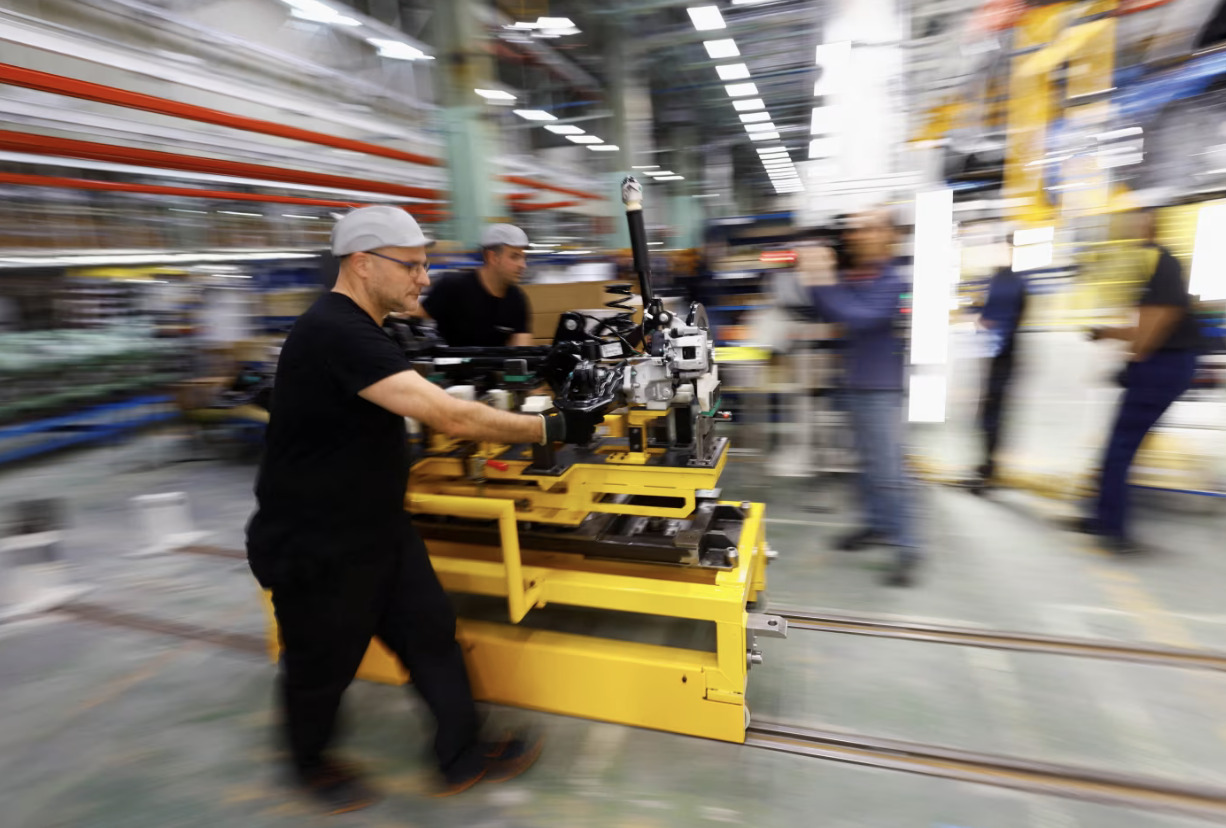
The label “Made in China” is rapidly evolving into “Made by China” as companies from the Asian economic powerhouse aggressively shift their manufacturing operations overseas. Driven by rising Western tariffs, domestic overcapacity, and weak local demand, Chinese manufacturers are opening production facilities across the Americas, Europe, and other regions worldwide. This outbound foreign direct investment trend, known in Mandarin as chuhai (going overseas), spans from home appliance production to the manufacturing of electric vehicles (EVs) and lithium-ion batteries.
Strategic Expansion and Labor Challenges
Industry giants such as BYD and CATL are leading this investment wave with multi-billion-dollar projects in countries like Hungary, Brazil, and the United States. However, this rapid global expansion has sparked significant tensions regarding labor regulations and community acceptance.
In Brazil, for instance, local authorities reported that subcontractors hired to construct a BYD plant subjected workers to severe labor rights violations, highlighting a clash between Chinese workplace practices and local laws. Industry consultants warn that the corporate culture of extensive overtime, which is commonplace in China, remains highly incompatible with strict Western labor standards and union regulations.
Political Backlash and Protectionism
The arrival of fierce Chinese competition has raised alarms among leaders in the United States and Europe, who fear these enterprise expansions could displace local incumbents and drive down wages. In the United States, dozens of lawmakers have urged President Trump’s administration to ban Chinese automakers from establishing plants domestically or importing vehicles assembled in Mexico and Canada.
Meanwhile, the European Union is pushing forward with defensive initiatives like the Industrial Accelerator Act. This legislative plan aims to attach strict conditions to foreign direct investments exceeding €100 million in sensitive sectors such as EVs and solar panels, requiring Chinese firms to hire local workers for at least half their staff, transfer proprietary technology, and purchase European-made components.
Global Market Impact and Resilience
Despite growing political resistance, China’s outward direct investment rose 7.1% last year, fueled by cutthroat domestic competition that has severely eroded profit margins at home. Some economists argue that, much like the Japanese automotive expansion in the 1980s and 1990s, this investment surge could ultimately benefit consumers and force local industries to innovate and become more resilient.
Strategic partnerships, such as Midea’s joint venture with Electrolux in North America or Chery Automobile’s rescue of a former Nissan plant in Spain, demonstrate how deeply integrated Chinese manufacturing is becoming within global supply chains. Over the long term, this geographic diversification could further cement China’s position as the dominant force in global manufacturing.
Referencia
The Wall Street Journal. (2026, May). China Is Exporting Its Factories Across the World and Spooking the Competition. https://www.wsj.com/business/autos/china-is-exporting-its-factories-across-the-world-and-spooking-the-competition-39e63291?st=cuEaQD