
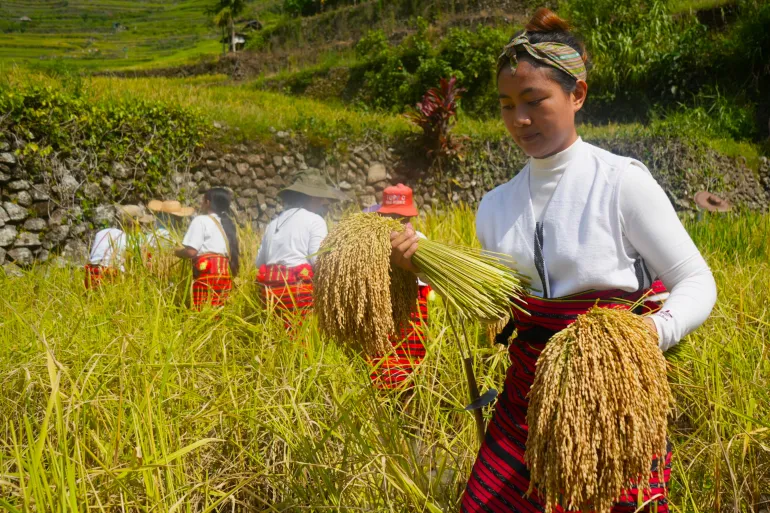
The centuries-old Ifugao rice terraces in Batad, a UNESCO World Heritage Site in the northern highlands of the Philippines. Face unprecedented structural threats driven by the escalating impacts of climate change. Recent extreme weather patterns. Ranging from intense dry spells to sudden, violent downpours. Have severely destabilized the mountainside agriculture. Extended droughts cause the soil structure to crack, allowing heavy rains from severe typhoons to seep rapidly into the ground. Triggering massive landslides, destroying ancestral irrigation canals, and damaging vital cropland cultivated by Indigenous communities.
Despite the Ifugao people’s long history of using traditional engineering to maintain the stone-and-earth terraces. The growing frequency and severity of climate-driven disasters exceed local capacity. While community members regularly organize voluntary communal labor efforts and receive temporary emergency relief. Repairing extensive damage and reinforcing fragile slopes requires significant financial investment and modern infrastructure restoration. However, limited national government funding and slow bureaucratic allocation leave local communities under-resourced as impending climate threats, such as Super El Niño events, risk causing further erosion.
In conclusion, the environmental pressures confronting the Batad rice terraces underscore how climate change poses a direct threat to ancient cultural heritage and Indigenous livelihoods. Preserving these historic agricultural systems requires immediate national intervention and dedicated conservation funding. Ultimately, to bridge the gap between traditional stewardship and the accelerating impacts of global climate disruption.
Reference
Regencia, T. (2026, July 27). Climate change presents new threat to Philippines’ UNESCO rice terraces. Al Jazeera. https://www.aljazeera.com/features/2026/7/27/climate-change-presents-new-threat-to-philippines-unesco-rice-terraces