
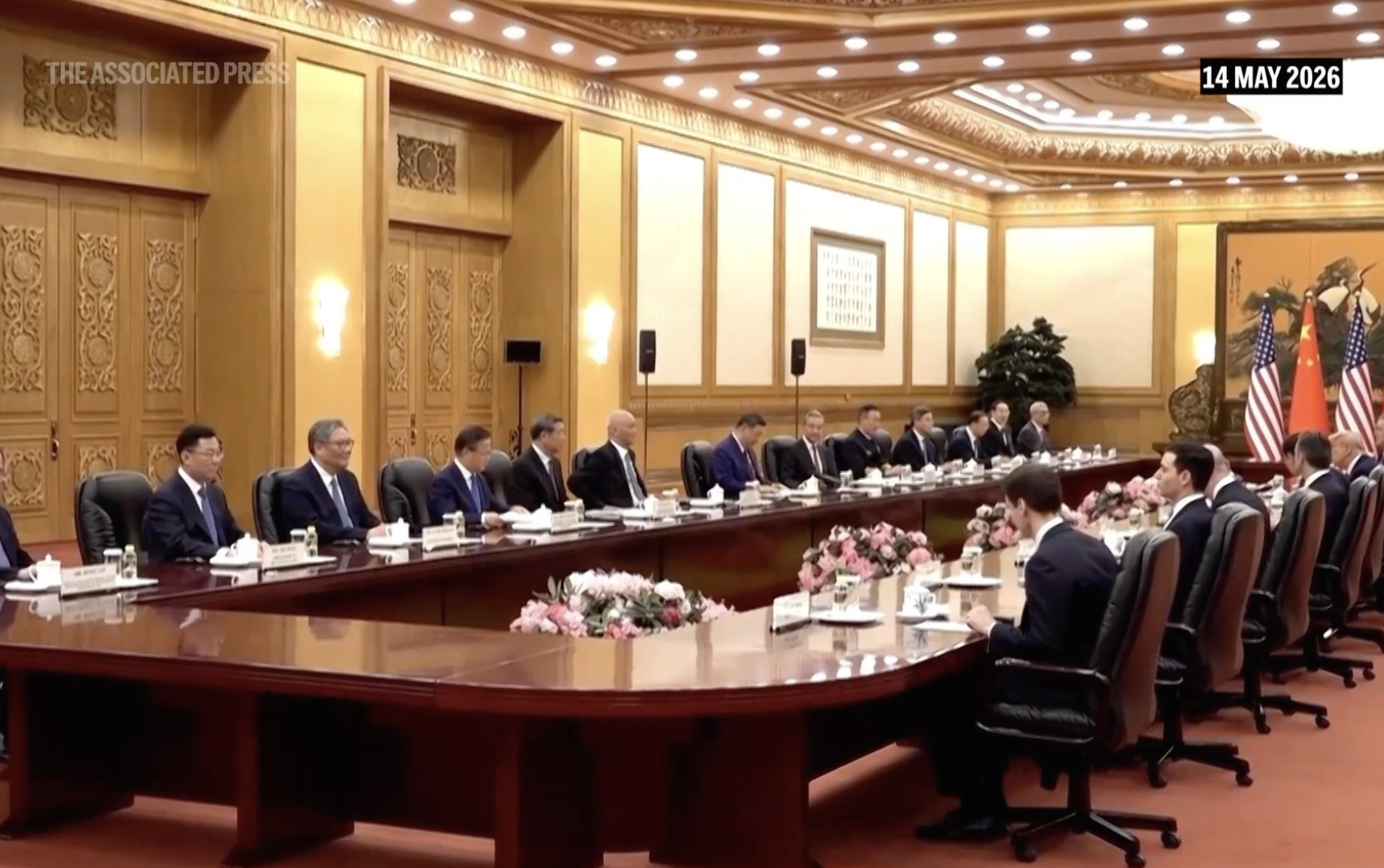
Earlier Commitments Show Uneven Progress
The United States and China have made uneven progress on commitments announced after Trump and Xi met in Beijing in May. Their second face-to-face meeting this year could renew efforts on trade, agriculture, Boeing aircraft, investment, and artificial intelligence. Analysts expect modest movement rather than a major breakthrough.
Both governments previously adopted a framework of constructive strategic stability to prevent disputes from escalating. It also seeks to preserve limited areas of cooperation. Observers say the Washington summit matters because it keeps high-level dialogue open, although fundamental disagreements continue to restrict progress.
Trade and Purchase Pledges Remain Incomplete
One possible outcome is the launch of a Board of Trade accompanied by reciprocal tariff reductions covering as much as $30 billion in goods in each direction. Negotiators are discussing about 10 product categories, potentially including consumer and agricultural goods, energy products, and medical devices. An agreement could increase American exports and reduce some prices for U.S. consumers, but its final scope remains uncertain.
Agricultural commitments have also fallen behind expectations. China’s earlier pledges would raise yearly purchases of U.S. farm products to roughly $30 billion, yet an official forecast places imports at $21.5 billion for the coming 12-month period. Registrations for American beef plants have been renewed, but technical obstacles still affect shipments. Meanwhile, China’s promised purchase of 200 Boeing aircraft has not produced confirmed orders four months after the announcement.
Distrust Limits Cooperation on AI and Investment
A planned dialogue on artificial intelligence initially produced little activity, but concerns about the technology’s possible misuse have renewed interest. Competition between the world’s two leading AI powers continues to obstruct broader cooperation. The United States has therefore proposed a more limited notification mechanism that would allow officials to communicate about AI incidents affecting national security.
Prospects for a joint Board of Investment are weaker. Chinese projects in the United States face congressional scrutiny over security and strategic risks, while Beijing remains cautious about transferring technology or investing under uncertain conditions. These mutual suspicions show why the relationship may improve only within narrow limits, even if the latest summit advances some of the agreements reached in May.
References
Moritsugu, K., & Tang, D. (2026, September 22). Fulfilling earlier US-China agreements is a work in progress as Trump and Xi meet again. AP News. https://apnews.com/article/trump-xi-beijing-washington-summit-8488ef4c2944d348193f441199179ae6