
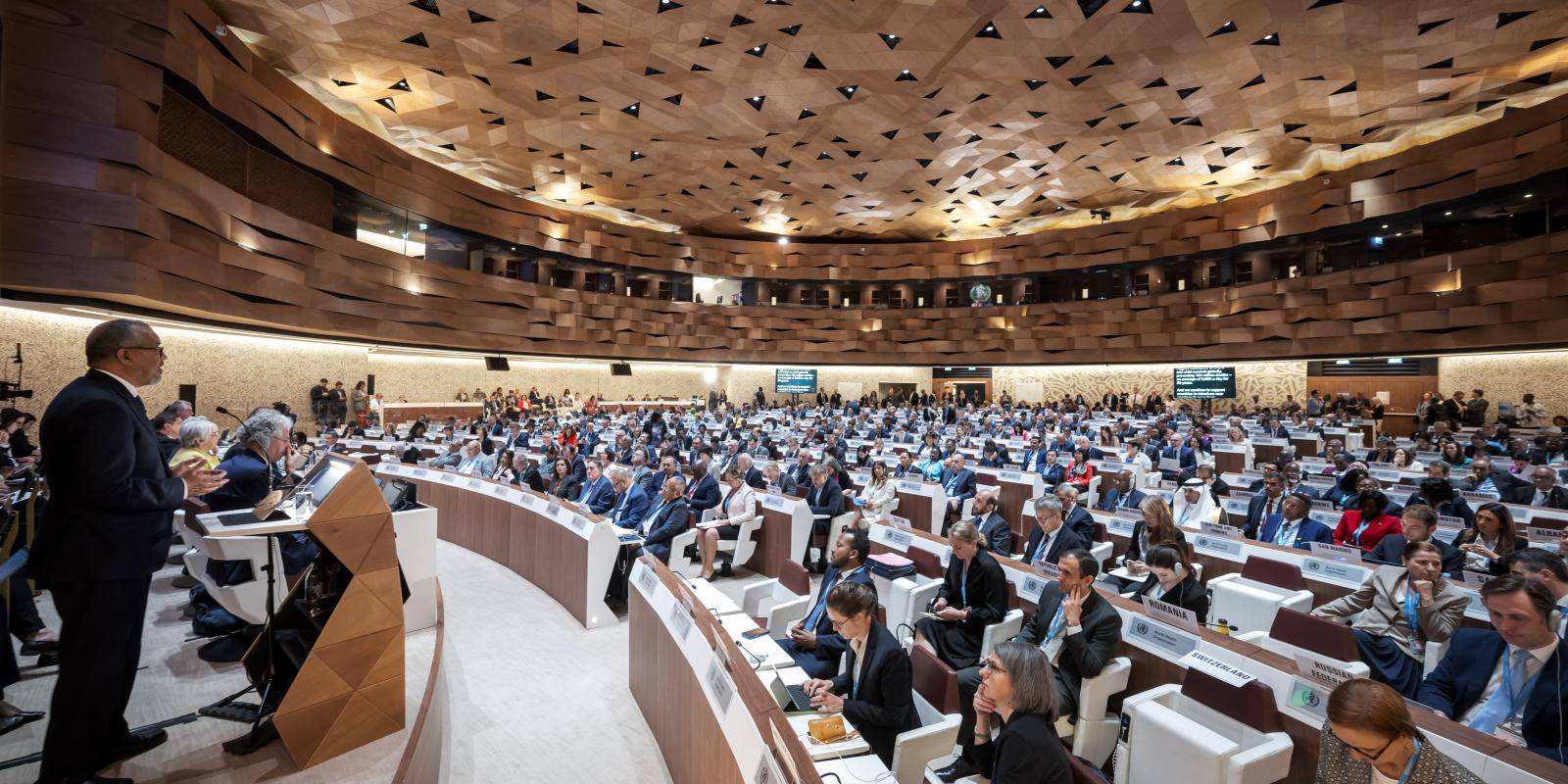
Global health governance is facing one of its most fragile moments in decades. The withdrawal of the United States from the World Health Organization (WHO) has opened a major funding gap and intensified a broader political shift away from multilateral cooperation. Bilateral agreements, especially those promoted through the United States’ “America First” health strategy, are increasingly replacing collective mechanisms. These arrangements often place financial burdens on lower-income countries while offering them limited influence over decisions that directly affect their health systems. This situation raises concerns about unequal power relations and weakens institutions designed to respond collectively to transnational health threats.
The current international order is described as undergoing a rupture rather than a gradual transition. In this context, middle powers — countries with diplomatic influence but without superpower dominance — are presented as essential actors for rebuilding trust in global cooperation. Their role becomes especially relevant because the WHO has historically depended less on coercive power and more on political legitimacy. If powerful states support the institution only when convenient, its capacity to coordinate disease surveillance, emergency responses and international standards risks becoming increasingly unstable. A weakened WHO could struggle to respond effectively to future crises that, by nature, cross borders and require coordinated action.
Rather than waiting for a comprehensive global agreement that may take years to emerge, flexible coalitions are proposed as a practical alternative. Different groups of countries could cooperate on specific issues according to shared interests and urgency. Pandemic preparedness, antimicrobial resistance, digital health governance and the links between climate and health all demand distinct forms of collaboration. This approach does not abandon multilateralism but adapts it to a more fragmented political environment. At the same time, reliance on fragmented alliances could create uneven progress if coordination mechanisms remain weak or if political priorities shift too quickly.
Greater political inclusion of countries from the Global South appears central to any legitimate reform. Nations such as Brazil, India, Indonesia, Nigeria and South Africa are portrayed as decisive actors in shaping the future of global health governance. Existing institutional arrangements are criticized for reflecting power distributions established in 1948 rather than contemporary realities of disease burden, medical capacity and demographic change. Without structural reforms that redistribute representation and influence, commitments to international cooperation risk appearing symbolic rather than meaningful. Calls for dialogue lose credibility when governance structures continue to privilege historically dominant actors.
Three priorities emerge as urgent. Reform of WHO governance requires stronger political ownership and clearer accountability instead of prolonged consultation processes. Digital health governance also demands more binding commitments, particularly regarding artificial intelligence, health data and technological inequalities between countries. Finally, the growing preference for bilateral agreements must be recognized as a structural challenge to multilateral health governance rather than a temporary funding issue.
The possibility of meaningful reform remains narrow. If multilateral institutions fail to demonstrate effectiveness, faster and more transactional bilateral models may become increasingly attractive despite their unequal dynamics. In that scenario, global health governance could become more fragmented and less capable of addressing collective threats. Inaction is presented as a political choice with consequences, especially at a moment when trust, cooperation and institutional legitimacy are under visible strain.
Reference: Kickbusch, I. (2026, May 11). Global health reform cannot wait for a new world order. Middle powers must act now. Chatham House. https://www.chathamhouse.org/2026/05/global-health-reform-cannot-wait-new-world-order-middle-powers-must-act-now