
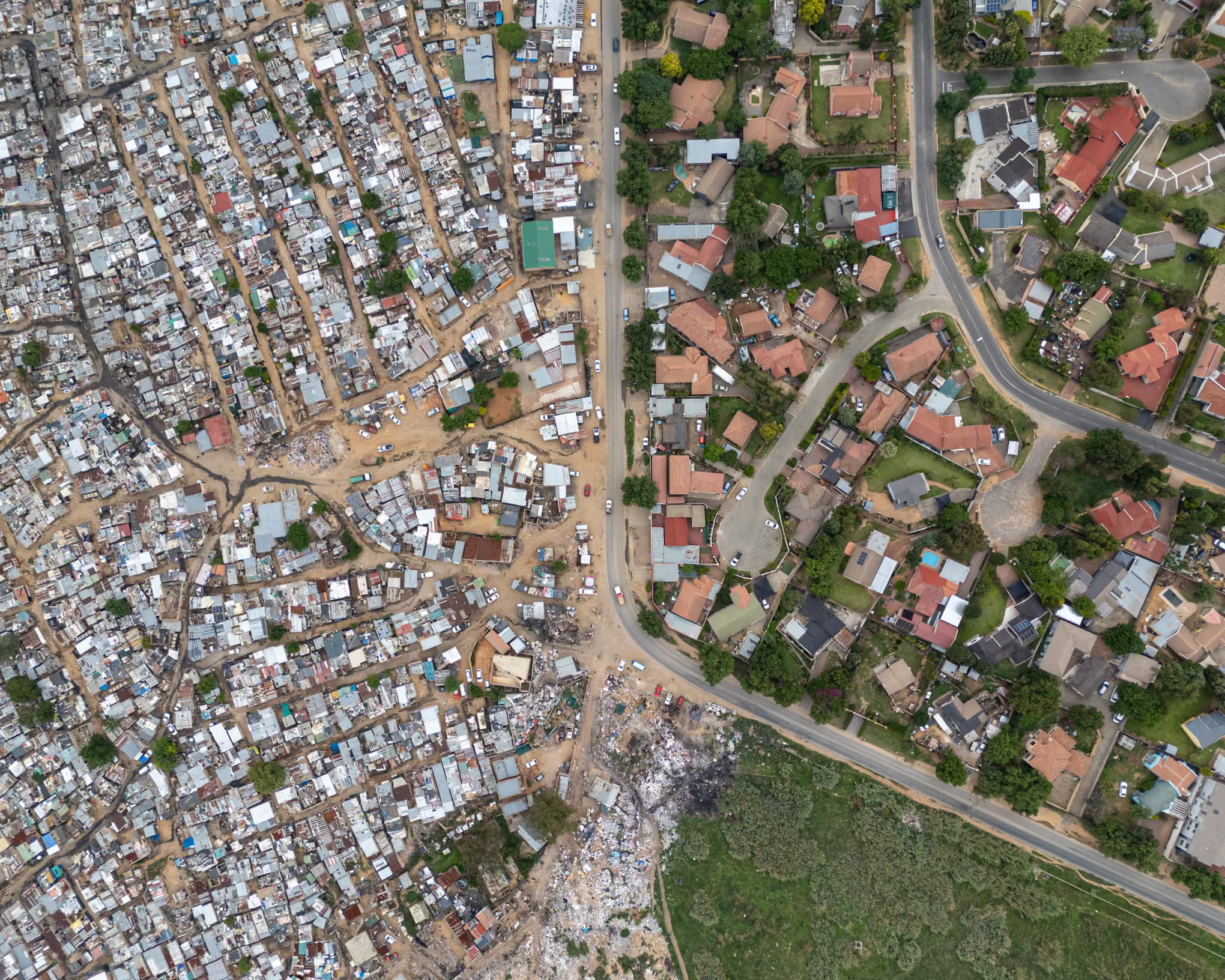
For decades, economic growth has been treated as the primary indicator of progress. Yet a growing number of researchers argue that rising GDP offers only a partial picture of how societies are actually doing. A country may become wealthier while still facing deep inequalities, environmental degradation, and declining quality of life. From this perspective, the central question is no longer how much economies produce, but whether that production translates into meaningful improvements in people’s lives.
This debate gains urgency in the context of climate change. Many current economic models depend on expanding production and consumption, a pattern that places increasing pressure on natural resources and contributes to environmental instability. The alternative being proposed is not a future defined by sacrifice or scarcity. Rather, it envisions societies where well-being is supported through stronger public services, greater social protection, and more equitable access to opportunities, while reducing dependence on resource-intensive forms of growth.
At the heart of this vision lies a different understanding of prosperity. Human flourishing is presented as something broader than material accumulation. Good health, quality education, secure housing, access to culture, meaningful leisure time, and strong social relationships are all considered essential components of a fulfilling life. Economic success, therefore, becomes a means to support these goals rather than an end in itself.
The discussion also highlights a tension that has shaped climate policy for years. Environmental measures often struggle to gain public support when they are perceived as placing additional burdens on ordinary citizens. Efforts to reduce emissions may be difficult to sustain if they fail to address concerns about inequality and economic insecurity. As a result, social justice and environmental sustainability are increasingly viewed as interconnected challenges. Policies that improve living standards while reducing ecological pressures may have a greater chance of securing long-term political support.
A key concept emerging from this approach is the idea of “enough.” Beyond a certain point, ever-higher levels of consumption do not necessarily produce greater happiness or well-being. At the same time, millions of people around the world continue to lack access to basic services and economic security. This contrast raises ethical questions about how resources are distributed and whether current patterns of wealth concentration are compatible with a sustainable future.
Addressing these imbalances would require substantial reforms. Proposals include greater taxation of extreme wealth, expanded investment in public goods, and stronger international cooperation to help lower-income countries pursue development without repeating environmentally damaging pathways. Such measures aim to create conditions in which economic security and ecological responsibility reinforce one another rather than compete for priority.
The obstacles, however, are considerable. Transforming economic systems would involve confronting powerful interests and overcoming political resistance. International coordination remains difficult, particularly when countries face different economic pressures and development needs. These challenges have led some observers to question whether such ambitions are realistic, even if the underlying concerns are widely acknowledged.
Ultimately, the debate centers on what societies choose to value. If progress is measured solely through economic output, important dimensions of human well-being may remain overlooked. An alternative approach suggests that success should be judged by the ability to create healthy, secure, and sustainable lives within the limits of the natural world. The question is not whether prosperity matters, but how prosperity should be defined in an era shaped by both environmental constraints and growing demands for social justice.
Reference: Watts, J. (2026, June 4). ‘Happiness is not just about GDP’: ambitious plan or utopia? The Guardian. https://www.theguardian.com/environment/2026/jun/04/happiness-is-not-just-about-gdp-ambitious-plan-or-utopia