
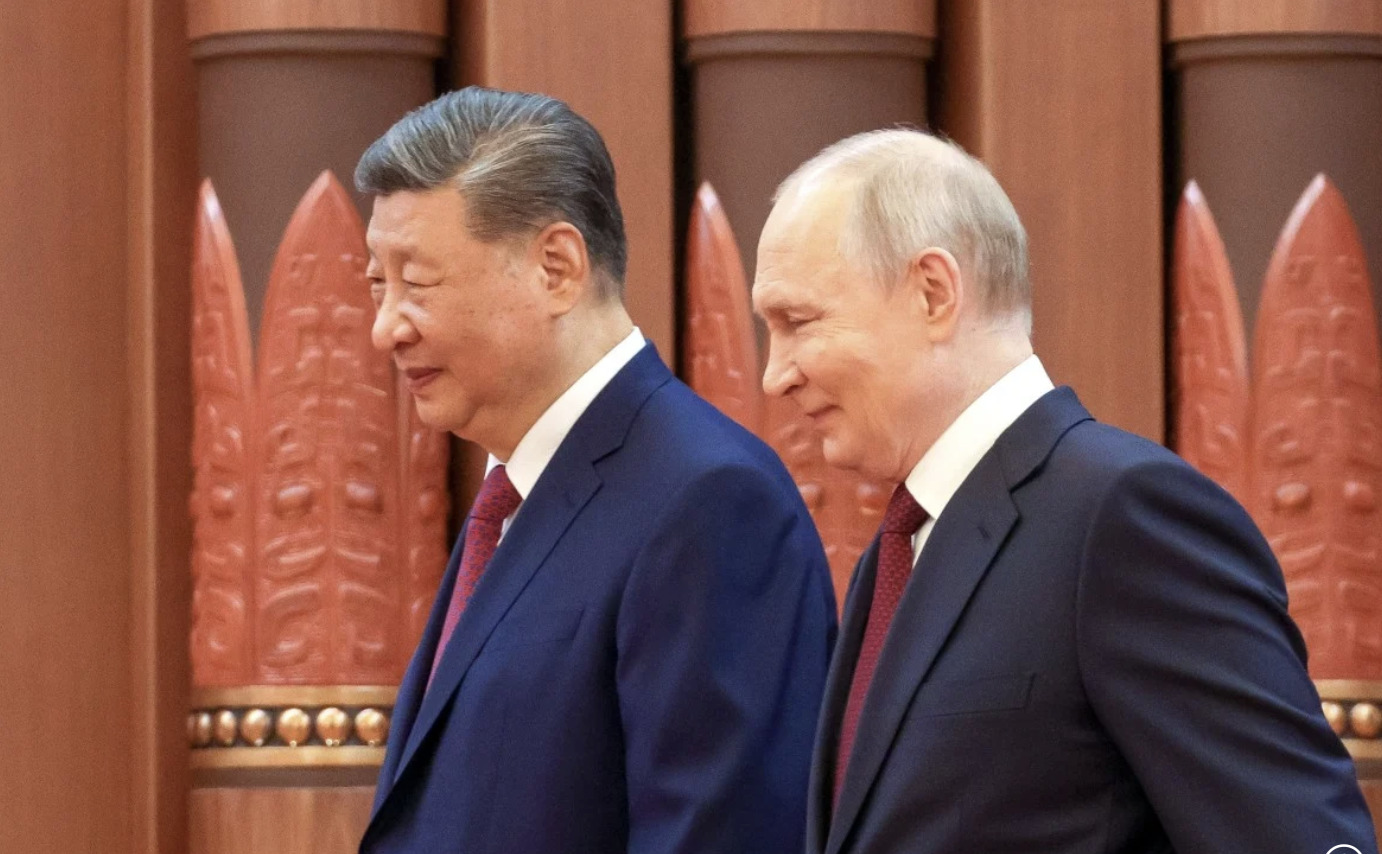
Cooperation between China and Russia on science and technology could help stop US isolation. Furthermore, it allows the international science community to return to normalcy amid geopolitical tensions. This collaboration offers the world an alternative model of scientific advancement. Consequently, it signals a significant shift in the scientific center of gravity from the West to the East. As the leaders of China and Russia met in Beijing, experts hoped the summit would provide essential institutional support for more cooperation.
A Summit for Innovation and Normalcy
Russian President Vladimir Putin and his Chinese counterpart Xi Jinping met on Wednesday to discuss trade, energy, and education. During this critical summit, Moscow and Beijing signed forty agreements. These deals heavily focused on deepening cooperation in innovation, technology, energy, science, and education. Valery Fokin, a professor at the University of Southern California, noted that this collaboration could stimulate the US to join rather than isolate. Furthermore, Fokin, a laureate of Russia’s top science honor, emphasized that international collaboration remains the lifeblood of science. He added that power comes from being together rather than executing science in individual silos.
Shifting the Center of Gravity in Biotechnology
The international science and technology landscape has become increasingly fragmented recently due to severe geopolitical and trade tensions. However, Vsevolod Belousov, director of Russia’s Federal Centre of Brain Research and Neurotechnologies, stated that Russia and China represent two of the world’s greatest scientific reservoirs. He explained that Russia offers expertise in fundamental neuroscience and mathematical modeling. Meanwhile, China offers an unprecedented ecosystem for rapid technological scaling and advanced biotechnological manufacturing. Therefore, synergy between the two countries might fundamentally shift the global scientific landscape. For the United States and Western powers, this means the center of gravity in biotechnological innovation is decisively moving East.
The Quantum Race and Future Corridors
Quantum technology has become a major battleground between the US, China, and Russia. Washington has levied strict sanctions against the quantum computing sector in both nations due to national security concerns. Maxim Ostras, CEO of the Russian Quantum Centre, noted that these restrictions are inadvertently forging a more resilient and self-reliant technological union. He praised China’s recent unveiling of the Jiuzhang 4.0 computer as nothing short of extraordinary.
Currently, collaboration includes joint research, publications, and scientific exchanges. However, demand for cooperation heavily exceeds existing mechanisms. Experts hope to see the establishment of a formal Russia-China quantum corridor to scale their discoveries. Additionally, a reciprocal visa-free arrangement established last year will continue, allowing more Russian scientists to easily visit China for joint bioengineering projects.
Reference
Bela, V., & Bela, V. (2026, 20 mayo). How China and Russia could team up to shift global science ‘centre of gravity’. South China Morning Post. https://www.scmp.com/news/china/science/article/3354254/how-china-and-russia-could-team-shift-global-science-centre-gravity?share=SSTdBPGnzQkycRJ9zDNePC%2FBnnux5ZU0tMY8Feiu211MmgEPldiNlotW1ZnQZctW6PeQZhXZo36EUcm0eLpor11U4%2F8TEg5YwWJJuUlGuv4%3D&utm_campaign=social_share