
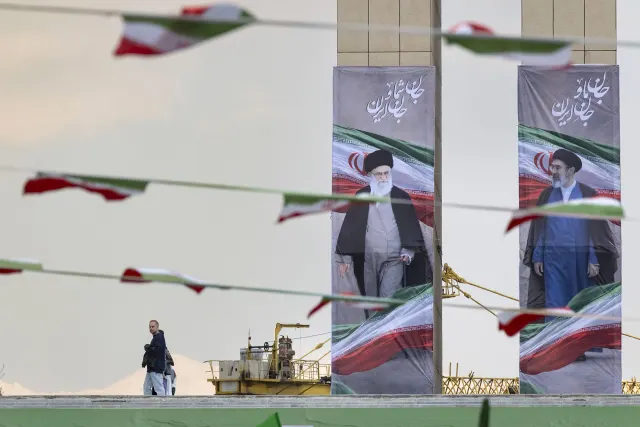
The article How the Iran War Confirmed, Contradicted, and Complicated U.S. Policy by Elisa Ewers and Ariane Tabatabai examines how the recent conflict has tested long-standing assumptions behind Iran policy.
At the center of the article is the idea of U.S. policy assumptions on Iran: some of these assumptions were validated during the war, others were disproven, and several now require serious revision. Therefore, the authors argue that reassessing U.S. policy assumptions on Iran is essential before shaping what comes next.
What U.S. policy assumptions on Iran got wrong
One major assumption that did not hold was the expectation that Iran’s regional proxies would respond forcefully and at scale if Tehran came under direct attack. Instead, groups such as Hamas, Iraqi militias, the Houthis, and Hezbollah acted far less aggressively than many analysts had anticipated. In particular, Hezbollah’s weakened condition limited its ability to play the role long associated with Iran’s deterrence strategy.
Another faulty assumption concerned Iran’s targeting decisions in the Gulf. Analysts had expected Tehran to distinguish between countries directly aligned with Washington and those seen as less involved. However, Iran instead struck all six Gulf countries on the first day of the war and expanded attacks to Iraq, Jordan, Cyprus, and Turkey. As a result, the conflict showed that U.S. policy assumptions on Iran had underestimated the breadth and speed of Tehran’s response.
What changed during the war
The war also altered expectations about the Strait of Hormuz. While U.S. planning had long included the possibility of a closure, the common assumption was that Iran would use this option only as a last resort. Instead, Tehran created a selective system: restricting some actors, allowing others through, and imposing costs that raised oil prices and increased its leverage. Consequently, Iran gained new bargaining power while preserving its own ability to move cargo.
In addition, the conflict may reshape Iranian doctrine. For decades, Tehran emphasized plausible deniability through proxies and hybrid tactics. Now, after direct attacks on neighbors and civilian infrastructure, the regime may move further away from deniability and place greater emphasis on rebuilding its own defenses and asymmetric capabilities.
What U.S. policy assumptions on Iran got right
Not all U.S. policy assumptions on Iran failed. The authors note that the expectation of regime resilience has been confirmed. Despite leadership losses, the Islamic Republic’s institutional structure has allowed it to continue functioning and retain its monopoly on force inside the country.
Likewise, assumptions about Iran’s likely use of hybrid warfare remain relevant. Analysts had anticipated possible terrorism, cyber operations, and attacks on U.S. or Jewish targets if the conflict escalated. Moreover, the article suggests that core judgments about the nature of the regime still hold, even if new figures and altered power dynamics will shape future decisions.
Conclusion
Overall, the article argues that U.S. policy assumptions on Iran can no longer be treated as fixed. Some proved accurate, but others were overtaken by events or exposed as outdated.
Ultimately, Washington needs a more realistic framework for the postwar period. Without that reassessment, future policy risks being shaped by assumptions the war has already called into question.
Reference
Ewers, E., & Tabatabai, A. (2026). How the Iran war confirmed, contradicted, and complicated U.S. policy. Council on Foreign Relations. https://www.cfr.org/articles/how-the-iran-war-confirmed-contradicted-and-complicated-u-s-policy