
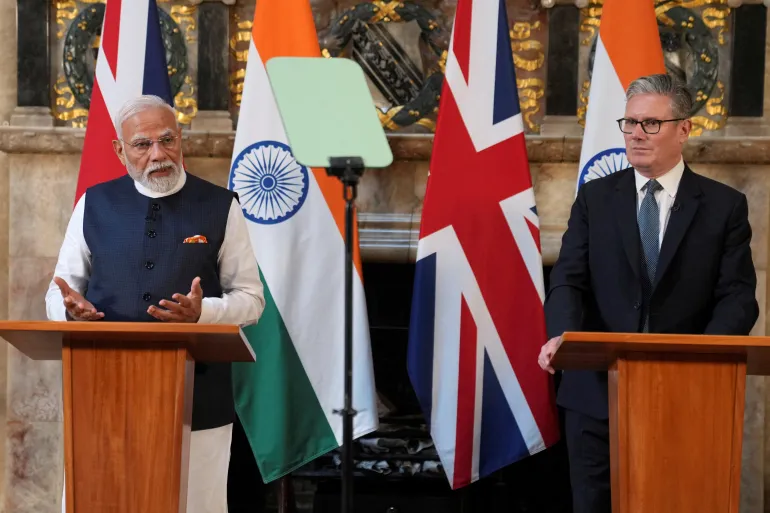
The Comprehensive Economic and Trade Agreement (CETA) between India and the United Kingdom has officially entered into force. Representing a major economic milestone that dramatically reduces tariffs on thousands of commodities and expands market access for services and skilled professionals in both nations. Under the terms of this milestone agreement, the UK is immediately eliminating tariffs on 96.8 percent of its tariff lines. Representing nearly 98 percent of its total trade value with India. Meanwhile, India is immediately removing duties on 64.1 percent of its tariff lines, with plans to phase out tariffs on an additional 21 percent over time. This bilateral trade dynamic is highly complementary; in the most recent financial year. India exported over 13 billion dollars in goods to the UK, while importing nearly 12 billion dollars in return.
For Indian consumers and businesses, the agreement makes high-value British imports significantly more affordable. Products set to see price drops in India include cosmetics, whiskies, chocolates, soft drinks, and lamb, alongside crucial manufacturing components. Such as electrical circuits, high-end optical products, medical devices, and automobiles. Conversely, British consumers will benefit from cheaper Indian goods as duties are scrapped on major export categories. Including textiles, leather, footwear, gems, jewelry, marine products, spices, fruits, and processed foods. Beyond physical goods, the treaty includes a highly anticipated Social Security Agreement. That exempts temporary Indian workers in the UK from paying National Insurance contributions for up to five years. Directly benefiting over 75,000 professionals and 900 companies across sectors like information technology, finance, consulting, and healthcare.
Certain highly sensitive sectors have been deliberately excluded from the tariff cuts to protect local agricultural and industrial interests. India has kept protective barriers on gold bars, smartphones, apples, and walnuts. While both nations have excluded poultry, eggs, sugar, and dairy from the deal. Despite these specific omissions, the agreement is widely viewed by political and business leadership in both democracies. As a transformative framework for technology sharing, investment, and talent mobility.
In conclusion, the activation of the India-UK trade agreement marks a profound shift toward deeper economic integration between two major global markets. By systematically lowering barriers on consumer goods, industrial components, and professional services. The deal not only offers immediate cost savings for citizens in both nations but also establishes a resilient, forward-looking economic partnership. Ultimately, the long-term success of this treaty will be measured by its ability to accelerate bilateral trade and foster seamless cross-border talent mobility in an increasingly interconnected global economy.
Reference
Mohamed, E. (2026, July 15). India-UK trade deal comes into effect: What’s cheaper in each country now? Al Jazeera. https://www.aljazeera.com/news/2026/7/15/india-uk-trade-deal-comes-into-effect-whats-cheaper-in-each-country-now