
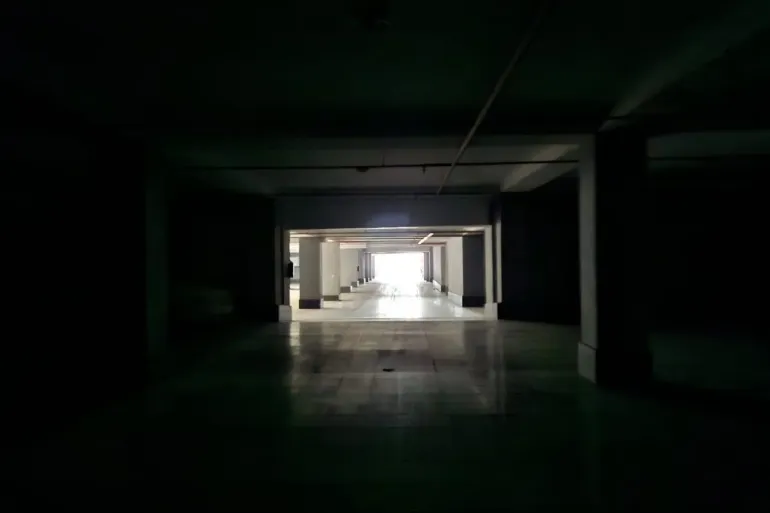
Life in Tehran has taken a chaotic turn. Millions of citizens are currently navigating a collapsing electrical grid that has disrupted daily life across the nation. Consequently, rolling Iran power blackouts have plunged critical civilian infrastructure, universities, and businesses into complete darkness.
The timing could not be worse. Iran is currently grappling with a severe summer heatwave alongside escalating military tensions from the United States-Israel war. As a result, official promises of a stable summer energy supply have completely evaporated.
Academic Exams and Daily Life Derailed
The impact on the younger generation is deeply frustrating. For example, at the prestigious Sharif University of Technology, sudden electricity cuts forced server networks completely offline during final exams. Because the electronic testing platforms vanished, administrators had to postpone 38 major tests until next month.
However, the crisis extends far beyond disrupted academic schedules. For thousands of vulnerable citizens, a stable electrical supply is a matter of life or death. Medical patients who rely on home ventilators, as well as families storing vital, temperature-sensitive medications in refrigerators, are facing terrifying conditions.
Military Strikes Meet Decaying Infrastructure
While officials previously guaranteed a seamless summer, recent events shattered those assurances. Government authorities confirmed that recent US military strikes heavily damaged major electrical facilities in southern Iran, causing a massive 4,200-megawatt drop in national grid capacity.
“If you knew how many electrical facilities were bombed two days ago, you wouldn’t ask this question.” — Mehdi Chamran, Tehran City Council Chairman
Furthermore, specific strikes on a power plant on Kish Island, combined with network destruction in Bandar Abbas, Jask, and Chabahar, have crippled distribution lines. In response, small business owners must now rely on noisy sidewalk generators to prevent perishable goods from spoiling. Meanwhile, traffic lights are failing, forcing police officers to direct traffic manually at major intersections.
The Deep-Rooted Energy Paradox
Interestingly, the energy deficit persists even though Iran’s largest industrial power consumers are currently offline due to wartime damage. Industrial giants like the Mobarakeh Steel Company theoretically returned 2,000 megawatts to the grid after halting operations.
Unfortunately, this surplus was immediately erased because the heavily bombed Mahshahr petrochemical complex now draws power from the grid rather than supplying it. According to economic experts, the war was simply the final blow to a fragile system. The underlying root of these chronic Iran power blackouts stems from years of severe underinvestment, massive energy loss along transmission lines, and an aging network unable to handle a modern climate crisis.
Alhaei, R. (2026, July 19). Iranians suffer from power blackouts during war and heatwave. Al Jazeera. https://www.aljazeera.com/news/2026/7/19/iranians-suffer-from-power-blackouts-during-war-and-heatwave