
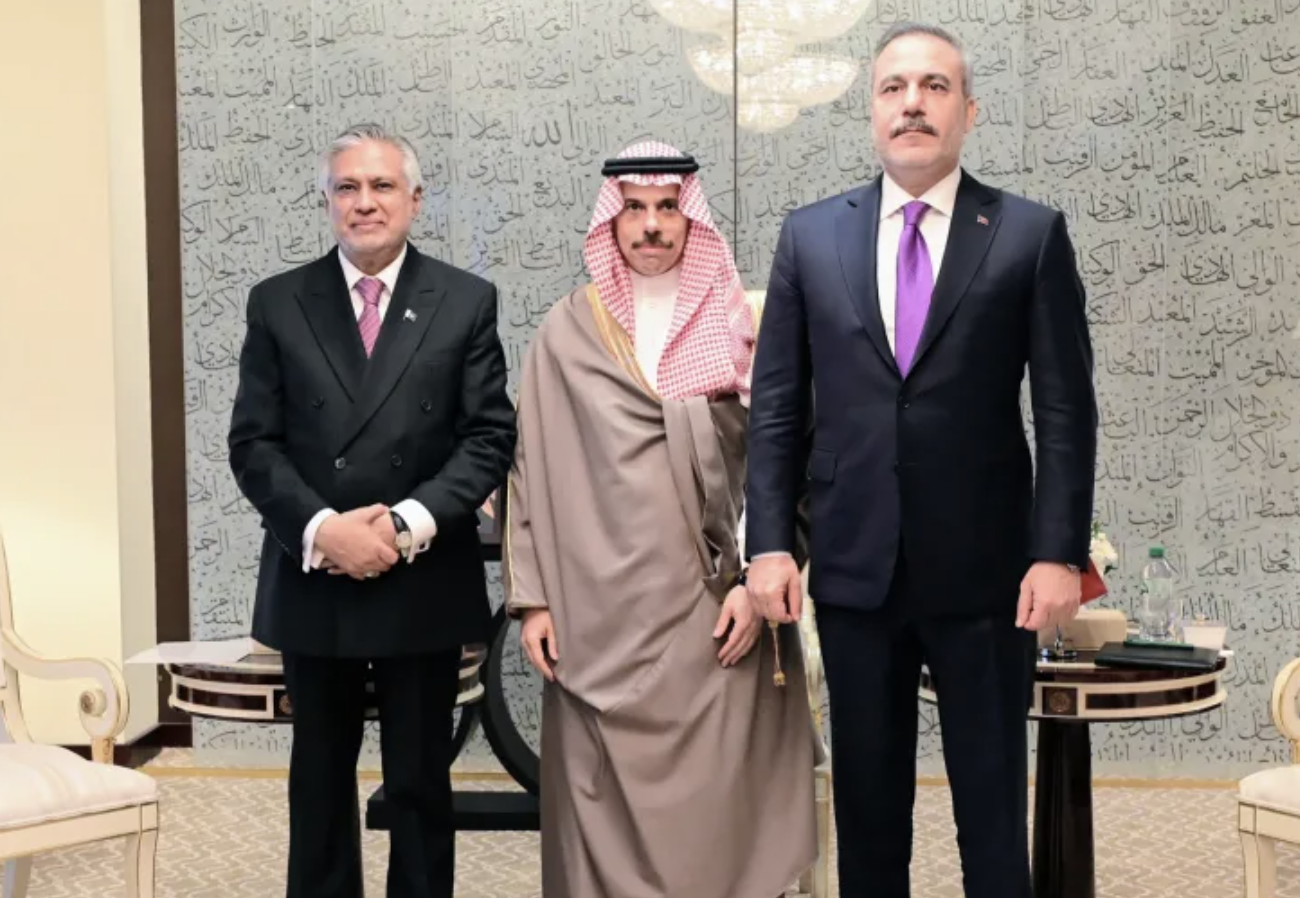
Emergency defense consultations surrounding the Meca Joint Defense Agreement underscore accelerating military cooperation across Middle Eastern and South Asian regional powers. Top defense officials from Pakistan and Turkiye traveled to Riyadh following urgent requests from Saudi authorities seeking operational implementation of mutual defense commitments amid intensifying conflict with Houthi forces.
Specifically, Turkish Chief of General Staff Selcuk Bayraktaroglu and Pakistani Chief of Defense Staff Asim Munir scheduled high-level meetings in the Saudi capital to address recent cross-border missile and drone strikes. Because long-range projectiles targeted critical infrastructure across Taif, Makkah, Jeddah, and Yanbu, regional authorities urgently seek coordinated defense mechanisms. Consequently, strategic planners assess long-term collective security arrangements.
Mutual Defense Guarantees and Strategic Restraint
Diplomatic frameworks established under recent security treaties establish formal collective defense obligations. For this reason, article provisions within the agreement classify external aggression against any signatory state as an attack against all three participating nations.
In fact, former Inter-Services Intelligence official Nauman Mahmood assumed responsibilities as secretary-general of the joint defense alliance to establish operational structures in Riyadh. Meanwhile, political analysts note that domestic troop deployments remain constrained by external border security obligations in Pakistan and NATO commitments in Turkiye. Therefore, defense ministries emphasize technical assistance, logistical support, and air defense cooperation rather than immediate ground troop commitments.
Territorial Realities and International Military Support
Escalating territorial control along vital maritime corridors compounds regional energy security concerns. Indeed, Houthi forces secured strategic positions near the port city of Mocha and the Bab el-Mandeb strait following ground offensives in western Yemen.
Furthermore, Western allies including France and Great Britain mobilized defensive assistance to protect commercial shipping routes and coastal oil infrastructure in Yanbu. Although Houthi political representatives issued stern warnings against direct foreign intervention, Saudi religious and civil authorities continue mobilizing domestic support to defend national sovereign borders. As a result, international observers closely monitor whether diplomatic negotiations yield sustainable regional de-escalation.
Reference
Al Jazeera. (2026, September 25). Pakistan, Turkiye edge closer towards joining Saudi war against Houthis. Al Jazeera. https://www.aljazeera.com/news/2026/9/25/pakistan-turkiye-edge-closer-towards-joining-saudi-war-against-houthis