
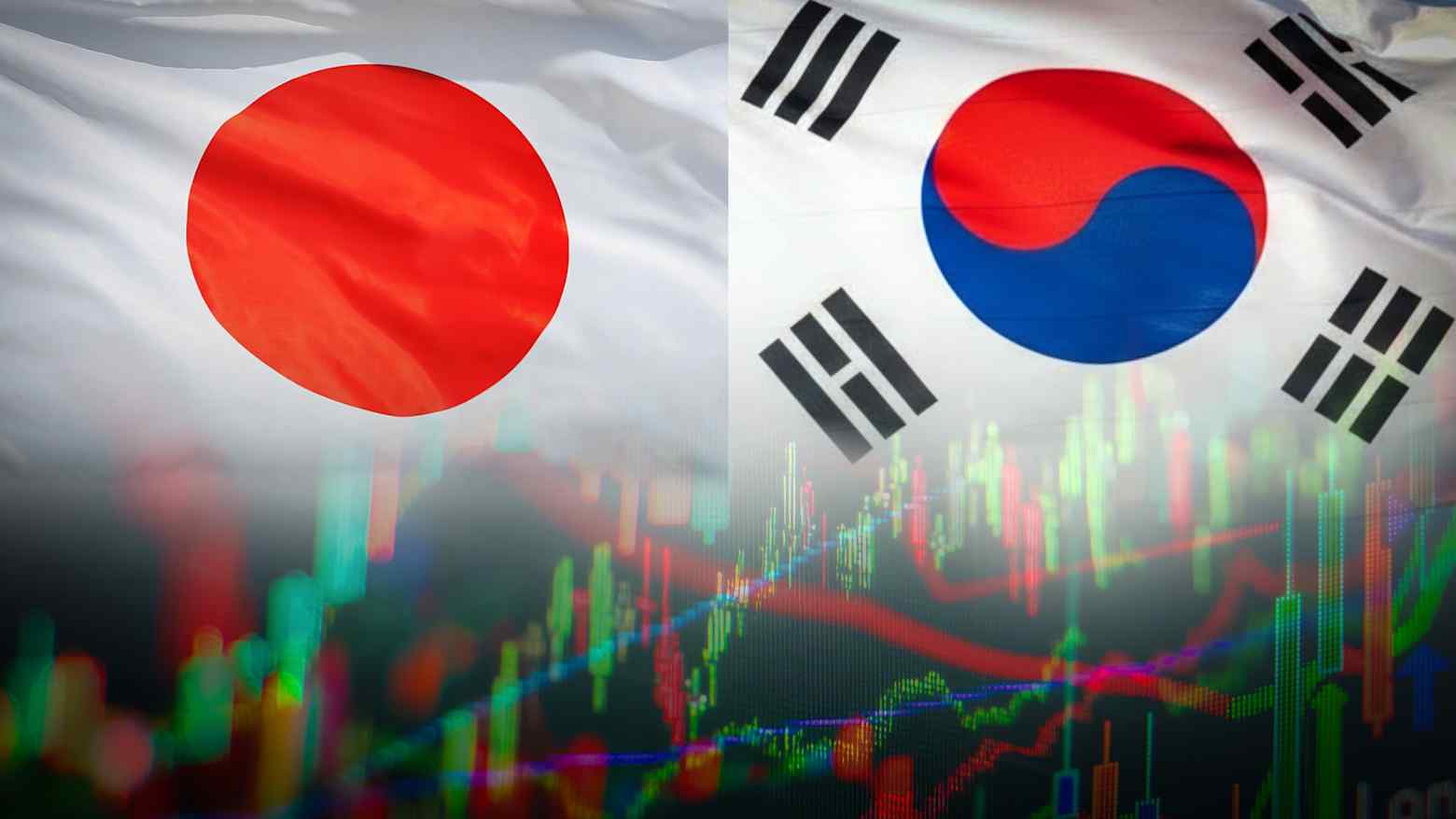
A Historic Day for Asian Capital Markets
East Asian equity markets achieved unprecedented landmarks as Japan’s benchmark Nikkei 225 stock average closed above the 70,000 mark and South Korea’s KOSPI index eclipsed 9,000 points for the first time in history. This extraordinary surge reflects a massive wave of investor confidence across regional trading floors. The simultaneous breakthroughs underscore the rapidly expanding valuation of Asian technology and industrial heavyweights, establishing a new baseline for global capital allocation in Asian markets.
The Interplay of AI and Geopolitical Breakthroughs
Two core catalysts drove this record-breaking trading session: the relentless global expansion of artificial intelligence (AI) infrastructure and a dramatic easing of international risks. Wall Street investment banks and institutional funds aggressively expanded their positions following the announcement of a tentative diplomatic agreement between the United States and Iran. This geopolitical breakthrough immediately mitigated intense energy anxieties and downward economic pressures, creating an optimal high-risk appetite environment for global equity buyers.
Semiconductor Supercycle and Corporate Earnings
At the center of the market rally is a powerful profit supercycle within the tech hardware and semiconductor industries. Companies specializing in AI chip manufacturing and precision testing equipment, such as South Korea’s Samsung Electronics and SK Hynix, alongside Japan’s technology components makers, led the historic advance. Analysts note that structural corporate reforms, record-high shareholder returns, and an estimated 320% earnings growth in key technology sectors have provided robust fundamental support for these soaring index valuations.
Global Supply Chains and Inflationary Relief
The macroeconomic implications of these milestones extend far beyond Asian borders, directly impacting global supply chain networks. The stabilization of international energy markets—triggered by the reopening of the strategic Strait of Hormuz under the U.S.-Iran framework—has substantially lowered shipping costs and alleviated global inflationary fears. Consequently, international investors view East Asian manufacturing hubs as stabilized environments capable of sustaining continuous production without immediate energy supply disruptions.
International Relevance
The record closing of the Nikkei above 70,000 and the KOSPI above 9,000 represents a crucial turning point for the global financial architecture and transnational technology governance. These milestones demonstrate that East Asian capital markets have become the primary epicenters for the AI infrastructure supercycle, shifting the balance of tech-driven wealth accumulation. Furthermore, the direct correlation between Middle Eastern diplomacy and East Asian market performance highlights the deep integration of global politics and international finance. Ultimately, the stability of these indices will serve as a vital metric for monitoring global inflation trends, multilateral trade health, and the resilience of advanced technology supply chains worldwide.
Reference: Nikkei Asia. (2026, June 18). Nikkei closes above 70,000 and KOSPI eclipses 9,000 for first time. https://asia.nikkei.com/business/markets/nikkei-closes-above-70-000-and-kospi-eclipses-9-000-for-first-time