
A Regional Pact with Uncertain Boundaries
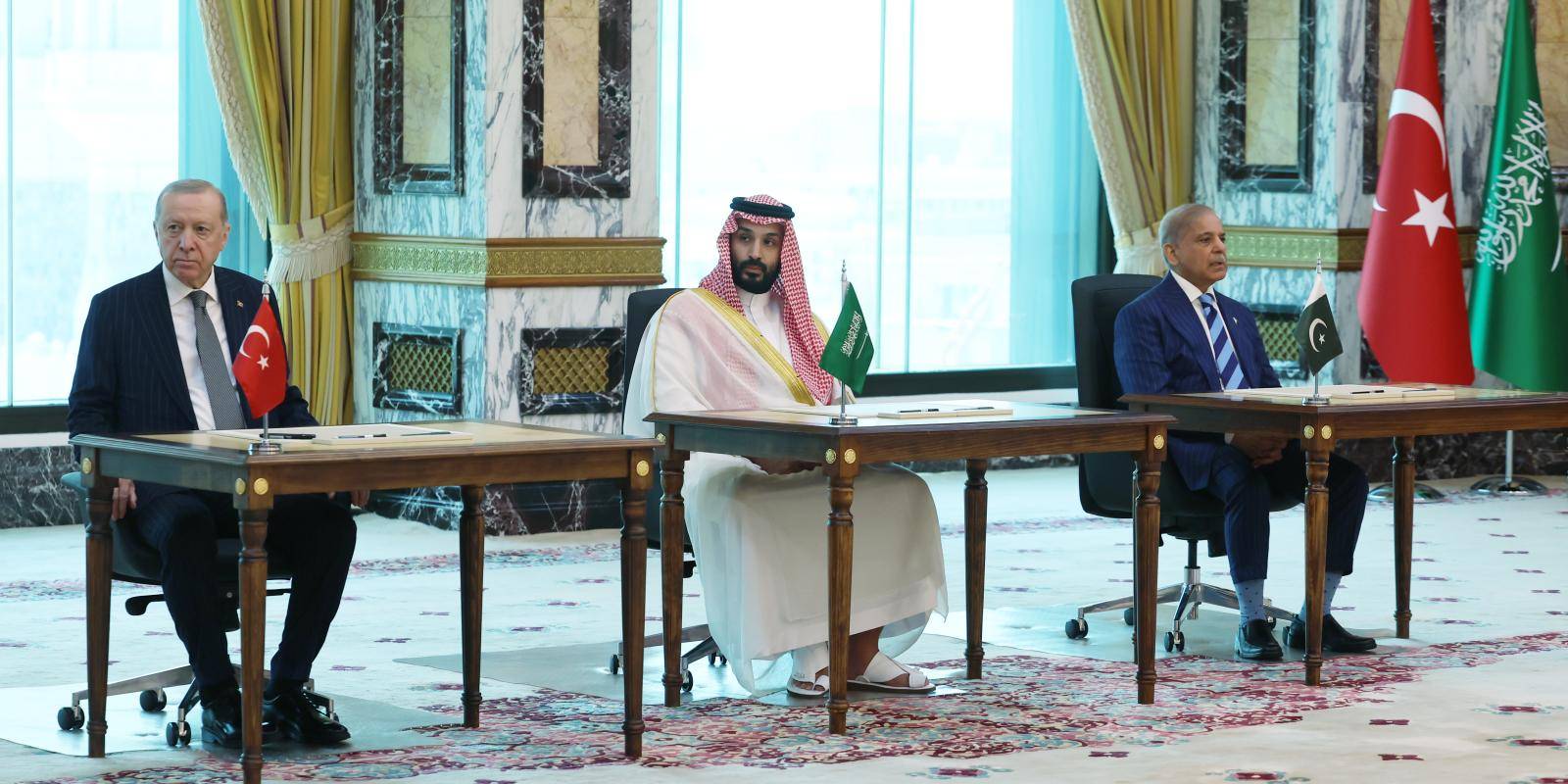
Saudi Arabia, Turkey and Pakistan signed the Mecca Joint Defence Agreement on 7 August 2026. The pact establishes that an armed attack against one member will be treated as an attack against all. Its creation reflects a broader search for greater regional security and less dependence on the United States.
At first glance, the agreement may resemble NATO because of its mutual-defence principle. Yet its ambitions remain considerably narrower, as its members present it as a defensive arrangement. Rather than targeting a particular country, the pact seeks to strengthen regional capabilities and encourage greater security cooperation.
That distinction matters because the agreement is still more an emerging framework than a consolidated alliance. Saudi Arabia could use it to reinforce its security position while reducing reliance on Washington. Turkey may gain new opportunities for its defence industry, while Pakistan could deepen its economic relationship with Riyadh and expand its regional influence.
Egypt’s Delicate Position
Egypt’s absence is especially notable because Cairo already maintains close relations with all three countries. Its government is considering membership, although constitutional and legal obligations require further examination. For now, this hesitation reflects Egypt’s longstanding preference for avoiding rigid military alignments.
Joining the pact could also carry diplomatic consequences. Egypt maintains relationships with countries that may view the agreement with suspicion. A formal commitment could therefore narrow Cairo’s room for manoeuvre and complicate its ability to communicate across opposing regional camps.
This concern is particularly relevant because Egypt has built part of its regional influence through mediation. Its relationships with different actors allow Cairo to participate in diplomatic efforts where other governments may have fewer channels. Entering a formal military alliance could make that balancing role considerably harder.
Security Without Losing Autonomy
Even so, Egypt has genuine reasons to consider closer cooperation. It shares several security concerns with the pact’s members, especially regarding instability involving non-state actors. Conflicts and political crises in Sudan, Libya and the Horn of Africa could make regional coordination increasingly valuable.
The possibility of conflict with Israel creates a more complicated calculation. Egypt maintains a peace treaty and security cooperation with Israel, yet Israeli military power remains an important strategic concern. At the same time, Washington continues providing Egypt with security support that the new pact cannot currently replace.
There is another concern beneath the military question: who would ultimately shape the alliance’s priorities? A greater integration into a Saudi-led security structure could strengthen Riyadh’s regional leadership. For Cairo, that raises the possibility of exchanging one form of dependence for another.
The Advantage of Waiting
For these reasons, immediate membership offers uncertain benefits. Egypt already cooperates with several pact members, meaning formal accession would not necessarily transform its existing security relationships. Meanwhile, the diplomatic costs could become significant if regional divisions deepen.
Yet the pact’s future could alter this calculation. Its real credibility will depend on what happens when one member faces a serious security threat. Declarations of solidarity are easier than translating them into coordinated military action.
Until that becomes clearer, Egypt can afford to observe from outside. Waiting would allow Cairo to evaluate the alliance’s military structure, practical obligations and willingness to act. More importantly, it would preserve Egypt’s ability to maintain relationships beyond the pact.
This cautious approach also reflects a larger question facing regional powers. Greater strategic autonomy can reduce dependence on Washington, but new alliances may create different forms of political dependence. For Egypt, therefore, the challenge is finding greater security without surrendering its diplomatic flexibility.
In the end, the Mecca Pact represents an important experiment in reshaping regional security. Its future influence will depend on its ability to deliver collective protection. For Cairo, remaining outside for now may provide something increasingly valuable: the freedom to choose later, once the alliance’s real limits become visible.
Reference: Aboudouh, A. (2026, August 14). Should Egypt join the Mecca Pact? Chatham House. https://www.chathamhouse.org/2026/08/should-egypt-join-mecca-pact