
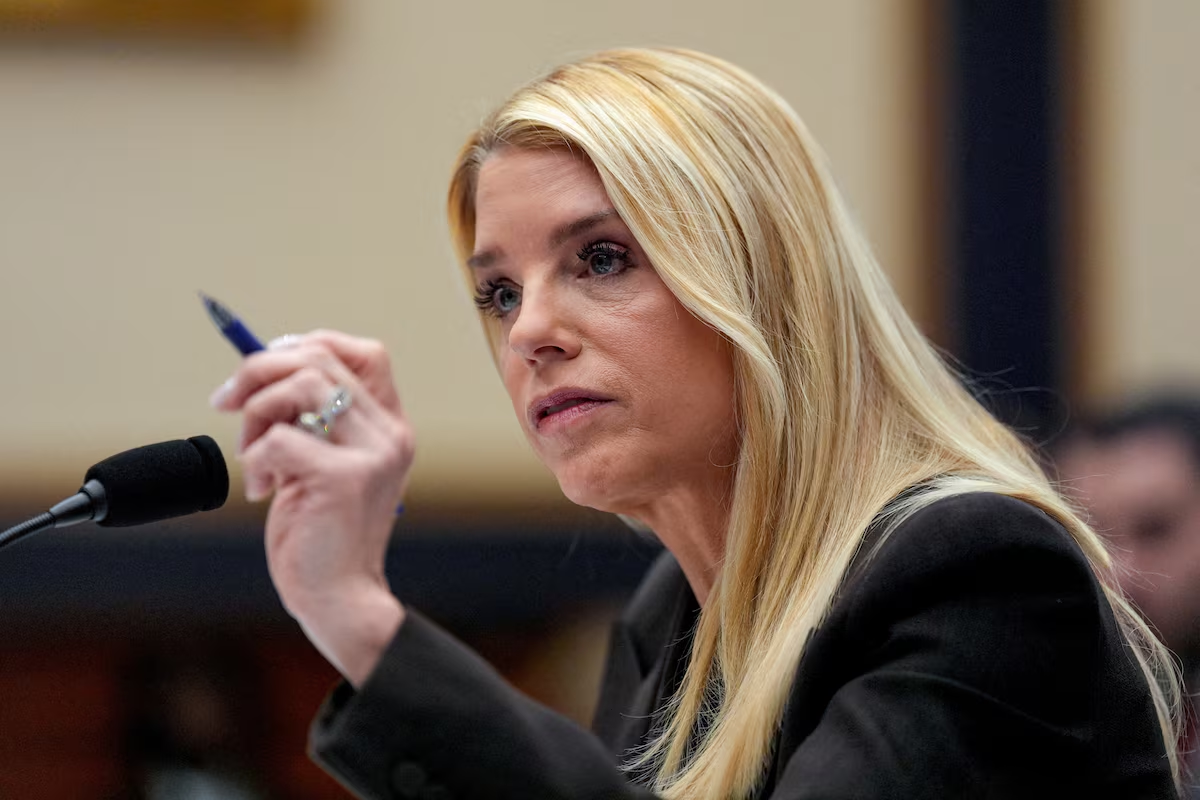
The Sudden Collapse of the Justice Department Leadership
On April 2, 2026, President Donald Trump fired U.S. Attorney General Pam Bondi, according to multiple news outlets. This dismissal marks the shortest tenure for a Senate-confirmed Attorney General in modern history, coming less than a year into the administration’s term. Consequently, the Department of Justice (DOJ) has been thrust into a leadership vacuum at a moment when the administration is navigating complex legal justifications for continued kinetic operations in Iran and the domestic implementation of the “Maximum Pressure” campaign on Cuba. This move suggests a profound disagreement over the limits of executive power, particularly regarding the use of federal resources to enforce emergency wartime measures.
Origins and the “Constitutional Hesitation” Critique
Originally, Pam Bondi was selected for her unwavering loyalty and shared vision of a “de-politicized” Justice Department focused on border security and deregulation. However, the origin of the current rift lies in Bondi’s reported hesitation to provide a formal legal opinion authorizing the domestic seizure of assets from “third-party facilitators” of the Iranian and Cuban regimes without traditional due process. As the President pushed for immediate “Asset Neutralization” to fund the ongoing war effort, Bondi allegedly expressed concerns regarding the constitutionality of such broad executive orders. Furthermore, the report emphasizes that the President viewed this caution not as legal prudence, but as a “betrayal” of the administration’s “America First” mandate during a time of war.
Structure of the Acting Leadership and the Recess Appointment Strategy
The structure of the DOJ following Bondi’s exit is organized around an immediate shift to “Acting” leadership, likely headed by a staunch loyalist from within the Civil Rights or National Security divisions. Specifically, the administration is reportedly exploring the use of Recess Appointments to bypass a potentially lengthy and contentious Senate confirmation process, given the narrow majority in the upper chamber. Moreover, the article highlights the “strategic purge” occurring within the top tiers of the DOJ; several high-ranking officials who supported Bondi’s cautious approach are expected to resign or be removed in the coming days. This creates an environment where the Justice Department is being rapidly restructured to function as a direct extension of the White House’s “Kinetic Diplomacy” doctrine.
Synthesis of Institutional Stability and the Rule of Law
The successful implementation of the President’s domestic and foreign agenda now faces a paradox: while removing “internal obstacles” allows for faster executive action, it simultaneously weakens the institutional legitimacy of the Justice Department in the eyes of the judiciary and international allies. This objective is essential to understand because it signals a move toward a “Unitary Executive” model where the Attorney General acts as the President’s personal counsel rather than an independent arbiter of the law. Simultaneously, there is a clear intent to signal to the remaining cabinet members that dissent on “national survival” issues—such as the Iran blockade—will not be tolerated. Ultimately, the Reuters report provides a stable warning: the firing of Pam Bondi is a signal that the administration is preparing for a “Total Executive” phase, where legal barriers to the war effort will be removed by any means necessary.
Reference
Reuters. (2026, April 2). Trump fires Pam Bondi as U.S. Attorney General – CNN, Fox. Reuters U.S. News. https://www.reuters.com/world/trump-fires-pam-bondi-us-attorney-general-cnn-fox-2026-04-02/