
A New Phase in the U.S.–Iran Confrontation
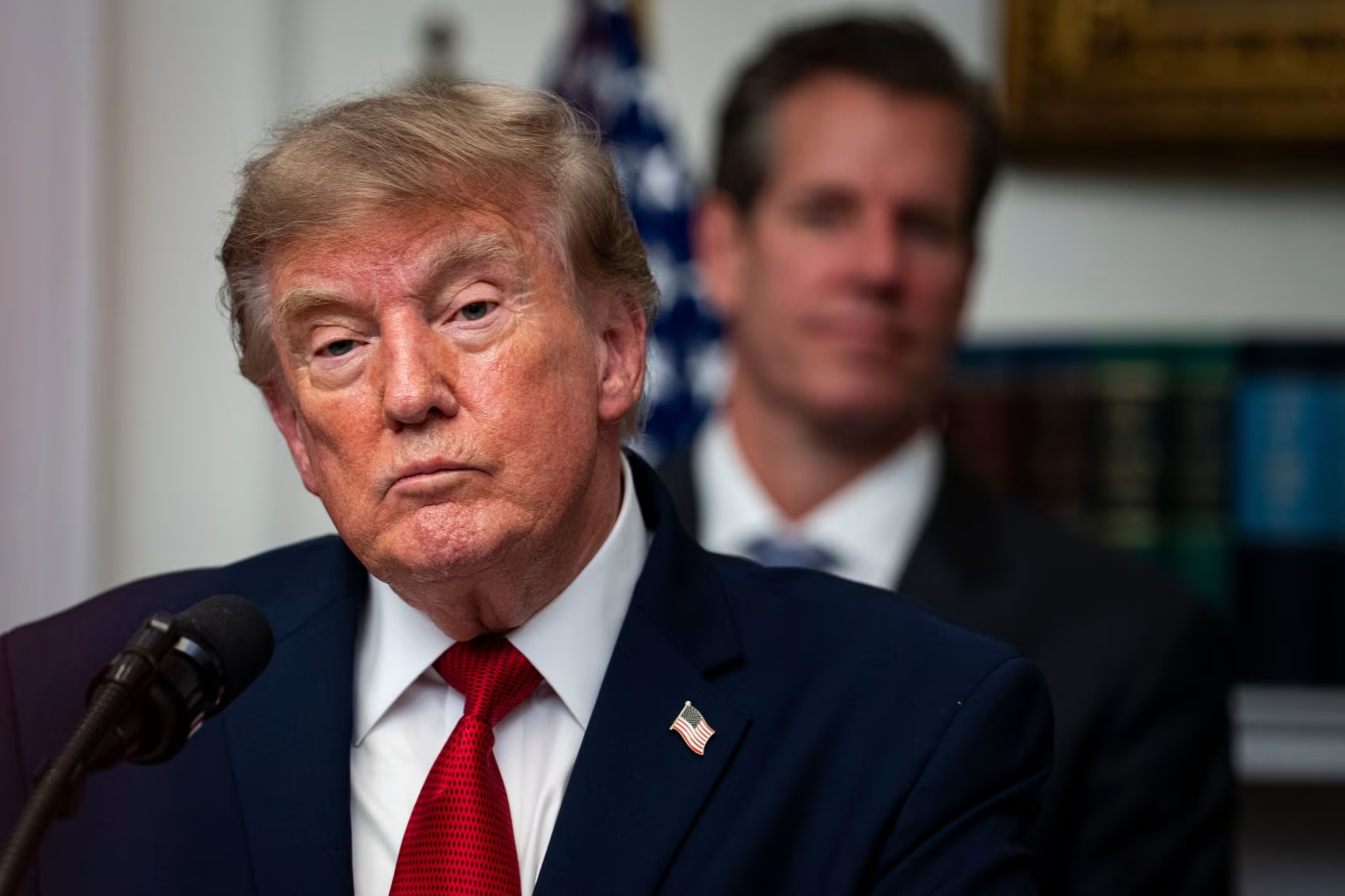
The relationship between the United States and Iran has entered a new and potentially decisive stage following President Donald Trump’s announcement of what he called an “Economic D-Day” against Tehran. Rather than relying on direct military action, the administration has chosen to intensify economic pressure through what Trump described as the most severe financial campaign ever directed at a foreign government. The proposal seeks not only to restrict Iran’s economy but also to penalize countries, banks, and companies that continue to facilitate Iranian trade and investment. The announcement comes at a time of heightened instability in the Middle East and reflects Washington’s growing frustration with the lack of progress in diplomatic negotiations.
Economic Isolation as a Foreign Policy Instrument
The strategy represents a significant expansion of the traditional sanctions model. Instead of focusing exclusively on Iranian institutions, the United States aims to increase pressure on external actors that help sustain Iran’s economic activity. By targeting financial networks, oil exports, and commercial partnerships, Washington hopes to reduce Tehran’s revenues and limit its ability to project influence across the region.
Supporters of the policy argue that economic coercion offers a less costly alternative to military escalation. From this perspective, weakening Iran’s economic foundations could create incentives for its leadership to return to negotiations without triggering a direct armed conflict. The approach also reflects a broader trend in international relations in which economic instruments are increasingly used to pursue strategic and geopolitical objectives.
Regional Reactions and Strategic Consequences
A key development reinforcing Washington’s strategy is the decision by the United Arab Emirates to suspend a range of financial and economic transactions with Iran. Given the UAE’s longstanding role as a commercial hub for Iranian businesses, this measure could significantly reduce Tehran’s access to regional and global markets. If other states follow a similar path, Iran may face increasing difficulties in maintaining trade flows and attracting foreign investment.
However, the effectiveness of this strategy remains uncertain. Iran has strongly rejected the initiative, labeling it “economic terrorism” and portraying the measures as an attack on its sovereignty. Rather than encouraging compromise, the sanctions could strengthen nationalist sentiment within Iran and reduce the political space for diplomatic engagement. Moreover, enforcing secondary sanctions on foreign entities may generate friction between the United States and some of its international partners, particularly those with economic interests in maintaining relations with Tehran.
Implications Beyond the Middle East
The consequences of the policy extend far beyond the immediate U.S.–Iran relationship. Continued tensions could threaten stability in the Strait of Hormuz, a strategic maritime corridor through which a substantial portion of the world’s energy supply passes. Any disruption in this region could influence global oil prices, increase transportation costs, and contribute to broader economic uncertainty.
Furthermore, the situation highlights the interconnected nature of contemporary international politics. Decisions taken in Washington and Tehran have the potential to affect governments, businesses, and consumers across multiple continents. As a result, the dispute is no longer solely a bilateral issue but a matter with significant implications for global economic and security dynamics.
Pressure Without a Clear Resolution
Trump’s “Economic D-Day” announcement signals a determination to maximize pressure on Iran at a moment when diplomatic avenues appear increasingly limited. While the strategy may deepen Iran’s economic isolation and raise the costs of its regional policies, history suggests that sanctions alone rarely guarantee political change. Their success ultimately depends on international cooperation, the resilience of the targeted state, and the existence of credible diplomatic alternatives.
The coming months will reveal whether this intensified campaign succeeds in bringing Iran back to the negotiating table or whether it contributes to a deeper cycle of confrontation. What is clear is that the initiative represents one of the most ambitious attempts in recent years to use economic power as a tool of geopolitical influence.
Reference:
McGraw, M., & Wegmann, P. (2026, August 20). Trump threatens Iran with “Economic D-Day”. The Wall Street Journal. https://www.wsj.com/world/middle-east/trump-threatens-iran-with-economic-d-day-4d2f238c