
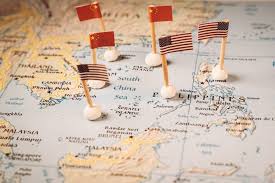
The annual “Balikatan” (Shoulder-to-Shoulder) military exercises between the United States and the Philippines concluded its largest iteration yet, involving over 17,000 troops from six nations (predominantly the U.S. with 10,000 soldiers). While officials frame the exercises as necessary for defense, local critics, activists, and neighboring China fear these war games are provoking conflict, disrupting local livelihoods, and positioning the Philippines as a dangerous target in a future superpower war.
Activists (such as the national coalition Bayan) and opposition lawmakers argue that aligning too closely with Washington transforms the Philippines into a “forward base and launchpad” for U.S. military attacks. They worry this presence will drag the country into a conflict between the U.S. and China, comparing the risk to how Gulf countries became targets due to hosting U.S. bases amid the ongoing U.S.-Israel war on Iran.
Also, Analysts note that over the last two years, Balikatan has shifted its focus from domestic internal security to external defense. The drills are described as “oiling the machinery of war,” heavily featuring live-fire exercises, air defense maneuvers, and the high-profile simulated sinking of a vessel. Notably, forces launched a Typhon-system Tomahawk missile capable of traveling 600km, which local opposition groups condemned.
Experts highlight that the Philippines has become the largest recipient of U.S. military aid in the Asia-Pacific. Amidst global conflicts, the U.S. relies heavily on Philippine ports for refueling, intelligence, and repair services via agreements like the Enhanced Defense Cooperation Agreement (EDCA).
To accommodate the live-fire and maritime drills, the military declared an 11-day “no sail zone” in certain coastal regions. Local fishing federations (like Pamalakaya) estimate that up to 4,800 fisherfolk in Subic Bay alone had their livelihoods restricted. Because many fishermen live hand-to-mouth and are already dealing with an inflation-driven oil price shock, losing days of work deepens local poverty. Even when permitted to fish for a few hours, many choose not to out of fear of getting caught in military crossfire.
The geopolitical blowback relies on the Communist Party of the Philippines (CPP) condemned drills, accusing U.S. officers of using the guise of deterrence to embed themselves and assist the Armed Forces of the Philippines (AFP) in tactical operations against local communist rebels (the New People’s Army).
The other important actor China in the matter of fact, viewed the exercises as a blatant provocation by external forces. In response, China’s Southern Theatre Command conducted its own live-fire drills east of Luzon island to “safeguard national sovereignty,” warning the Philippines that tying its security to external powers like the U.S. “may very well backfire.”
Altogether, whether or not the Philippines is drawing more closer to the U.S, it makes it an important actor on the region and in conflicts which involves their national and foreign security agenda. The Philippines, if they want to continue having both the U.S and China in their sight, need to accommodate their interests to both countries, if not as mentioned before, is going to backfire and it could become a regional country and discrepancies between both Trump and Xi Jinping.
Reference
Beltran, M. (2026, May 23). Some fear US-Philippines war games are drawing conflict closer to home. Al Jazeera. https://www.aljazeera.com/news/2026/5/23/some-fear-us-philippines-war-games-are-drawing-conflict-closer-to-home