
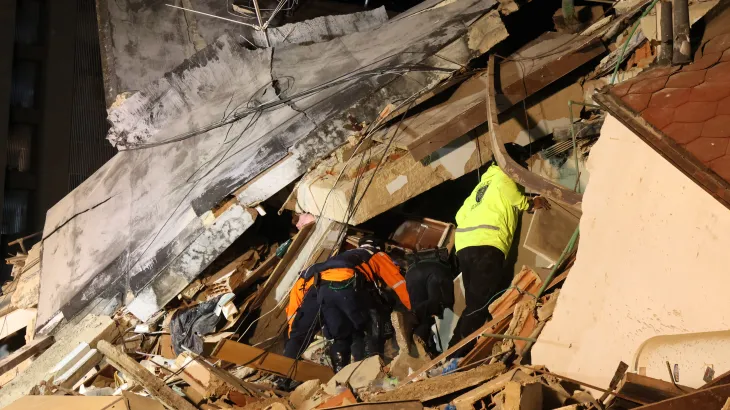
On June 25, 2026, a devastating seismic crisis gripped Venezuela as back-to-back powerful earthquakes, measuring magnitudes of 7.2 and 7.5, struck the north-central region of the country within less than a minute of each other. Seismologists classified the rare, rapid-succession event as an “earthquake doublet”, which originated near the Móron fault zone in Yaracuy State and triggered brief tsunami advisories across parts of the Caribbean. This unprecedented natural disaster quickly forced Acting President Delcy Rodriguez to declare a nationwide state of emergency as authorities began to grapple with a rapidly unfolding humanitarian crisis.
The immediate root of the catastrophe’s high impact lies in both the timing of the tremors and the structural vulnerabilities of the local infrastructure. Because the earthquakes struck on a major national holiday commemorating the 1821 Battle of Carabobo, families were overwhelmingly gathered inside their homes rather than at work or school. This domestic entrapment turned tragic as the twin shocks brought down dozens of residential and commercial structures, including the total collapse of a 22-story building in the upscale Altamira neighborhood of Caracas. Furthermore, the initial 7.2 foreshock severely weakened structural columns and walls, leaving buildings entirely defenseless against the massive 7.5 mainshock that followed just 39 seconds later.
In consequence, the physical and institutional structure of the country has been thrown into complete disarray as emergency services struggle to respond. On a domestic level, the official death toll quickly reached at least 32 people, with more than 7000 individuals hospitalized and many still feared trapped under mountains of concrete rubble. Institutionally, Interior Minister Diosdado Cabello deployed all available police, fire, and civil assistance units, while the Ministry of Education suspended classes nationwide to convert intact schools into emergency shelters. Meanwhile, corporate and logistical operations ground to a halt following widespread power outages, severed telecommunications, and the emergency closure of the heavily damaged Simón Bolívar International Airport.
Ultimately, this sudden disaster synthesizes a deeply alarming reality for a nation forced to confront a widespread, localized catastrophe. While international figures like US Secretary of State Marco Rubio extended immediate condolences, the true burden falls on local rescue workers scrambling through dust-choked streets before inevitable, heavy aftershocks can cause further collapses. In conclusion, as the coastal state of La Guaira is designated a disaster zone, the twin earthquakes serve as a stark reminder of the immense tectonic stress building beneath the Caribbean coast, leaving the country’s fragile emergency systems pushed to a definitive breaking point
Reference:
Al Jazeera. (2026, June 25). Venezuela struck by back-to-back earthquakes, many casualties feared. Al Jazeera News. https://www.aljazeera.com/news/2026/6/25/venezuela-struck-by-back-to-back-earthquakes-high-casualties-feared