
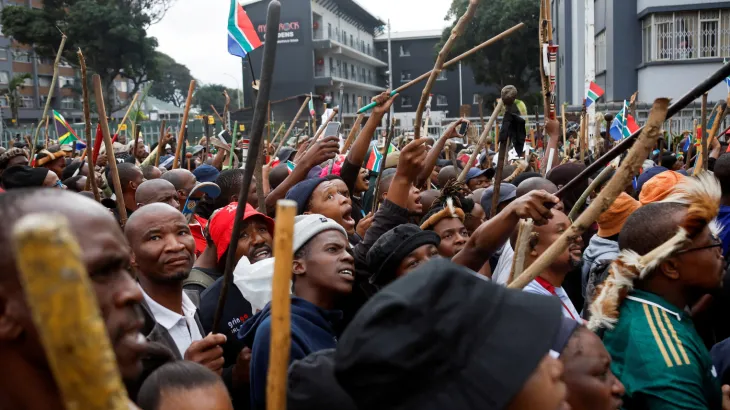
Recently, tensions reached a boiling point across the nation as June 30 marked South Africa’s anti-migrant deadline. Consequently, widespread protests erupted in major cities, including Johannesburg and Durban. Campaign groups, such as the March and March movement, had previously set this unofficial date for all undocumented migrants to leave the country immediately. Furthermore, these activists falsely claimed that foreign nationals would face arrest and deportation if they failed to comply.
The Immediate Impact on Vulnerable Communities
The atmosphere on the ground quickly became highly volatile. First, large crowds gathered to enforce their strict demands through demonstrations, with some protesters carrying traditional fighting sticks and singing liberation songs.Consequently, undocumented foreigners faced severe intimidation and mounting fear. In fact, thousands of foreign nationals had already fled the country in the days leading up to the protests, with several neighboring nations like Mozambique, Malawi, and Zimbabwe repatriating their citizens over fears of xenophobic violence. Those who remained were forced to camp outside consulates and shelters to seek protection.
Government Response and Security Measures
To address the escalating crisis, the government firmly rejected the ultimatum. President Cyril Ramaphosa addressed the nation, stating clearly that taking the law into one’s own hands is vigilantism and that the state alone enforces immigration laws. Moreover, authorities redirected substantial funds to deploy additional police and placed the military on standby to prevent severe unrest. In Johannesburg, police struggled to contain splinter groups that broke away to cause commotion and break windows in areas where foreign nationals live alongside locals.
Root Causes Behind South Africa’s Anti-Migrant Deadline
To fully grasp this situation, we must examine the underlying socio-economic factors driving this hostility. Currently, severe unemployment, which hovers around 30 percent, continues to deeply frustrate the local working class.Consequently, marginalized communities frequently scapegoat foreign nationals for their economic struggles, lack of jobs, and issues with public services. Instead of addressing systemic failures or the legacy of inequality, some political figures and citizens target vulnerable populations. Ultimately, true stability will only return when these fundamental inequalities are comprehensively addressed by the state.
References
Al Jazeera. (2026, June 30). South Africa deploys police as anti-immigrant protests prompt fears. https://www.aljazeera.com/news/2026/6/30/south-africa-deploys-police-as-anti-immigrant-protests-prompt-fears