
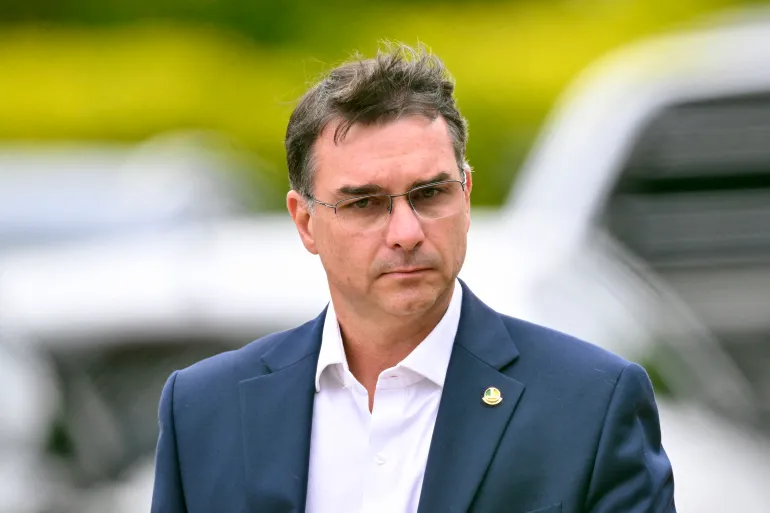
Brazilian presidential candidate Flavio Bolsonaro, son of former President Jair Bolsonaro. Has officially requested that the Trump administration delay its proposed 25 percent tariffs on Brazilian goods for 180 days, pushing the decision until after Brazil’s general elections in October. The Trump administration surprised Brasilia in June by announcing the proposed tariffs. Citing trade violations that include illegal deforestation and unfair electronic payment practices.
The timing of the announcement, which closely followed a Washington visit by Flavio Bolsonaro, has sparked a fierce domestic political crisis. President Luiz Inacio Lula da Silva has repeatedly accused the right-wing senator of lobbying the United States to penalize his own country. Labeling Bolsonaro’s subsequent request for a delay as an act of treason against the fatherland.
In response, Flavio Bolsonaro strongly rejects the treason allegations. Counter-arguing that the immediate imposition of these tariffs would actually grant the current Lula administration a manufactured political victory. In a formal submission to the Office of the US Trade Representative, Bolsonaro emphasized that the October general elections will redefine the country’s political viability within ninety days. Making a temporary freeze on trade penalties logical. However, his diplomatic efforts have yielded little success so far. US Secretary of State Marco Rubio indicated in a letter that substantial policy differences remain between Washington and Brazil. The public remains deeply polarized over the issue, with recent polling showing that 47 percent of Brazilians believe the Bolsonaro family invited the tariffs. While 35 percent believe they are trying to stop them.
In conclusion, this confrontation highlights how closely tied domestic Latin American politics have become to Washington’s foreign and economic policies. With a final US decision on the tariffs Looming in mid-July, the issue has transformed from a standard trade dispute into a high-stakes proxy battle for the Brazilian presidency. Ultimately, it underscores a deeply divided electorate where foreign economic pressure is viewed not just as a matter of state. But rather as a potent weapon used by rival political factions to influence voter sentiment ahead of a critical election.
Reference
Al Jazeera Staff. (2026, July 6). Flavio Bolsonaro asks Trump to delay tariffs on Brazil until after election. Al Jazeera. https://www.aljazeera.com/news/2026/7/6/flavio-bolsonaro-asks-trump-to-delay-tariffs-on-brazil-until-after-election