
The Transition from Regional Neutrality to Active Hostility
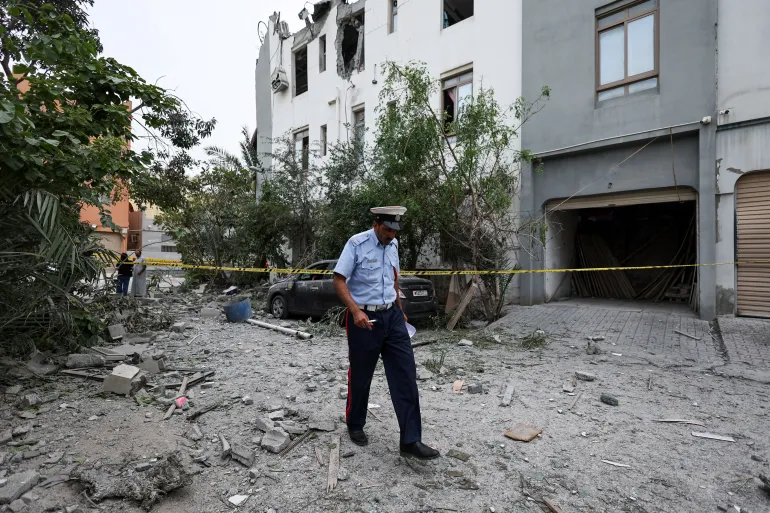
By mid-April 2026, the Persian Gulf has transitioned from a zone of “cautious neutrality” to an active theater of proxy warfare. The report highlights that Bahrain has formally summoned the Iraqi chargé d’affaires following a series of “pro-Iranian” drone and missile attacks launched from Iraqi territory against Gulf maritime interests. Consequently, the war is no longer contained between Washington and Tehran; it is leaking into the sovereign space of the Gulf monarchies. This suggests that Iran is utilizing its “Axis of Resistance” in Iraq to bypass the U.S. naval blockade (Article #105) by targeting the U.S. allies directly.
Origins and the “Iraqi Buffer” Problem
Originally, Iraq attempted to maintain a “balanced” foreign policy, acting as a bridge between Iran and the Arab world. However, the origin of the current diplomatic crisis lies in the loss of control over the PMF (Popular Mobilization Forces). As the “Stone Age” campaign (Article #90) enters its third month, these pro-Iranian militias in Iraq have begun autonomous operations against Bahrain and Saudi Arabia to “punish” them for hosting U.S. bases. For 2026, this has created a crisis of State Sovereignty in Baghdad, where the central government is either unable or unwilling to stop attacks that are drawing Iraq into a regional conflagration.
The Structure of Proxy Attrition
The structure of this escalation is organized around the “Plausible Deniability” of the Iranian state. Specifically:
- Launch Point Diversification: By moving launch sites into Southern Iraq, Iran forces the U.S. and its allies to choose between tolerating the attacks or striking Iraq, which would further destabilize Baghdad.
- Infrastructure Targeting: The attacks have shifted from military targets to “Dual-Use” infrastructure, including desalination intake valves and oil storage facilities in Bahrain’s territorial waters.
- Institutional Friction: The article highlights the tension within the GCC (Gulf Cooperation Council), where members like Bahrain and the UAE are demanding a “collective military response,” while others like Qatar and Kuwait fear that any retaliation will trigger a “Total Gulf War.”
Synthesis of the “Buffer State” Collapse and Regional Contagion
The successful utilization of Iraqi proxies now faces a paradox: by using Iraq as a shield, Iran may permanently destroy the Regional Integration it needs for economic survival. This represents the collapse of the “Buffer State” in Political Science—where Iraq, meant to separate rivals, becomes the very platform for their clash. There is a clear intent in Manama to signal that “patience has run out,” but the structural reality is that the Gulf states remain highly vulnerable to low-cost, high-impact drone swarms. Ultimately, it is clear that the Islamabad Impasse (Article #107) has signaled to the proxies that the time for “restraint” is over; the Gulf is entering a phase where no border is truly safe.
Reference
Al Jazeera. (2026, April 13). Bahrain summons Iraqi envoy as pro-Iranian attacks persist in Gulf. Al Jazeera News Middle East. https://www.aljazeera.com/news/2026/4/13/bahrain-summons-iraqi-envoy-as-pro-iranian-attacks-persist-in-gulf