
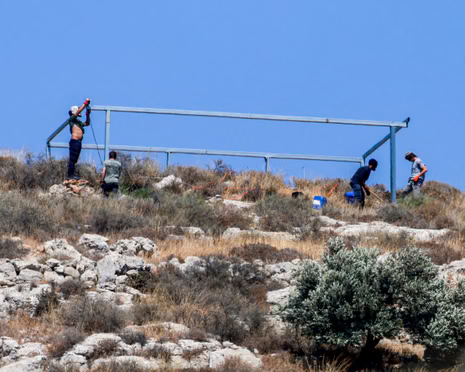
As national legislative elections approach on October 27, the expanding Israel illegal settlements Gaza West Bank landscape reflects a severe escalation in regional land policy. Moving past international legal warnings, the far-right governing coalition has advanced massive funding initiatives to build new housing blocks. This systematic strategy aims to permanently alter the physical and legal reality of Palestinian territories before the current government mandate expires.
Establishing New Outposts Inside Northern Gaza
To understand the scope of this territorial push, observers must analyze the specific structural methods chosen by defense planners. The defense ministry confirmed intentions to build three distinct “Nahal” outposts inside Israeli-controlled sectors of northern Gaza. Historically, these military-agricultural communities serve as the initial structural phase that paves the way for civilian colonization.
According to regional monitoring groups, utilizing the armed forces to establish these outposts signals a permanent end to the 2005 Gaza disengagement policy.
Furthermore, military commanders in the region have publicly praised extremist civilian outposts, describing them as essential security partners. Consequently, the Israel illegal settlements Gaza West Bank expansion functions less as a series of isolated real estate projects and more as a coordinated, state-backed security strategy.
Secret Budgets Unleashed on the West Bank
This territorial campaign extends well beyond the coastal enclave into the Judean and Samaritan hills. The finance ministry announced the release of 1.3 billion shekels ($400 million) in state funding to construct thousands of new homes across the West Bank.
The cabinet initially approved this massive budget last month but intentionally kept the decision hidden to avoid diplomatic pushback from Washington. However, active bulldozers have already begun clearing land for at least seven new settlements. As a result, the state is rapidly deploying public resources to create irreversible facts on the ground before polling day.
The Total Collapse of the Ceasefire Territorial Lines
For international diplomacy and the prospects of a two-state solution, these rapid construction projects create severe long-term obstacles. Military briefings confirm that Israel now directly controls 65% of the Gaza Strip. This expanded footprint goes far beyond the 53% threshold established under the ceasefire brokered last year by the United States.
Furthermore, this rapid territorial expansion has drawn sharp legal and political pushback from within Israel’s own establishment. Dozens of political and security officials, including two former prime ministers, have threatened legal challenges over the state’s support for extremist organizations. Meanwhile, over two million displaced Palestinians remain crowded into the remaining third of the Gaza territory, facing severe survival conditions.
A Highly Fragmented Regional Reality
Reversing these newly established infrastructure networks will require years of intense international pressure and legal mediation. The deliberate placement of new outposts has established a highly fragmented baseline for future peace talks.
Moving forward, international stakeholders must adapt to a deeply altered geopolitical environment. Traditional diplomatic warnings have proven entirely ineffective at stopping these rapid construction sprints. Ultimately, the pressing challenge for global leadership is protecting international law before the remaining borders collapse into permanent fragmentation.
Beaumont, P. (2026, July 18). Israeli ministers announce plans for new illegal settlements in Gaza and West Bank. The Guardian. https://www.theguardian.com/world/2026/jul/18/israel-plan-new-illegal-settlements-gaza-west-bank-occupied-palestine