
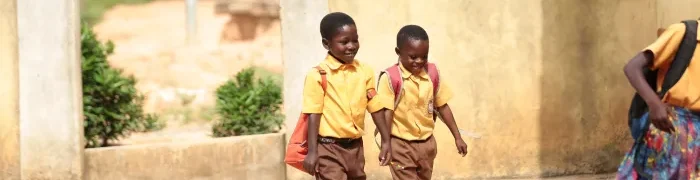
The number of out-of-school children reaches its highest level in years
According to UNESCO’s 2026 Global Education Monitoring (GEM) Report, the number of children and young people out of school has increased for the seventh consecutive year, reaching 273 million worldwide. This means that one in every six school-age children is excluded from education. The report attributes this trend to population growth, ongoing crises, armed conflicts, and shrinking education budgets, which have slowed progress across nearly all regions since 2015.
Progress has slowed, but important gains have been achieved
Despite the alarming figures, UNESCO highlights substantial progress since 2000. Global enrolment in primary and secondary education increased by 327 million students, representing a 30% rise and the equivalent of more than 25 additional children entering school every minute. Countries such as Madagascar, Togo, Morocco, Viet Nam, Georgia, and Türkiye have reduced out-of-school rates by at least 80%, demonstrating that targeted policies can significantly expand educational access.
Conflict, poverty and population growth continue to drive exclusion
The report identifies conflict and demographic growth as major barriers to educational access, particularly in sub-Saharan Africa and parts of the Middle East. More than one in six children worldwide lives in conflict-affected areas, where school closures and instability place millions at risk of educational exclusion. UNESCO also notes that official statistics likely underestimate the scale of the problem, as millions of children affected by humanitarian crises are not fully captured in existing datasets.
No single policy can solve the education crisis
UNESCO stresses that educational exclusion requires comprehensive and context-specific solutions. Evidence from 14 African countries shows that making education compulsory, rather than only free, can add more than one year of schooling. Additional measures such as child labour legislation, school feeding programmes, electrification projects, and cash transfers linked to attendance have also proven effective in increasing enrolment and retention. The report concludes that successful reforms must address both educational and socioeconomic barriers simultaneously.
Reference
United Nations Educational, Scientific and Cultural Organization (2026, march 25). More children out of school for the 7th year in a row, up to 273 million. UNESCO. https://www.unesco.org/en/articles/more-children-out-school-7th-year-row-273-million