
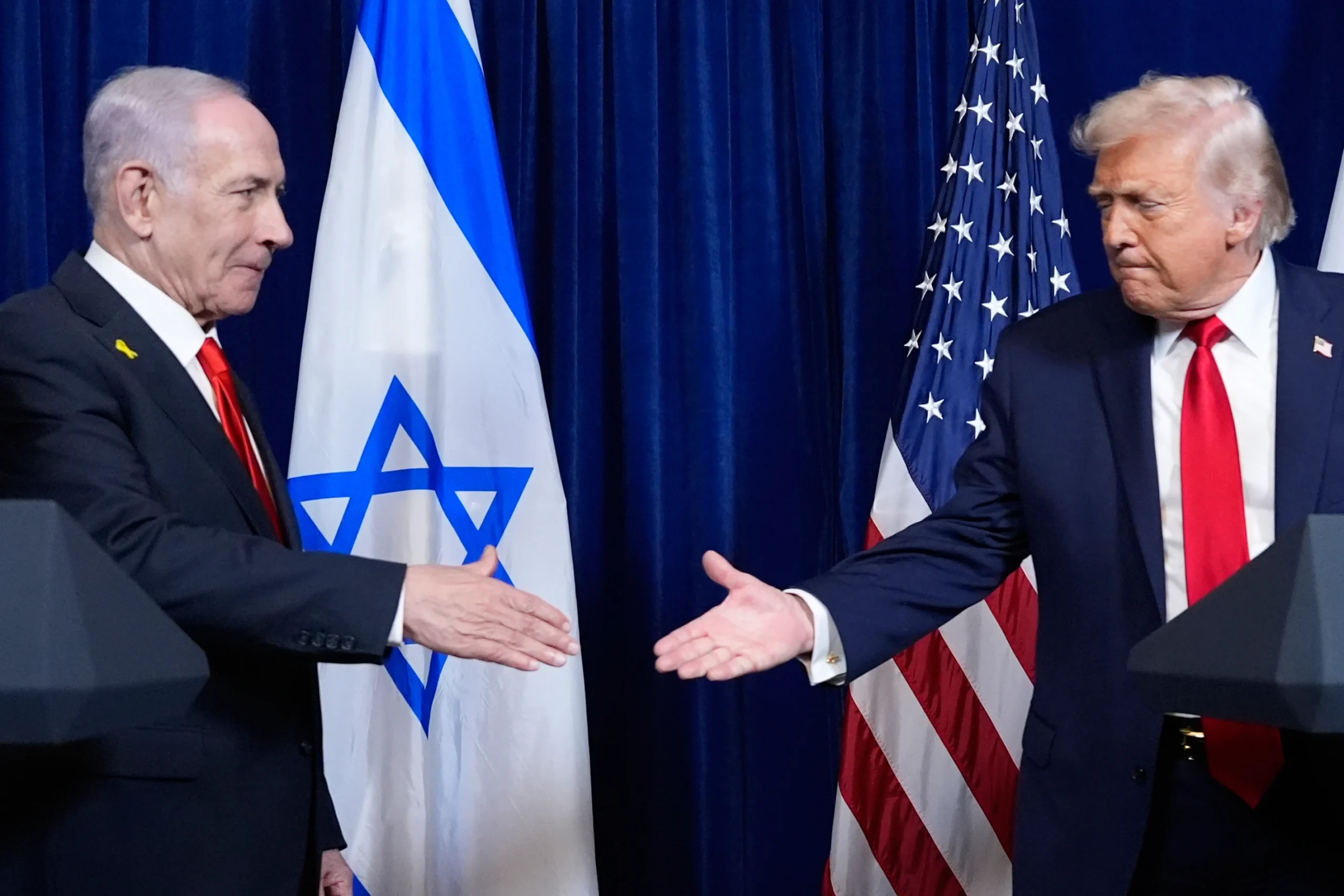
A growing divide has emerged between two leaders who, only months earlier, appeared closely aligned in their approach toward Iran. What began as a coordinated effort to confront Tehran has evolved into a dispute over how the conflict should end. While both governments continue to view Iran as a strategic threat, they increasingly disagree on the balance between military pressure and diplomatic restraint.
At the center of the disagreement is a fundamental difference in priorities. Donald Trump has become increasingly focused on containing the regional consequences of the war. Rising energy prices, concerns about economic instability and political pressures at home have strengthened his interest in preventing a wider conflict. His administration has sought to preserve diplomatic channels with Iran and avoid actions that could trigger another cycle of escalation across the Middle East.
Benjamin Netanyahu, however, appears to view the situation through a different lens. For the Israeli government, the conflict is not simply a matter of deterrence but an opportunity to weaken Iran and its regional allies more decisively. This objective has led Israel to pursue military actions that Washington has at times considered risky or premature. Recent strikes in Lebanon and Iran demonstrated the extent to which Israeli decision-making has begun to diverge from American preferences.
The tensions became particularly visible after Israel carried out an attack on Beirut despite public warnings from Trump against such a move. The strike was followed by Iranian missile attacks on Israel and further Israeli operations against Iranian targets. Although the violence eventually subsided, the episode exposed a growing gap between Washington’s desire to stabilize the situation and Israel’s willingness to continue applying military pressure.
This disagreement highlights a broader challenge within long-standing alliances. Partners may share strategic objectives while differing sharply on the methods required to achieve them. In this case, both governments remain committed to limiting Iranian influence, yet they increasingly disagree about the costs and risks of military action. The result is a relationship characterized by cooperation on some fronts and visible friction on others.
The situation also illustrates how domestic political considerations can shape foreign policy decisions. Both leaders face electoral pressures and public expectations that influence their calculations. Military operations, ceasefire negotiations and diplomatic initiatives are therefore intertwined with political concerns at home. The decisions taken on the battlefield are not only responses to security threats but also reflections of competing political incentives.
Beyond the personal dynamics between Trump and Netanyahu, the dispute reveals the difficulty of controlling escalation once a conflict has expanded beyond its original objectives. Actions intended to strengthen deterrence can create new crises and complicate diplomatic efforts. As violence spreads across multiple fronts involving Iran, Lebanon and other regional actors, opportunities for negotiation become increasingly fragile.
The fluctuant relationship between the United States and Israel exposes that alliances are not immune to disagreement even during wartime. Shared adversaries do not necessarily produce shared strategies. The most difficult question then is no longer whether pressure should be applied to Iran, but how far that pressure should go before the risks begin to outweigh the intended gains.
Reference: Frankel, J. & Madhani, A. (2026, June 8). Netanyahu and Trump are at odds over the war they started together. Associated Press. https://apnews.com/article/israel-netanyahu-us-trump-iran-war-2230178d2cd4aa6b96e3e022b734d498